

 English
 中文简体
中文简体 Español
Home / News / Industry News / How Do You Select the Right Cold Room Evaporator for Your Specific Cold Storage Requirements?
Industry News
The evaporator is the single most operationally critical component in any cold room refrigeration system. It determines how effectively heat is extracted from the storage space, how uniformly temperature is distributed across the room, how much moisture is removed from stored products, and how frequently the system must interrupt cooling for defrost cycles. Despite this importance, evaporator selection is frequently treated as an afterthought — a component chosen primarily on price once the compressor and condensing unit have been specified. This approach consistently produces cold rooms that fail to maintain temperature uniformity, damage product through excessive dehumidification, consume more energy than necessary, or require frequent maintenance interventions. Selecting the right evaporator for a specific cold storage application requires understanding the interaction between evaporator type, sizing parameters, airflow characteristics, defrost method, and the thermal and humidity requirements of the products being stored.
Content
Cold room evaporators are available in several configurations, each suited to different storage conditions, room sizes, and product types. The three principal types encountered in commercial and industrial cold storage are unit coolers (forced-air evaporators), ceiling-mounted air coolers, and wall-mounted evaporators. Each has a distinct airflow pattern, coil geometry, and defrost characteristic that makes it more or less appropriate for specific applications.
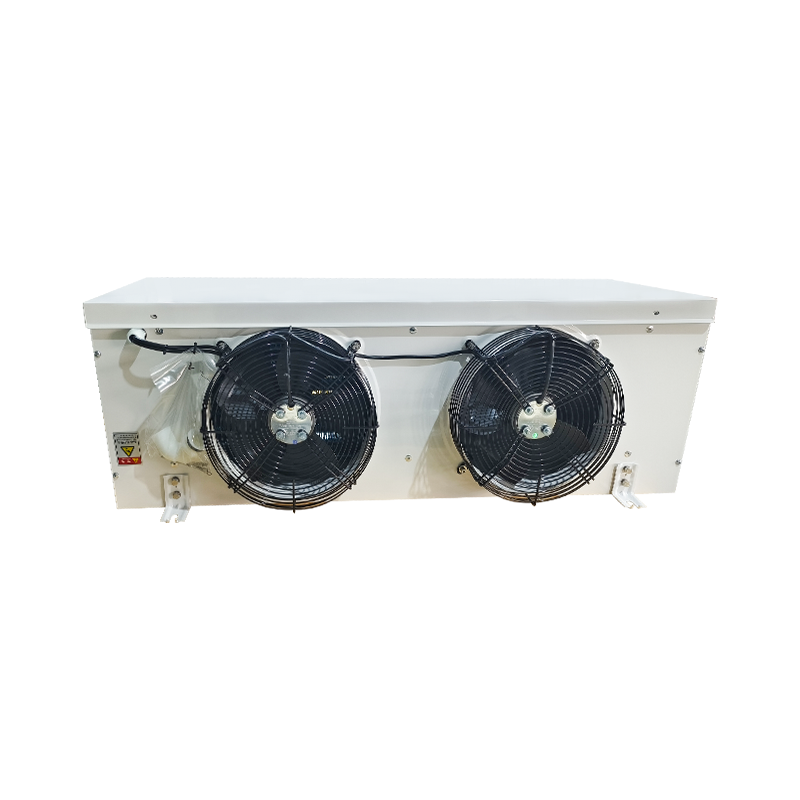
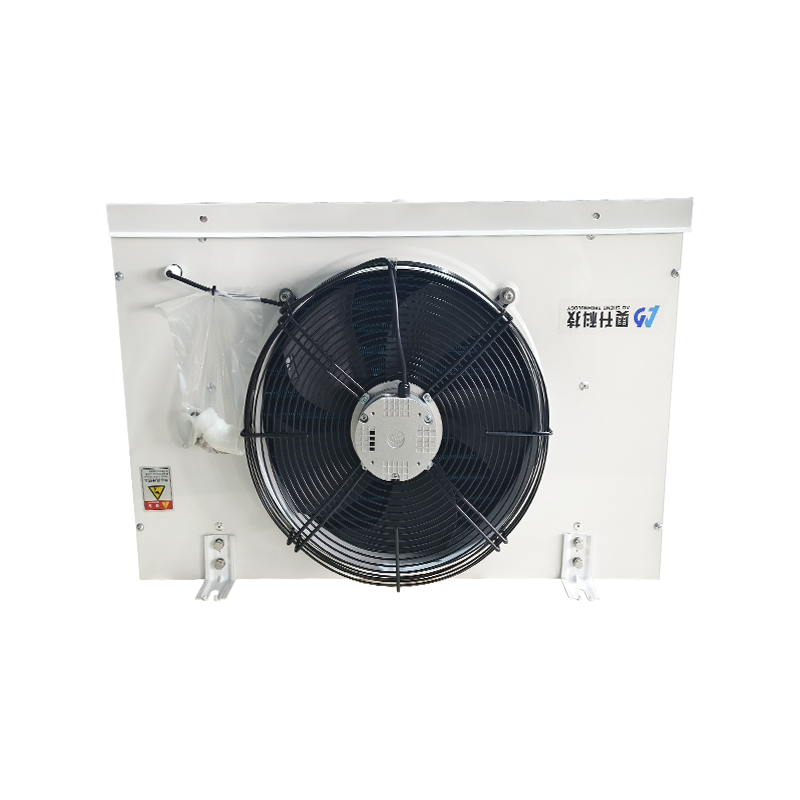
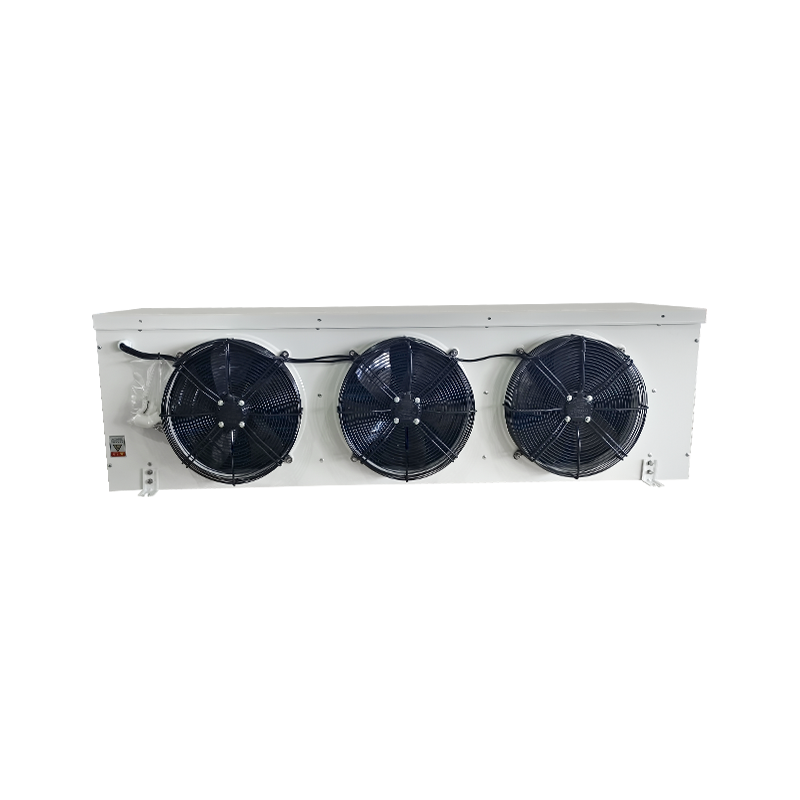
Unit coolers are the most widely used evaporator type in commercial cold rooms. They consist of a finned-tube coil mounted in a casing with one or more axial or centrifugal fans that draw room air across the coil and discharge it in a directed airstream. The forced airflow enables efficient heat transfer at relatively compact coil sizes and allows the cold air to be projected across the room to reach product stored at distance from the evaporator. Unit coolers are available for medium-temperature applications (0°C to +10°C room temperature) and low-temperature applications (−18°C to −30°C), with coil geometry, fin spacing, and defrost method specified accordingly. In medium-temperature applications, fin spacing of 4mm to 8mm is standard; in low-temperature blast freezing or frozen storage applications, fin spacing of 8mm to 12mm is required to accommodate frost accumulation between defrost cycles without blocking airflow.
Ceiling-mounted evaporators discharge conditioned air downward or horizontally across the ceiling plane and are particularly well suited to large cold stores, distribution centers, and high-bay frozen warehouses where uniform temperature distribution across a large floor area is the primary design challenge. Multi-fan ceiling units can be arranged to provide overlapping airstreams that eliminate stratification and dead zones in the storage volume. Because the evaporator is mounted at ceiling height, it minimizes obstruction to forklift operations and maximizes usable floor space — a significant advantage in high-throughput logistics cold stores where floor utilization is a key performance metric.
Wall-mounted evaporators are used in smaller cold rooms and specialist applications where ceiling mounting is impractical. Penthouse evaporators — mounted externally on the cold room roof with air ducted into and out of the storage space — are used when maintenance access or refrigerant charge minimization inside the storage area is a priority, as in food processing environments with strict hygiene requirements or pharmaceutical storage facilities. The external mounting allows refrigerant to remain outside the conditioned space, reducing leak risk in product storage areas and simplifying service access without opening the cold room door.
Evaporator sizing is not simply a matter of matching nominal cooling capacity to the calculated room heat load. The effective capacity of an evaporator depends critically on the temperature difference (TD) between the room air temperature and the refrigerant evaporating temperature — and this relationship is linear: an evaporator rated at 10 kW at a 10K TD will deliver approximately 8 kW at an 8K TD and 12 kW at a 12K TD. Specifying the wrong TD assumption produces a system that is either undersized — unable to pull down temperature under load — or oversized, which causes short cycling, excessive dehumidification of stored products, and higher energy consumption.
Standard TD values used in cold room evaporator selection depend on the application type and the humidity sensitivity of stored products. The table below summarizes typical TD recommendations by application:
| Application Type | Room Temp (°C) | Recommended TD (K) | Relative Humidity Target |
|---|---|---|---|
| Fresh fruit and vegetables | 0 to +4 | 4–6 | 90–95% |
| Meat and dairy (medium humidity) | 0 to +4 | 6–8 | 80–90% |
| General chilled food storage | +2 to +8 | 8–10 | 75–85% |
| Frozen food storage | −18 to −22 | 8–12 | Not critical |
| Blast freezing | −35 to −40 | 10–15 | Not critical |
The relationship between TD and humidity is direct and important: a lower TD means the evaporating temperature is closer to the room air temperature, which reduces the coil's capacity to condense moisture from the circulating air. For humidity-sensitive products such as fresh produce, cut flowers, and unpacked meat, specifying a low TD evaporator — sized with a larger coil surface area to compensate for the reduced driving force — is essential to avoid weight loss, wilting, and surface desiccation that directly reduce product value.
In any cold room operating below approximately +5°C, frost accumulates on the evaporator coil surfaces during normal operation as moisture in the room air freezes on contact with the sub-zero coil surface. This frost layer progressively insulates the coil, reducing heat transfer efficiency and increasing airflow resistance through the fin pack. Without regular defrost, a cold room evaporator can lose 30% to 50% of its rated capacity within 24 hours of initial operation in high-moisture environments. Selecting the appropriate defrost method is therefore integral to evaporator selection — not a separate decision made after the coil has been specified.
Off-cycle defrost — in which the compressor is stopped and the evaporator fans continue to run, allowing room-temperature air to melt frost from the coil — is the simplest and most energy-efficient defrost method. It is only suitable for medium-temperature applications where the room temperature is above 0°C, as frost melts naturally when coil surface temperature rises above freezing. Off-cycle defrost requires no additional heaters or control complexity and produces no added heat load in the cold room, making it the preferred method for fresh produce, dairy, and beverage cold rooms where room temperature is maintained between +2°C and +10°C.
Electric resistance heaters embedded in or around the evaporator coil are the standard defrost method for low-temperature cold rooms and frozen food stores. Electric defrost is reliable, simple to control, and applicable across the full range of evaporating temperatures down to −40°C. The primary disadvantage is energy consumption: electric defrost heaters for a medium-sized frozen store evaporator may consume 2 to 6 kW during each defrost cycle, and with two to four defrost cycles per day, defrost energy can represent 10% to 20% of total system energy consumption. Defrost heater sizing — which determines both defrost duration and energy consumption — must be matched to the frost accumulation rate, which depends on door opening frequency, product throughput, and room infiltration rate.
Hot gas defrost routes high-temperature refrigerant discharge gas from the compressor directly through the evaporator coil during defrost cycles, using the refrigerant's condensing heat to melt frost from inside the coil. This method is significantly more energy-efficient than electric defrost because the heat source is recovered from the refrigeration cycle rather than drawn from the electrical supply. Hot gas defrost also tends to be faster — defrost cycle times of 10 to 20 minutes are typical versus 20 to 45 minutes for electric defrost in comparable applications — which reduces the temperature pull-up in the cold room during each defrost event and improves product temperature stability. The trade-off is higher system complexity and installation cost, requiring additional refrigerant piping, solenoid valves, and control sequencing that is unnecessary for electric defrost systems.
Selecting an evaporator with sufficient cooling capacity is necessary but not sufficient for cold room performance — the evaporator must also distribute conditioned air uniformly throughout the storage volume to maintain consistent temperature across all stored product. Poor airflow distribution produces warm zones where product deteriorates prematurely and cold zones where product may freeze unintentionally, both of which represent direct product loss and potential food safety or quality compliance failures.
Fan selection and throw distance are the primary airflow distribution design parameters. The throw distance of a unit cooler — the distance over which the discharged airstream maintains sufficient velocity to entrain room air and produce effective mixing — depends on fan airflow volume, discharge velocity, and room ceiling height. Manufacturers specify throw distance at a terminal velocity of 0.25 m/s, the minimum air movement needed to prevent stagnant zones. For a room longer than the throw distance of a single evaporator, multiple units must be positioned to provide overlapping coverage, or a single unit with extended discharge ducting must be used to reach the far end of the room.
The transition away from high-GWP refrigerants — R404A and R507A in low-temperature applications, R134a in medium-temperature — toward lower-GWP alternatives including R448A, R449A, R452A, and natural refrigerants such as CO₂ (R744) and ammonia (R717) has direct implications for evaporator selection. Not all evaporators designed for legacy refrigerants are compatible with their replacements, and specifying a new evaporator without verifying refrigerant compatibility with the intended system design is a common source of problems in both new installations and retrofit projects.
CO₂ refrigeration systems operate at significantly higher pressures than HFC systems — low-side pressures of 30 to 40 bar in subcritical CO₂ systems compared to 2 to 6 bar for R404A — requiring evaporators specifically designed and pressure-rated for CO₂ service, with heavier-wall tubing, reinforced headers, and brazed connections rated to the appropriate pressure class. Standard HFC evaporators must never be used in CO₂ systems regardless of nominal cooling capacity match. Ammonia systems require evaporators with steel or stainless steel construction, as ammonia reacts with copper and copper alloys to form corrosive compounds that rapidly destroy standard copper-tube evaporator coils.
For HFC and HFO refrigerants in standard cold room applications, aluminum fin and copper tube construction remains the industry standard, offering good thermal conductivity, acceptable corrosion resistance in clean environments, and competitive cost. In coastal or high-humidity environments where coil corrosion is accelerated, epoxy-coated or pre-coated aluminum fins provide substantially extended service life — typically three to five times the fin life of uncoated aluminum in corrosive atmospheres — at a moderate cost premium that is quickly recovered through reduced maintenance and replacement costs over the system's service life.
Bringing together all of the above considerations into a structured selection process reduces the risk of specification errors and ensures the chosen evaporator delivers the required performance throughout the cold room's operational life. The following checklist summarizes the key decision points that must be addressed before finalizing evaporator selection for any cold storage project:
For exclusive deals and latest offers, sign up by entering your email address below.

We specialise in the refrigeration industry. Please feel free to contact us.