


 English
 中文简体
中文简体 Español
Product Category
Cold Room Evaporators Manufacturers
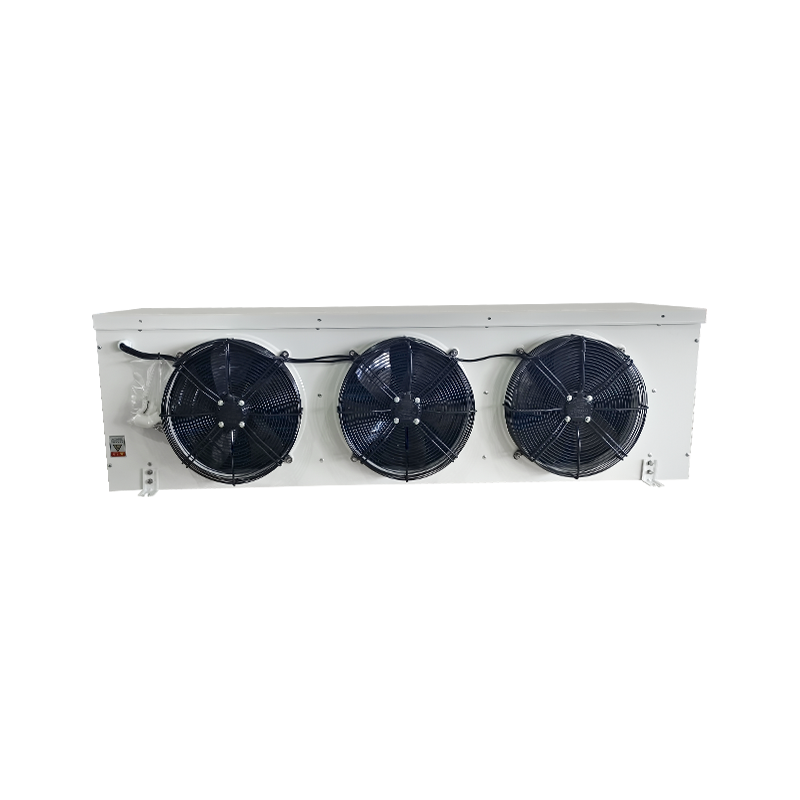
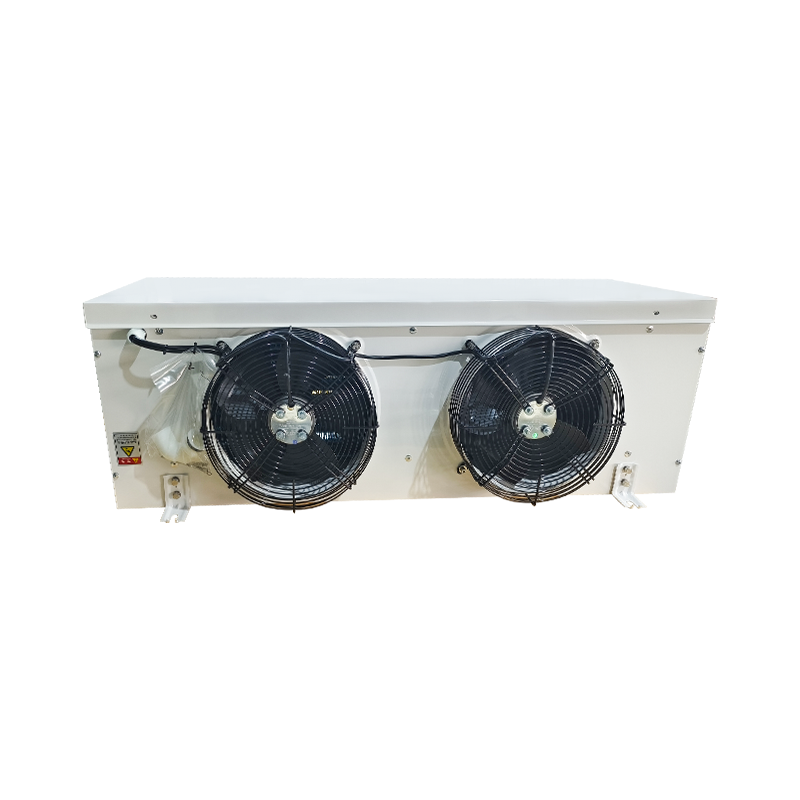
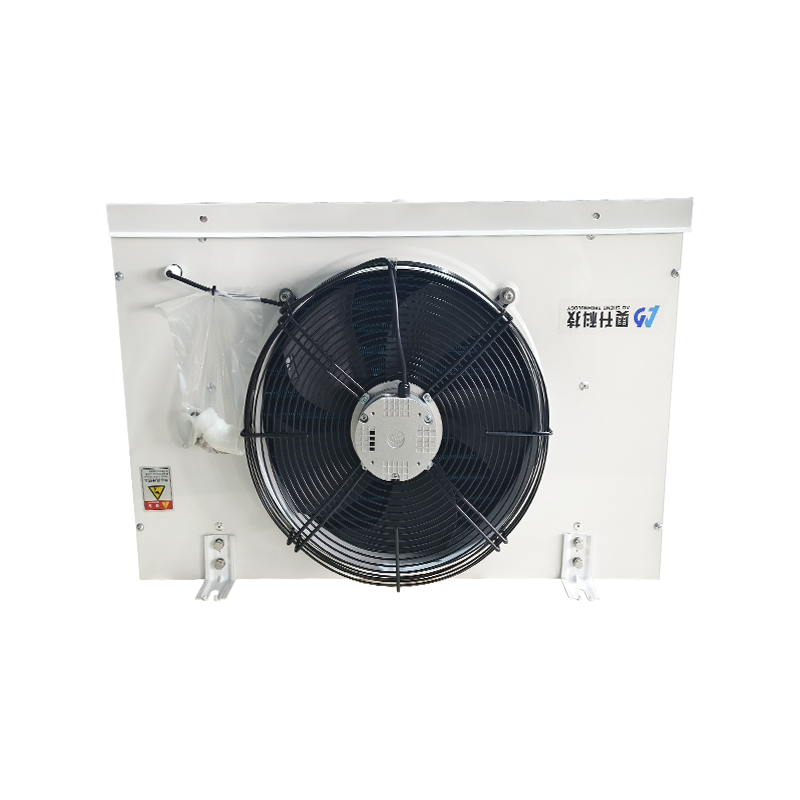
Applications and Functions
The EVAPORATOR (also known as an "evaporative air cooler" or "air cooler") is a key component in cold storage refrigeration systems, primarily used for forced circulation of cold air, achieving rapid and uniform temperature reduction within the warehouse. It is widely used in food freezing, cold storage, pharmaceutical warehousing, and cold chain logistics, ensuring that goods are stored in an ideal, long-term, constant temperature and low humidity environment.
Core Features
1. Efficient Heat Exchange:
- Utilizing high-quality copper tube and aluminum fin heat exchangers, this unit delivers high heat transfer efficiency. Combined with a high-volume, low-noise fan, it rapidly lowers the storage temperature and reduces energy consumption.
- Operating temperature range (-40°C to +10°C) is wide, meeting diverse needs such as fresh-keeping, freezing, and quick-freezing.
2. Uniform Air Supply:
- Optimized air duct design ensures consistent cold air coverage, minimizing local temperature differences and safeguarding the quality of stored goods.
3. Frost and Corrosion Protection:
- Standard electric defrost or hot air defrost system effectively reduces frost formation and maintains continuous, efficient operation. - The housing is made of rust-resistant materials (such as stainless steel, aluminum-magnesium alloy, galvanized steel with plastic spraying), which is corrosion-resistant and extends its service life.
4. Energy Saving and Environmental Protection:
- A low-energy motor and high-efficiency fan blade design meet national energy efficiency standards, reducing long-term operating costs.
Product Highlights
- Intelligent Control: An optional automatic defrost controller intelligently activates and stops defrosting based on frost thickness, reducing energy consumption.
- Low-Noise Operation: Optimized fan impeller and motor configuration achieves an operating noise level of ≤55dB, making it suitable for environments requiring high quietness.
- Modular Installation: Wall-mountable, adaptable to various cold storage structures, saving space.
- Easy-Maintenance Design: Removable panels and an open structure facilitate cleaning and maintenance, reducing maintenance costs.
Applicable Applications
- Food Industry: Low-temperature freezers for meat, seafood, ice cream, etc.
- Pharmaceutical Cold Chain: Constant-temperature storage for pharmaceuticals, vaccines, and biological reagents.
- Logistics Warehousing: Cold chain distribution centers and transit cold storage. - Agricultural processing: Fruit and vegetable pre-cooling, flower preservation, and fruit and vegetable ripening storage.
With its core advantages of efficient cooling, energy saving, and durability, the EVAPORATOR is essential equipment for ensuring stable cold storage operations. We offer various specifications (air volume and power) tailored to storage capacity and temperature requirements, and provide professional installation and after-sales support!
About AUSSN
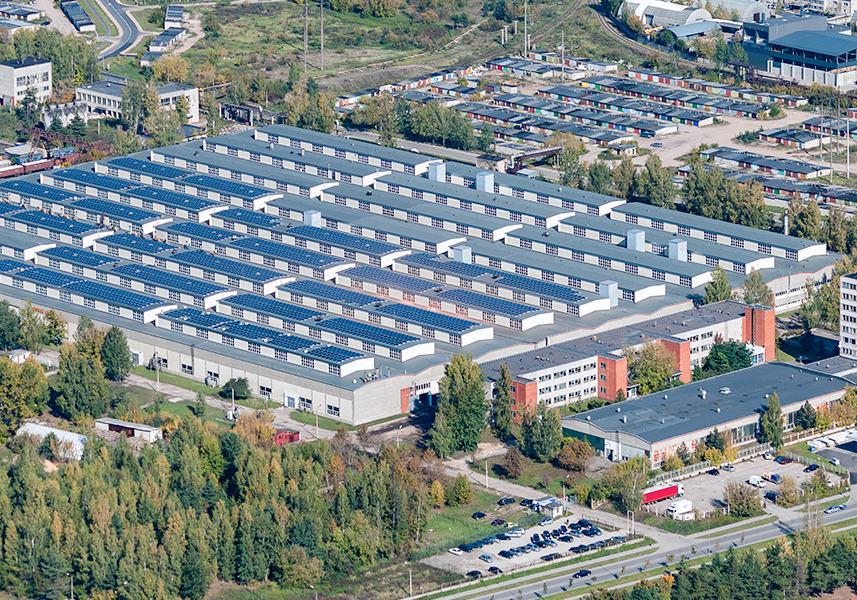
Changzhou Aosheng Refrigeration Technology Co., Ltd. is a professional manufacturer of condensing units that integrates research and development, design, manufacturing, sales, engineering installation and after-sales service. Cold Room Evaporator Units Manufacturers and OEM/ODM Air Cooler Evaporator Factory in China. The condensing units produced by our company are widely used in commercial refrigerators, cold storage and other projects. The original accessories of the new intelligent unit products are all from major international and domestic brands. The refrigeration system is stable and reliable, with an extremely low failure rate. The first-class sheet metal and spraying process make product beautiful, generous, solid and durable. Our company's box type condensing unit has been specially improved for commercial refrigerators, making your refrigeration effect more perfect. Each product has undergone full process inspection standards to ensure that users can use it with confidence. Support Custom Cold Room Evaporators. Aosheng adheres to the corporate philosophy of "integrity-based, quality oriented, wholehearted and striving for excellence". With unremitting efforts and persistent pursuit, we have woven a sales network that covers the whole country and even the world, ensuring product quality,continuously strengthening and consolidating the market, and enhancing brand awareness and influence. Our company warmly welcome guests from all over the world to visit our factory for inspection, guidance, and business negotiations.
-

0+
Factory Area
-

0+
Monthly Capacity(Units)
-

0+
Country Of Export
Changzhou Aosheng
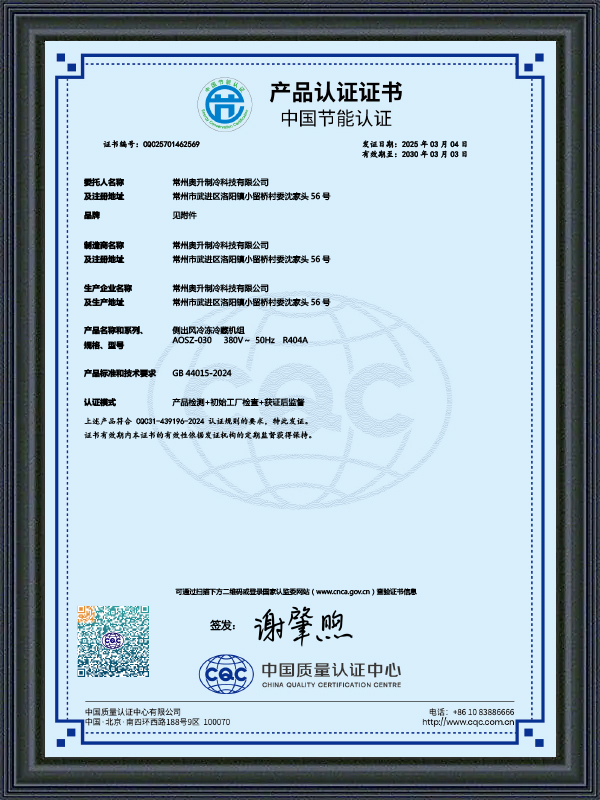
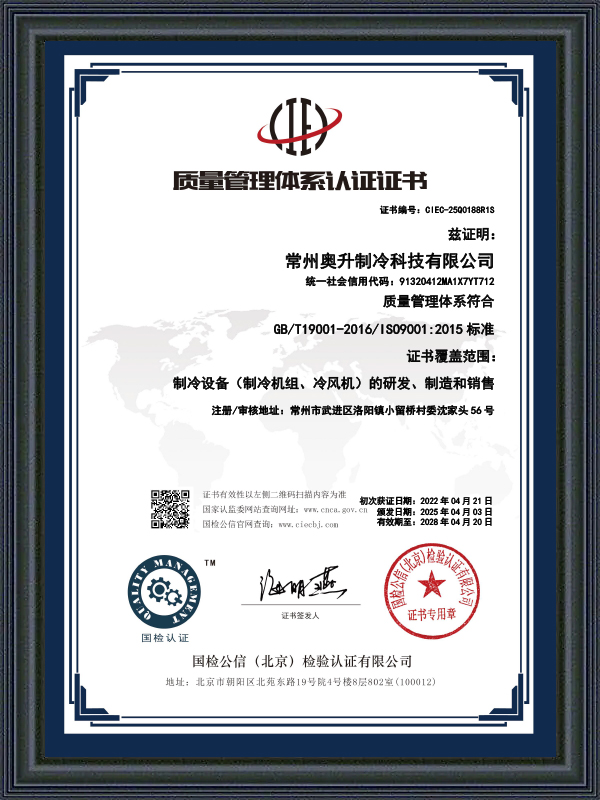
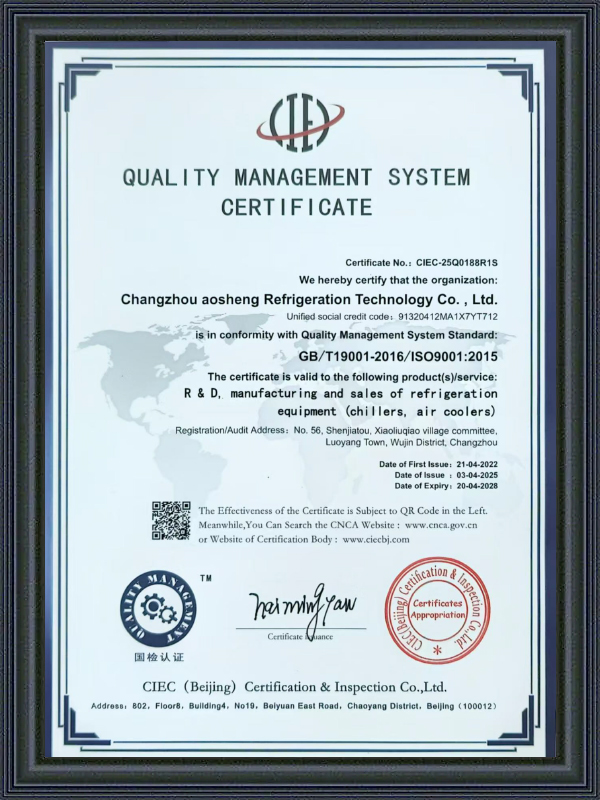
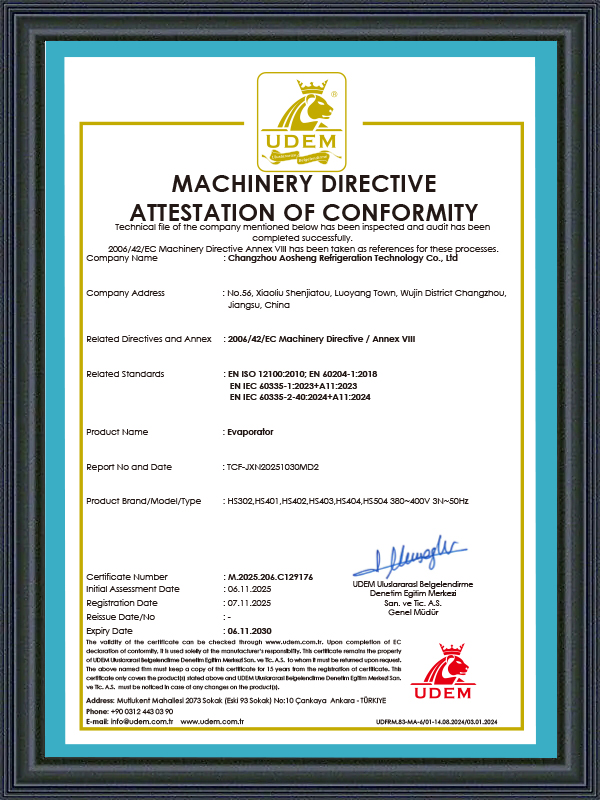
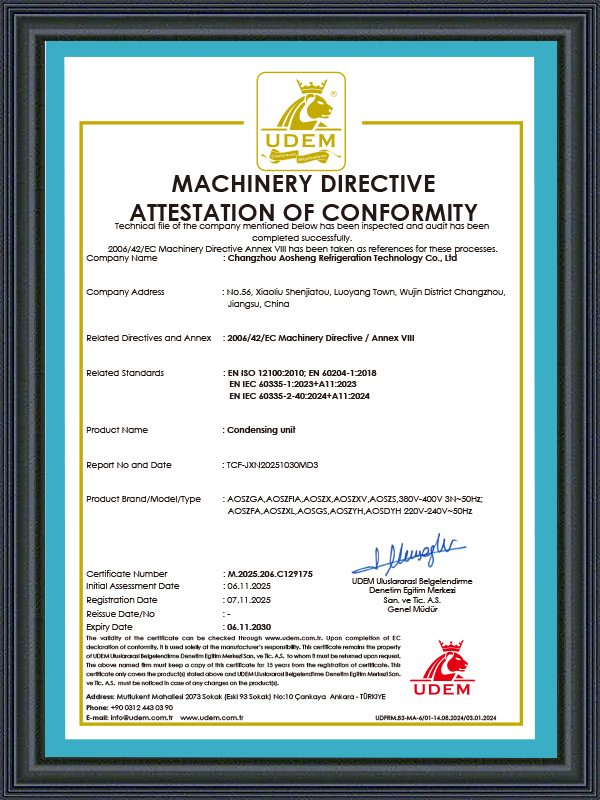
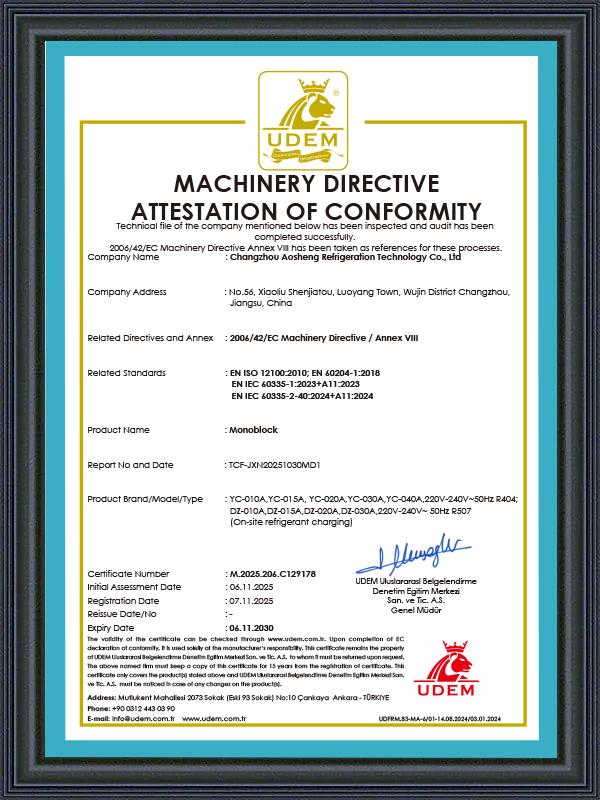
Certificate Of Honor
Latest News
Industry News
-
How to Adjust a TXV for Superheat: A Practical Step-by-Step Field Guide
 Oct 09,2026
  Industry News
-
1234ze Refrigerant: Key Properties, Pros, Cons, and Cold Room Design Notes
Sep 30,2026
Industry News
-
inverter for compressor: Applications, Selection Criteria, and Practical Guidance
Sep 22,2026
Industry News
-
Refrigeration Check Valves: What They Do and Why They Matter in Cold Rooms
Sep 14,2026
Industry News
Industry Knowledge
Practical Engineering Insights into Cold Room Evaporator Units
Cold room evaporator units, also commonly called air cooler evaporators, play a central role in determining cooling uniformity, product dehydration rate, and defrost frequency. In many installations, the evaporator has a greater impact on day-to-day refrigeration performance than the condensing unit itself. Proper coil design and control settings can significantly improve product quality while reducing energy consumption.
TD Selection and Its Effect on Product Moisture Loss
The temperature difference (TD) between room air and refrigerant evaporating temperature strongly affects humidity retention. A large TD provides rapid cooling but lowers coil surface temperature, causing more moisture to condense from the air and increasing product weight loss.
For fresh produce and flowers, designers often select a TD of 4°C to 6°C to maintain high relative humidity. For frozen storage, larger TD values are acceptable because dehydration is less critical than maximizing capacity.
| Application | Typical TD | Primary Objective |
| Fresh Produce | 4–6°C | Minimize dehydration |
| Dairy and Meat | 6–8°C | Balance efficiency and humidity |
| Frozen Storage | 8–12°C | Maximize cooling capacity |
Air Velocity and Surface Drying
High fan speed improves heat transfer and shortens pull-down time, but excessive air velocity can dry exposed products such as cheese, vegetables, and floral products. This is why many cold room evaporator units for sensitive goods use large coil surfaces with lower face velocity rather than relying solely on higher airflow.
When products are unpackaged, reducing air speed around storage racks can have a measurable effect on weight retention over long storage periods.
Fin Spacing Selection by Room Temperature
Fin spacing directly determines how quickly frost accumulates. Narrow spacing increases heat transfer surface area, but also restricts airflow sooner in low-temperature rooms.
| Room Temperature | Typical Fin Spacing | Reason |
| 0 to 8°C | 4.5–6 mm | Higher efficiency with moderate frost |
| -18°C | 7–10 mm | Longer intervals between defrosts |
| Below -30°C | 10–12 mm | Maintains airflow under heavy frost load |
Electric Defrost Heater Sizing Considerations
Undersized heaters extend defrost time and may leave residual ice between fins. Oversized heaters can overheat the coil and increase room temperature unnecessarily. Effective designs distribute heater watt density evenly across the coil and drain pan to ensure complete frost removal.
In low-temperature freezer rooms, drain line heaters are often as important as coil heaters because blocked drains can lead to water overflow and ice accumulation below the unit.
Fan Delay After Defrost
Restarting fans immediately after defrost can blow warm, moist air into the room and cause visible fogging. Fan delay allows the coil to cool below freezing before airflow resumes, preventing water droplets from being carried onto stored products.
This setting is particularly valuable in freezer applications where ice buildup on packaging must be minimized.
Air Throw and Room Geometry
Long narrow rooms require sufficient air throw to maintain even temperatures from one end to the other. If airflow cannot reach the far wall, warm pockets may develop and cause inconsistent product temperatures.
In rooms with high racks, evaporator discharge direction should be coordinated with aisle layout to avoid airflow obstruction.
Coil Coatings for Aggressive Environments
Air cooler evaporators installed in seafood processing plants, cheese factories, and coastal warehouses are frequently exposed to salt, acids, and harsh cleaning chemicals. Epoxy-coated fins and corrosion-resistant hardware can significantly extend service life.
Although coatings slightly reduce heat transfer, the improvement in durability usually outweighs the small loss in performance.
Field Indicators of Evaporator Problems
- Uneven frost pattern across the coil face.
- Water dripping during refrigeration cycles.
- Longer pull-down times after door openings.
- Excessive product dehydration.
- Frequent high superheat fluctuations.
Tracking these indicators over time helps maintenance teams identify refrigerant distribution issues, airflow restrictions, and defrost inefficiencies before they affect stored product quality.
Be the First to Know
For exclusive deals and latest offers, sign up by entering your email address below.
-

We specialise in the refrigeration industry. Please feel free to contact us.
-
Quick Links
Home Products Solution About AUSSN Contact -
Prducts
Box Type Condensing Units Open Type Condensing Units Cold Room Evaporator Units Air Cooler Evaporator Monoblock Condensing Unit -
Contact Us
No.56, Xiaoliu Shenjiatou, Luoyang Town, Wujin District Changzhou, Jiangsu, China+86-0519-88991025
+86-15161135627
Copyright © Changzhou Aosheng Refrigeration Technology Co., Ltd. All Rights Reserved.
Air Cooler Evaporator Factory
Custom Cold Room Evaporators Manufacturers
