


 English
 中文简体
中文简体 Español
Home / Products
Refrigeration Condensing Unit Company
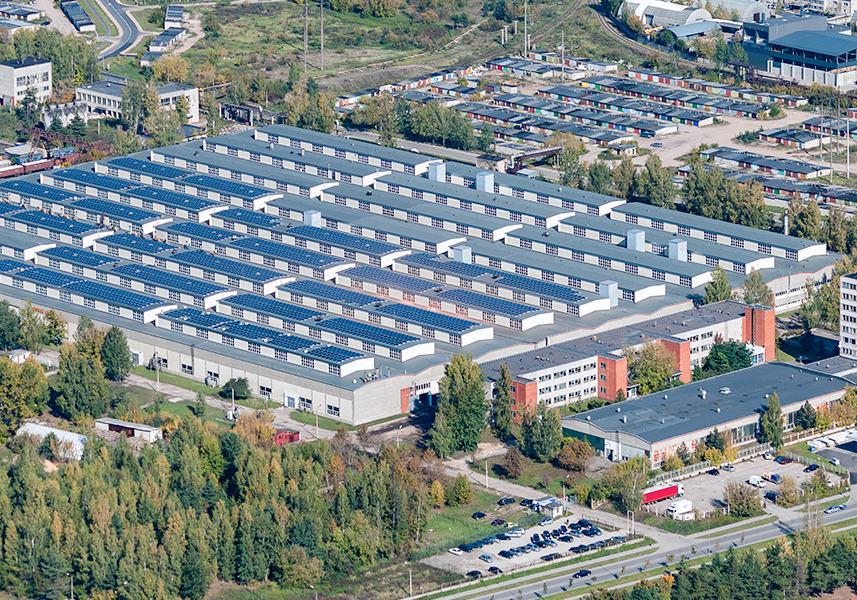

Factory Area

Monthly Capacity(Units)

Country Of Export
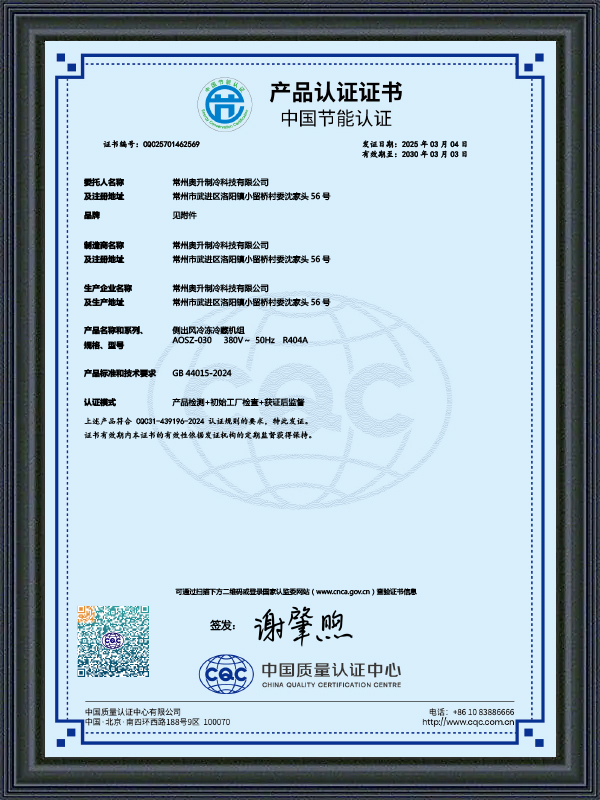
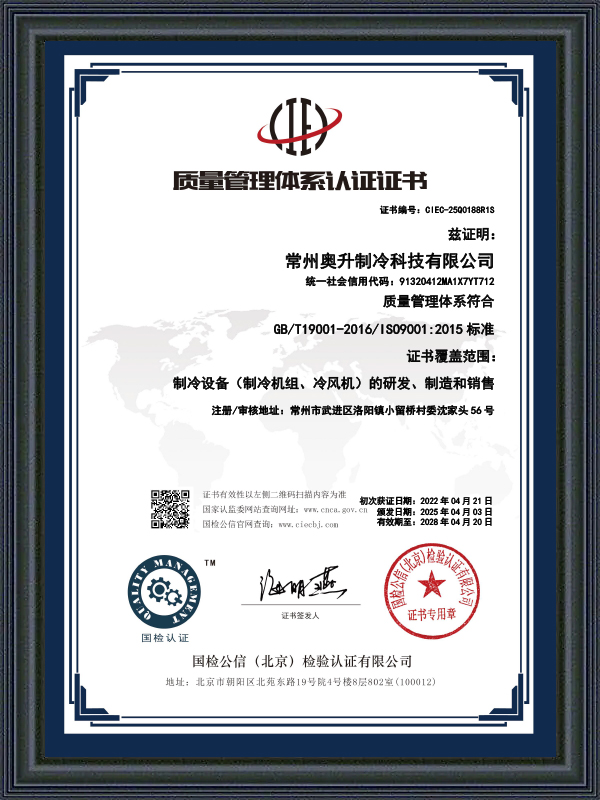
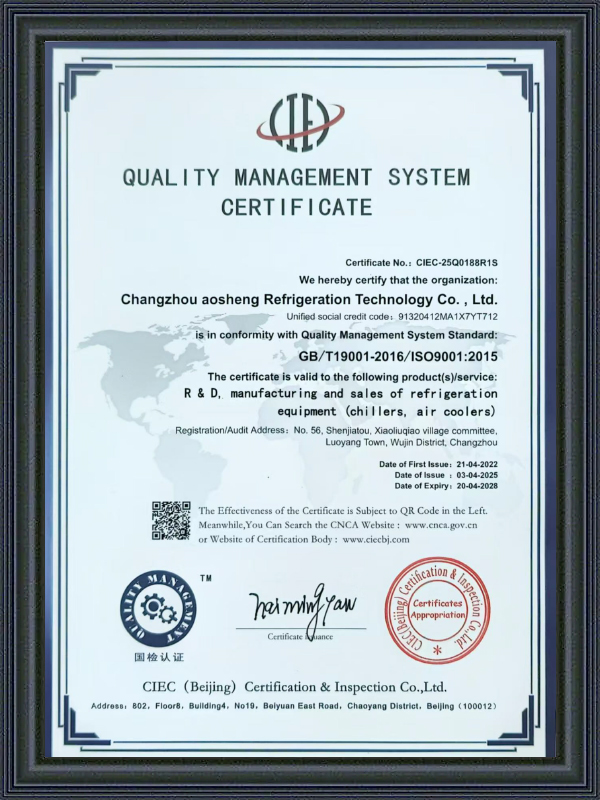
 Oct 09,2026
  Industry News
Sep 30,2026
Industry News
Sep 22,2026
Industry News
Sep 14,2026
Industry News
Industry News
Sep 30,2026
Industry News
Sep 22,2026
Industry News
Sep 14,2026
Industry News
Most buyers compare outdoor refrigeration condensing units by their nominal cooling capacity — the kilowatt figure printed on the datasheet. What that figure rarely makes clear is the ambient temperature at which it was measured. Industry convention typically rates condensing unit capacity at 32°C ambient, yet in many real-world installation environments — rooftops in southern China, outdoor plant rooms in the Middle East, sun-exposed side walls of supermarket buildings — ambient temperatures regularly reach 40°C to 46°C during peak summer months. At 43°C ambient, a unit rated at 10 kW at 32°C may deliver only 7.5 kW to 8 kW of usable cooling capacity, because the compressor must work against a significantly higher condensing pressure to reject heat into hotter surrounding air.
This capacity derating is not a product defect — it is a thermodynamic reality. The critical procurement practice is to request full performance curves from the manufacturer across the ambient temperature range expected at the installation site, and to size the unit based on worst-case summer conditions rather than rated conditions. At Aosheng, our condensing units are performance-tested and documented across a range of ambient conditions, giving engineers and installers the data they need to specify confidently for hot-climate deployments rather than discovering undersizing problems after commissioning.
An outdoor condensing unit installed with insufficient clearance around the condenser coil will recirculate its own hot discharge air back across the inlet face, artificially raising the effective ambient temperature seen by the unit and triggering the same capacity derating described above — even on a mild day. This phenomenon, known as hot air recirculation, is one of the most common causes of mysterious performance complaints on newly commissioned refrigeration systems, and it is entirely avoidable with correct placement during installation planning.
General clearance guidelines for outdoor condensing units with top-discharge axial fans are as follows, though specific requirements vary by model and manufacturer:
In constrained plant areas where adequate clearance is impossible to achieve, louvred discharge deflectors or duct extensions can be fitted to direct hot discharge air away from the inlet zone. This is a lower-cost solution than relocating the unit but requires careful aerodynamic design to avoid increasing system static pressure to a level that reduces fan airflow and defeats the purpose of the modification.
Outdoor refrigeration condensing units face relentless environmental exposure — ultraviolet radiation, rain, temperature cycling, industrial air pollutants, and in coastal installations, salt-laden air. The long-term structural integrity and appearance of the unit depends almost entirely on the quality of its sheet metal construction and the surface treatment applied before and after forming. These are not cosmetic concerns; corrosion that reaches the base metal of the cabinet progressively weakens structural rigidity, causes fastener holes to elongate, and eventually compromises the weatherproofing of electrical enclosures.
The production process for quality outdoor condensing unit cabinets involves multiple sequential treatments. Cold-rolled steel sheet is first cleaned, degreased, and phosphate-treated to create a micro-crystalline conversion coating that improves adhesion and provides a primary corrosion barrier. The treated sheet is then powder-coated using an electrostatic application process — typically with a polyester powder at 60–80 microns dry film thickness — and cured in a controlled-temperature oven. The cured powder coat forms a continuous, pinhole-free film that is far more durable in outdoor environments than liquid paint applied at equivalent thickness.
Aosheng's first-class sheet metal and spraying process follows this multi-stage treatment standard, producing cabinets that resist salt spray testing to 500 hours or beyond without base metal corrosion — a benchmark that distinguishes professional-grade outdoor equipment from lower-cost alternatives where surface treatment is abbreviated to reduce production time. For installations in coastal zones or industrial environments with elevated atmospheric corrosion, hot-dip galvanised steel substrate with powder topcoat provides an additional layer of protection that extends service life significantly beyond standard cold-rolled steel constructions.
The compressor is the highest-cost component in an outdoor condensing unit and the most expensive to replace when it fails. Understanding the protection mechanisms built into quality condensing units — and verifying that they are correctly commissioned — is one of the most practical steps an operator can take to extend compressor service life and reduce unplanned maintenance costs. The majority of compressor failures in the field are attributable to a small number of preventable causes, each of which has a corresponding protective feature in a well-specified unit.
| Failure Cause | Mechanism | Protective Feature |
|---|---|---|
| Liquid slugging | Liquid refrigerant enters compressor cylinder, causing mechanical damage | Crankcase heater, suction accumulator, superheat control |
| High discharge temperature | Overheated discharge gas degrades oil, damages valve plates | High-pressure cut-out, discharge temperature sensor with alarm |
| Short cycling | Rapid on/off cycling causes overheating and winding insulation breakdown | Anti-short-cycle timer (minimum 3–5 minutes off time) |
| Phase failure / reversal | Three-phase motor runs on two phases or reverse direction, causing overheating | Phase-failure and phase-sequence relay in control panel |
| Oil dilution at start-up | Refrigerant migrates into crankcase oil during off-cycle, reducing lubrication | Crankcase heater energised during compressor-off periods |
When sourcing a condensing unit, verifying that all of these protective features are factory-fitted rather than available as optional extras is a meaningful quality indicator. Aosheng's intelligent unit products incorporate these protections as standard, using components from major international and domestic brands to ensure reliable operation across the unit's service life.
The global phasedown of high Global Warming Potential (GWP) HFC refrigerants under the Kigali Amendment and regional regulations such as the EU F-Gas Regulation is directly affecting the specification of new outdoor refrigeration condensing units. Refrigerants that were standard choices as recently as five years ago — R-404A, R-507A, and to a lesser extent R-410A — are now subject to sales restrictions in many markets, and new equipment designed around these refrigerants carries increasing regulatory and commercial risk over a ten-to-fifteen-year service life.
For buyers specifying outdoor condensing units today, the practical refrigerant decision matrix looks broadly as follows:
Confirming that a new outdoor condensing unit is factory-designed and tested for a current lower-GWP refrigerant — not simply stated as "compatible" with a retrofit fluid — is an important procurement verification step. Components including compressor valve geometry, expansion device sizing, lubricant specification, and pressure vessel ratings should all be optimised for the intended refrigerant from the factory design stage.
As urban commercial development increases density and cold storage facilities are built in closer proximity to residential areas, noise emission from outdoor condensing units has become a significant compliance and community relations issue. Many municipalities now apply noise limits at property boundaries — typically in the range of 45 dB(A) to 55 dB(A) during daytime hours and 35 dB(A) to 45 dB(A) at night — that must be met as a condition of planning permission or operating licence. Understanding the noise characteristics of a condensing unit and the practical options for managing them is essential for any installation in a noise-sensitive location.
Condensing unit noise has three primary sources, each of which requires a different mitigation approach:
Where proximity to residential areas makes standard noise output unacceptable even with the above measures, purpose-built acoustic enclosures can be constructed around the condensing unit. These require careful aerodynamic design — sufficient free area in the louvred panels to maintain full inlet airflow without increasing fan static pressure — and should be assessed using specialist acoustic modelling before construction to confirm that target noise levels at the boundary will be achieved. Retrospective acoustic enclosure installation after a noise complaint has been received is significantly more expensive and disruptive than designing for it from the outset.
Modern outdoor refrigeration condensing units equipped with intelligent electronic controllers offer significantly more than basic temperature set-point control. The control features now available — either standard or as factory options on quality units — can reduce annual energy consumption by 15% to 30% compared to units operating with fixed-parameter controls, representing a payback period of two to four years on the additional investment in most commercial cold storage applications.
Standard condensing unit controls maintain a fixed minimum condensing pressure regardless of ambient temperature. On a cool night or in mild spring or autumn weather, the condensing pressure could safely drop well below the fixed minimum — reducing compressor discharge pressure, compressor lift, and therefore electrical power consumption. Floating condensing pressure control allows the set point to vary with ambient temperature, capturing this efficiency benefit automatically. In climates with significant seasonal temperature variation, the energy saving from this single feature can represent 8–12% of annual compressor energy consumption.
Condensing units supplied with electronic expansion valve (EEV) control continuously optimise refrigerant superheat at the evaporator outlet in response to real-time system conditions. Compared to fixed thermostatic expansion valves, EEVs maintain tighter superheat control across varying load conditions — preventing the efficiency losses caused by hunting in lightly loaded TEV systems and the flood-back risk during rapid load changes. The result is more stable evaporating temperature, higher average system COP, and reduced compressor wear from more consistent suction gas conditions.
Controllers with Modbus RTU or cloud-connected data logging allow operators and service contractors to monitor condensing unit operating parameters — suction pressure, discharge pressure, superheat, compressor run hours, and alarm history — remotely without site visits. This capability transforms maintenance from a scheduled event into a condition-based programme: service intervals can be timed to actual compressor hours and operating conditions rather than calendar dates, and developing faults such as progressive condenser coil fouling or gradual refrigerant undercharge can be identified from trending data before they cause a complete system failure and product loss event.
For exclusive deals and latest offers, sign up by entering your email address below.

We specialise in the refrigeration industry. Please feel free to contact us.
