


 English
 中文简体
中文简体 Español
Custom Water Cooled Condensing Units
Product Category
Water Cooled Condensing Units Manufacturers
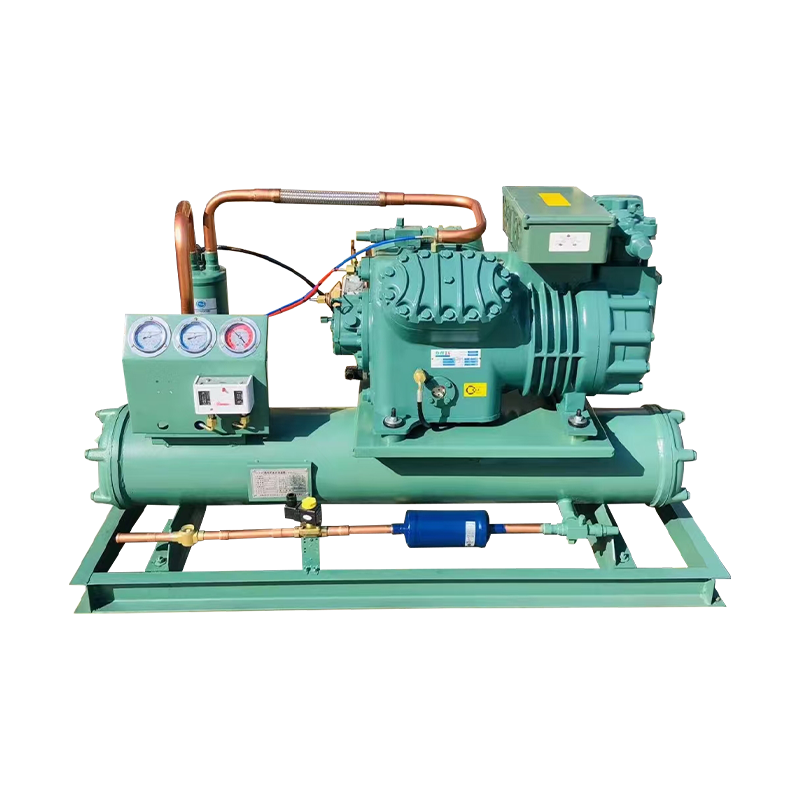
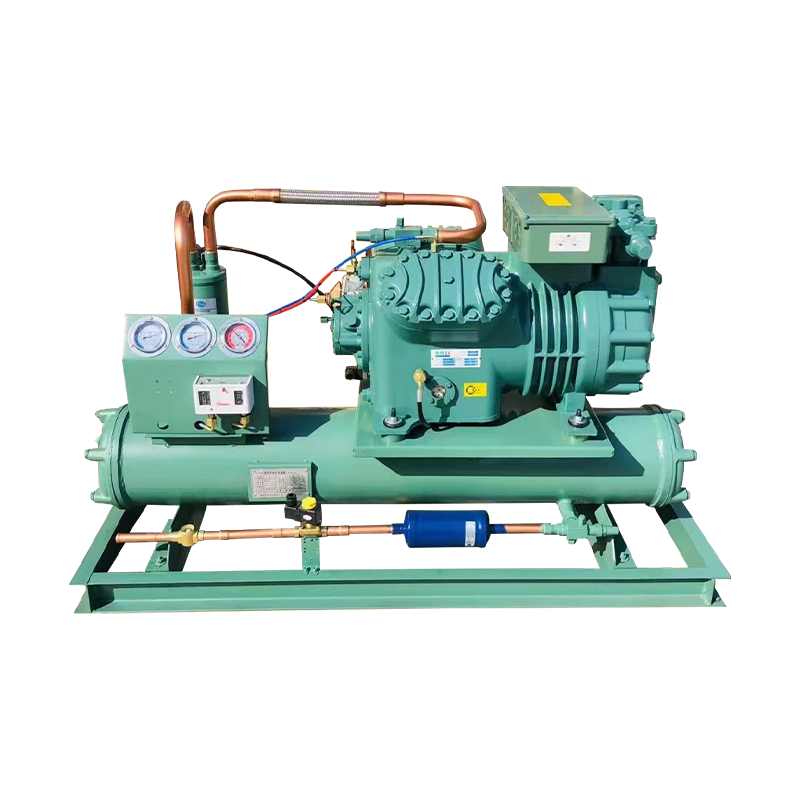
Product Overview
The WATER COOLING CONDENSING UNIT utilizes a water circulation cooling method, dissipating heat through a cooling tower or chilled water system. It features high cooling efficiency, stable operation, and suitability for high-load, continuous operation, making it an ideal choice for medium- to large-scale cold storage facilities and high-temperature environments.
Core Features
1. High-Efficiency Water Cooling
- Utilizing a shell-and-tube/plate condenser, heat exchange efficiency is 20%-30% higher than air cooling, making it particularly suitable for areas with high ambient temperatures.
- Controllable cooling water temperature ensures optimal unit operation and extends compressor life.
2. Energy and Power Savings
- With the same cooling capacity, it saves 15%-25% energy compared to air-cooled units, making it suitable for cold storage facilities operating 24/7.
- Compatible with variable frequency water pumps and cooling towers to further reduce energy consumption.
3. High Cooling Output
- Covering a wide cooling range (3HP to 50HP), it meets the needs of cold storage facilities ranging from small to medium-sized to large logistics cold chain centers. - Wide operating temperature range (-40°C to +10°C), supporting special processes such as quick freezing and ultra-low temperature.
4. Low-Noise Operation
- No outdoor fan noise, operating noise ≤60dB, suitable for locations requiring high quietness.
Product Highlights
- Efficient and Stable: Water-cooled heat dissipation is unaffected by ambient temperature, maintaining efficient cooling even in high summer temperatures.
- Energy-Saving and Environmentally Friendly: High Energy Efficiency Ratio (COP) reduces carbon emissions.
- Long Life: Low compressor load reduces failure rate by over 30%.
- Intelligent Control: Optional PLC automatic control system monitors water temperature, pressure, and other parameters in real time.
Applicable Scenarios
- Large cold chain logistics centers
- Food processing plants (quick freezing production lines, low-temperature workshops)
- Cold storage in high-temperature regions (South China, Middle East, etc.)
Water-Cooled vs. Air-Cooled Units Comparison
| Features | Water-Cooled Unit | Air-Cooled Unit |
|---|---|---|
| Heat Dissipation Method | Water Circulation Cooling (Requires Cooling Tower) | Forced Air Cooling |
| Energy Efficiency Ratio | High (15%-25% energy savings compared to air cooling) | Medium |
| Initial Investment | High (Requires a supporting water system) | Low |
| Maintenance Cost | Regular Condenser/Cooling Tower Cleaning | Only Condenser Fin Cleaning Required |
| Applicable Environments | Large Cold Storage, High-Temperature Areas | Small and Medium-Sized Cold Storage, Water-Scarce Areas |
| Noise | Low (≤60dB) | High (≤75dB) |
Selection Recommendations
- Water Cooling: Cold Storage > 100m³, 24/7 Operation, Ambient Temperature > 35°C.
- Air Cooling: Cold Storage < 100m³, Intermittent Operation, Water-Scarce Areas
About AUSSN
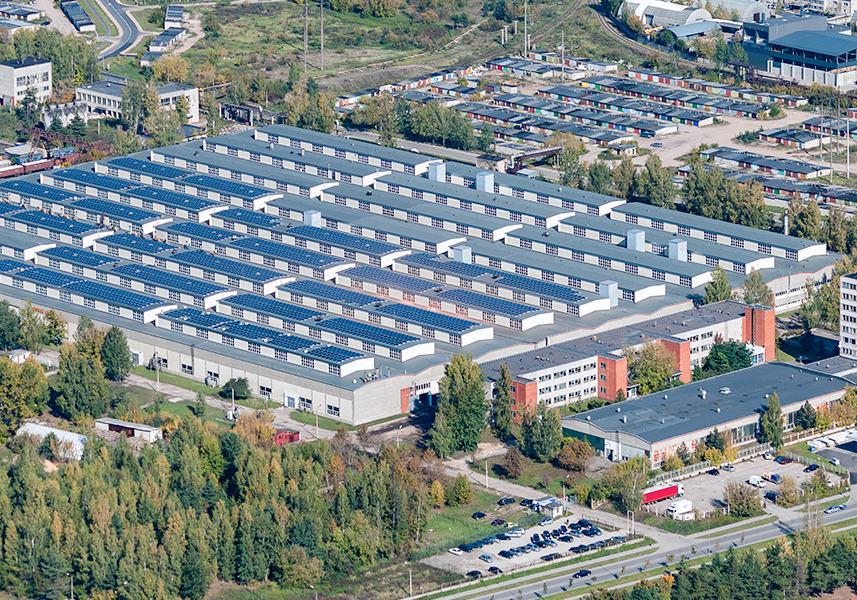
Changzhou Aosheng Refrigeration Technology Co., Ltd. is a professional manufacturer of condensing units that integrates research and development, design, manufacturing, sales, engineering installation and after-sales service. Water Cooled Condensing Units Manufacturers and OEM/ODM Water Cooling Condensing Units Factory in China. The condensing units produced by our company are widely used in commercial refrigerators, cold storage and other projects. The original accessories of the new intelligent unit products are all from major international and domestic brands. The refrigeration system is stable and reliable, with an extremely low failure rate. The first-class sheet metal and spraying process make product beautiful, generous, solid and durable. Our company's box type condensing unit has been specially improved for commercial refrigerators, making your refrigeration effect more perfect. Each product has undergone full process inspection standards to ensure that users can use it with confidence. Support Custom Water Cooled Condensing Units. Aosheng adheres to the corporate philosophy of "integrity-based, quality oriented, wholehearted and striving for excellence". With unremitting efforts and persistent pursuit, we have woven a sales network that covers the whole country and even the world, ensuring product quality,continuously strengthening and consolidating the market, and enhancing brand awareness and influence. Our company warmly welcome guests from all over the world to visit our factory for inspection, guidance, and business negotiations.
-

0+
Factory Area
-

0+
Monthly Capacity(Units)
-

0+
Country Of Export
Changzhou Aosheng
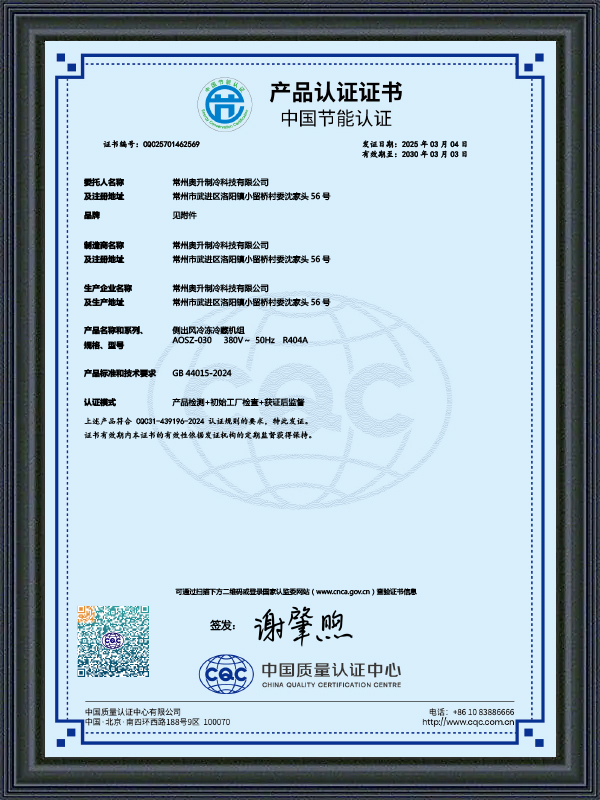
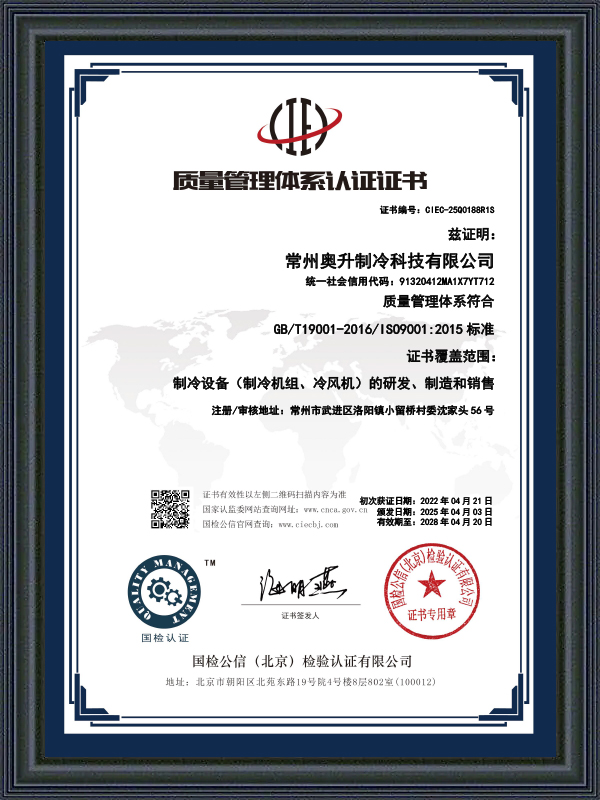
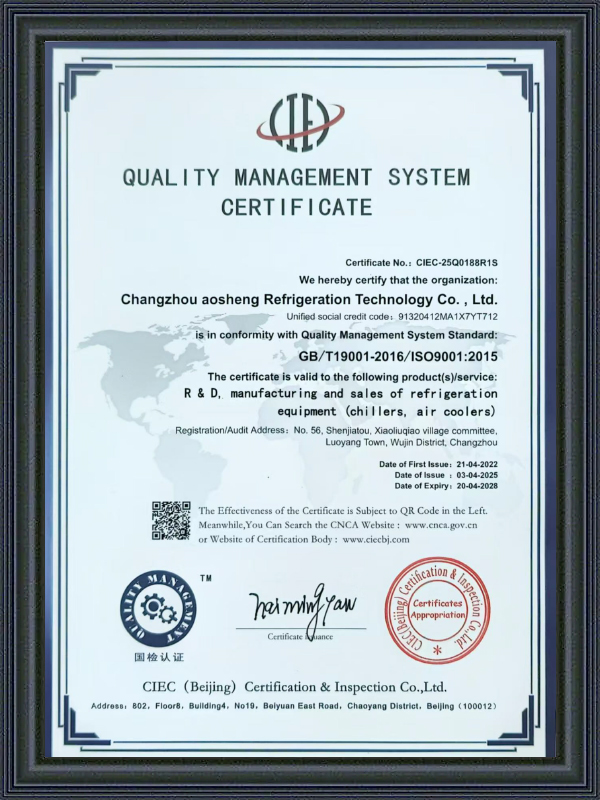
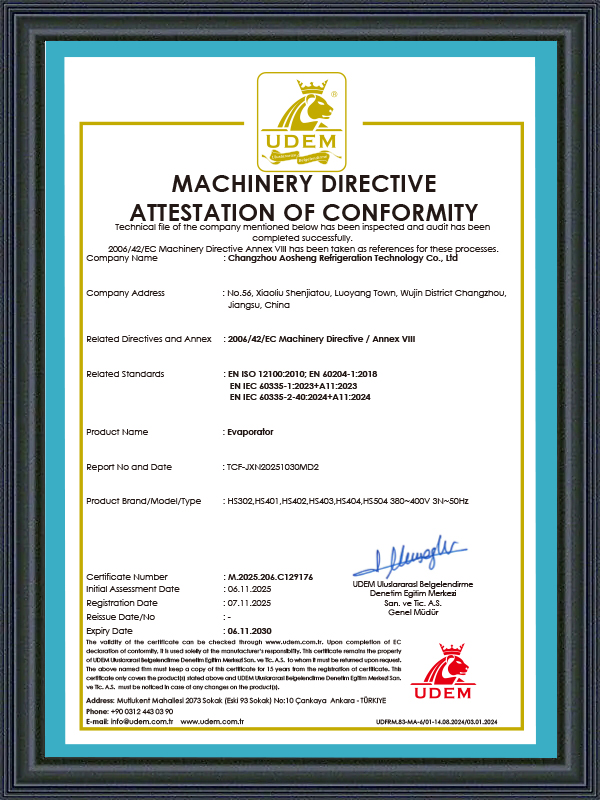
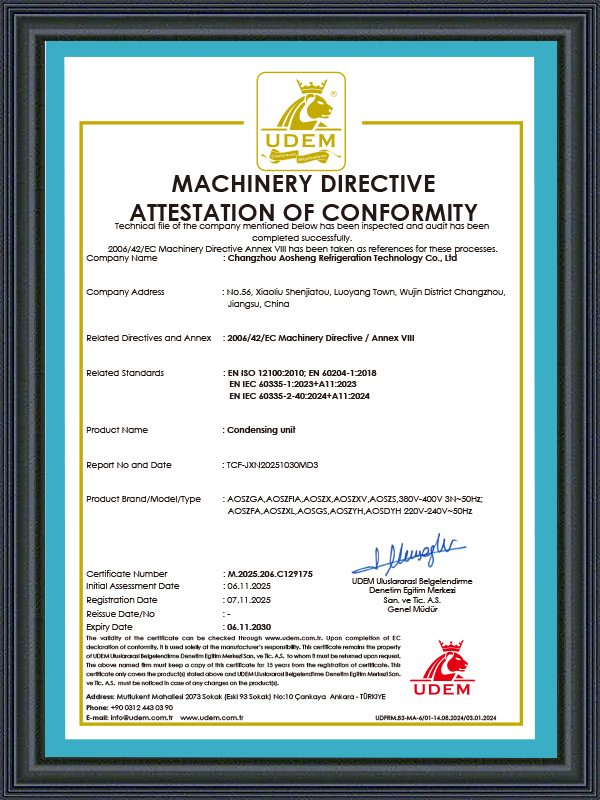
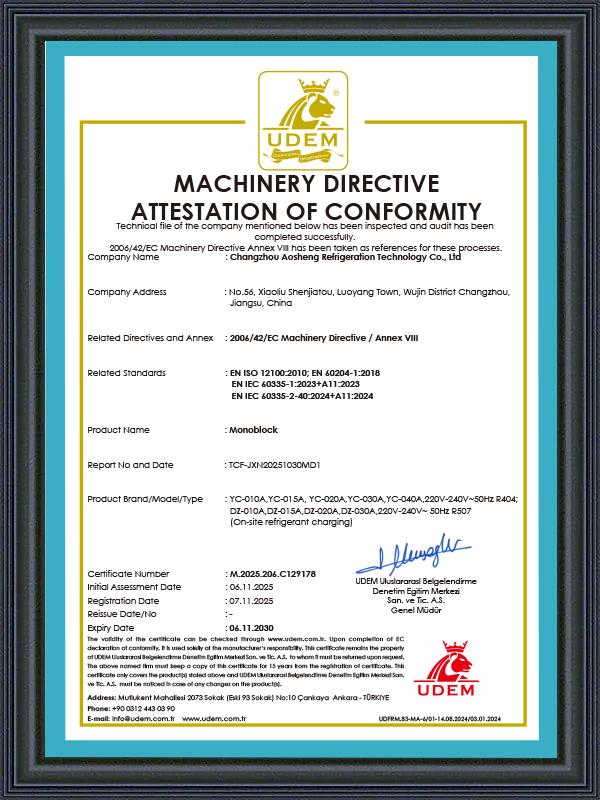
Certificate Of Honor
Latest News
Industry News
-
How to Adjust a TXV for Superheat: A Practical Step-by-Step Field Guide
 Oct 09,2026
  Industry News
-
1234ze Refrigerant: Key Properties, Pros, Cons, and Cold Room Design Notes
Sep 30,2026
Industry News
-
inverter for compressor: Applications, Selection Criteria, and Practical Guidance
Sep 22,2026
Industry News
-
Refrigeration Check Valves: What They Do and Why They Matter in Cold Rooms
Sep 14,2026
Industry News
Industry Knowledge
Advanced Operational Insights for Water Cooled Condensing Units
Water cooled condensing units are often selected for applications where stable condensing pressure, low operating noise, and high efficiency are priorities. Their long-term performance depends less on outdoor weather conditions and more on water-side management. Water quality, flow stability, and condenser cleanliness directly influence energy consumption, compressor reliability, and maintenance intervals.
Approach Temperature as a Key Performance Indicator
One of the most useful diagnostic parameters for water cooling condensing units is condenser approach temperature, defined as the difference between refrigerant condensing temperature and leaving water temperature. A low and stable approach temperature indicates efficient heat transfer, while a rising value often signals scale formation or reduced water flow.
For clean shell-and-tube condensers, an approach temperature of 2°C to 5°C is common. When the approach rises beyond this range under similar load conditions, condenser inspection is usually warranted.
Effect of Fouling Factor on Heat Transfer
Condenser sizing calculations include a fouling factor to account for expected mineral deposits and biological growth. If actual water quality is worse than the design assumption, heat transfer can deteriorate much faster than expected.
| Water Condition | Typical Fouling Risk | Recommended Action |
| Treated Closed Loop | Low | Annual inspection |
| Cooling Tower Water | Moderate to high | Routine water treatment |
| Hard Untreated Water | Very high | Frequent descaling required |
Pressure Drop and Pump Energy Consumption
A condenser with a very low pressure drop reduces pumping cost but may require a larger heat exchanger surface. Conversely, excessive water velocity increases pressure drop and raises pump energy consumption. Well-balanced designs optimize both heat transfer and hydraulic efficiency.
In many industrial systems, pump energy is significant enough that condenser water-side pressure drop should be evaluated alongside compressor performance.
Non-Condensable Gases and Their Impact
Air trapped in the refrigerant circuit accumulates in the condenser and creates an insulating barrier that elevates head pressure. Water cooled systems can mask this issue because cooling water temperatures remain stable, making rising condensing pressure more noticeable.
If condensing pressure remains unusually high despite clean tubes and adequate water flow, non-condensables should be considered as a possible cause.
Heat Recovery Opportunities
Water cooled condensing units can be integrated with desuperheaters or heat recovery systems to capture rejected heat for domestic hot water, cleaning processes, or space heating. In facilities with continuous refrigeration loads, this can significantly improve total energy utilization.
Food processing plants and hotels often realize substantial savings by reusing compressor waste heat that would otherwise be rejected to the cooling tower.
Tube Material Selection for Aggressive Water
Standard copper tubes are suitable for most treated water systems. When chloride concentration is high or seawater is used, cupronickel or titanium condensers provide much better corrosion resistance.
Selecting the correct tube material is often more cost-effective than frequent condenser replacement in corrosive environments.
Monitoring Parameters for Predictive Maintenance
- Entering and leaving condenser water temperatures.
- Refrigerant condensing pressure.
- Compressor amperage.
- Water pressure drop across the condenser.
- Water treatment chemistry reports.
When Water Cooling Condensing Units Provide the Greatest Benefit
Water cooled condensing units are especially advantageous in high-ambient climates, indoor mechanical rooms, and applications where low noise and stable condensing pressure are important. They are also well suited to facilities that can take advantage of heat recovery.
Although they require supporting infrastructure such as pumps, cooling towers, and water treatment systems, they often deliver superior energy efficiency and highly consistent refrigeration performance over the long term.
Be the First to Know
For exclusive deals and latest offers, sign up by entering your email address below.
-

We specialise in the refrigeration industry. Please feel free to contact us.
-
Quick Links
Home Products Solution About AUSSN Contact -
Prducts
Box Type Condensing Units Open Type Condensing Units Cold Room Evaporator Units Air Cooler Evaporator Monoblock Condensing Unit -
Contact Us
No.56, Xiaoliu Shenjiatou, Luoyang Town, Wujin District Changzhou, Jiangsu, China+86-0519-88991025
+86-15161135627
Copyright © Changzhou Aosheng Refrigeration Technology Co., Ltd. All Rights Reserved.
Water Cooling Condensing Units Factory
Custom Water Cooled Condensing Units
