


 English
 中文简体
中文简体 Español
Home / News / Industry News / How Does a Variable Frequency Hot Fluorine Unit Improve Heating Efficiency in Industrial Applications?
Industry News
A variable frequency hot fluorine unit is a refrigerant-based heating system that extracts thermal energy from a compressor's discharge gas — commonly referred to as "hot fluorine" or hot refrigerant gas — and transfers it to a process fluid or space heating circuit, while simultaneously using variable frequency drive (VFD) technology to modulate compressor speed in response to real-time load demand. This combination of heat recovery from compressor discharge and inverter-driven capacity control represents one of the most energy-efficient approaches to industrial and commercial heating available today. Understanding how these two technologies work together, and where they deliver the greatest practical value, is essential for engineers and facility managers evaluating heating system upgrades or new installations.
Content
In refrigeration and heat pump terminology, "fluorine" refers to the fluorocarbon refrigerant circulating within the system — compounds such as R410A, R32, R134a, or R22, all of which contain fluorine atoms in their molecular structure. The term "hot fluorine" specifically refers to the superheated refrigerant gas leaving the compressor discharge port before it enters the condenser. At this point in the refrigeration cycle, the refrigerant is at its highest temperature and pressure — typically between 60°C and 120°C depending on the refrigerant type, compression ratio, and operating conditions. This high-temperature gas carries substantial thermal energy that conventional refrigeration systems simply reject to the ambient environment through the condenser.
A hot fluorine unit intercepts this discharge gas before condensation occurs and routes it through a dedicated heat exchanger — typically a brazed plate heat exchanger or a shell-and-tube heat exchanger — where the thermal energy is transferred to a secondary circuit carrying water, glycol solution, or process fluid. The refrigerant gas condenses in this heat exchanger, releasing its latent heat of condensation in addition to the sensible superheat, and the cooled liquid refrigerant then continues through the standard refrigeration cycle. This heat recovery mechanism does not reduce the cooling capacity of the refrigeration system — it simply captures energy that would otherwise be wasted and redirects it for productive use.
The practical implication is significant: for every kilowatt of electrical power consumed by the compressor, a hot fluorine unit can deliver 1.5 to 3.5 kW of useful heating output depending on operating conditions, refrigerant type, and heat exchanger sizing. This coefficient of performance (COP) for heating is fundamentally superior to direct electric resistance heating, which can only deliver 1 kW of heat per kilowatt of electricity consumed, and it is also superior to conventional boiler-based systems that typically achieve efficiencies of 85% to 95% of fuel energy input.
The variable frequency drive component is what transforms a standard hot fluorine heat recovery unit into a high-efficiency, precisely controllable heating system. A VFD — also called an inverter drive or frequency converter — controls the speed of the compressor motor by varying the frequency of the electrical supply to the motor, typically across a range of 25 Hz to 75 Hz (corresponding to approximately 30% to 120% of nominal motor speed on a 50 Hz supply). By modulating compressor speed, the VFD directly controls refrigerant mass flow rate and therefore the system's heating and cooling capacity in real time.
Conventional fixed-speed compressor systems operate in binary mode — either running at full capacity or switched off — cycling on and off as the controlled variable (temperature, pressure, or load) moves above and below setpoint. This on/off cycling creates several operational problems: thermal shock to compressor components from repeated start-stop cycles, temperature fluctuations in the heated process stream, high inrush current at each start, and poor part-load efficiency because the system always operates at full capacity regardless of actual load. A variable frequency hot fluorine unit eliminates these problems by matching compressor output precisely to demand. When heating load is low, the compressor runs at reduced speed — perhaps 40% to 60% of full speed — consuming proportionally less electrical power while maintaining the process temperature within a tighter band. When full heating output is required, the compressor accelerates to maximum speed within seconds without the mechanical stress of a direct-on-line start.
The energy saving from variable speed operation is particularly pronounced because compressor power consumption does not scale linearly with speed — it follows a cubic relationship at the theoretical limit (though real compressor efficiency curves are more complex). Reducing compressor speed to 70% of full speed can reduce power consumption by 30% to 50% compared to full-speed operation at the same load point, depending on the compressor type and operating conditions. Over a full operating year with typical load variation profiles, this part-load efficiency improvement commonly reduces annual energy consumption by 20% to 40% compared to equivalent fixed-speed systems.
A complete variable frequency hot fluorine unit integrates several subsystems that must be correctly specified and matched to deliver reliable, efficient operation. The principal components and their functional roles are described below.
Specifying a variable frequency hot fluorine unit correctly requires understanding the key performance parameters and how they vary with operating conditions. The table below summarizes typical performance characteristics for a mid-range air-source variable frequency hot fluorine unit using R410A refrigerant:
| Parameter | Full Load (100% Speed) | Part Load (60% Speed) | Minimum Load (30% Speed) |
|---|---|---|---|
| Heating Capacity | 100% | 55–65% | 25–35% |
| Power Consumption | 100% | 40–50% | 15–25% |
| COP (Heating) | 3.2–3.8 | 3.5–4.2 | 3.0–3.6 |
| Supply Water Temperature | 45–65°C | 45–65°C | 45–60°C |
| Ambient Operating Range | −15°C to +43°C | −15°C to +43°C | −15°C to +43°C |
A notable feature of the data is that COP is often highest at intermediate speeds rather than at full load, because the compressor operates at a more favorable pressure ratio when not at maximum speed. This part-load COP advantage means that in applications with variable heating demand — which describes the majority of real-world installations — the annual average COP of a variable frequency unit will exceed the rated full-load COP, further improving energy economics compared to fixed-speed alternatives.
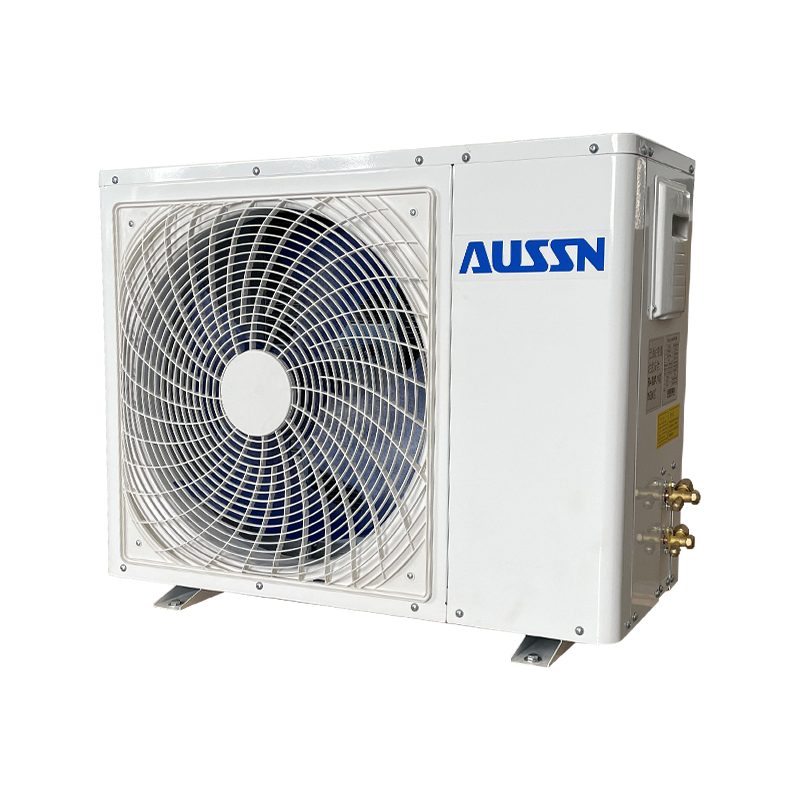
Variable frequency hot fluorine units are deployed across a diverse range of industrial, commercial, and agricultural applications where the combination of high-efficiency heating, precise temperature control, and simultaneous cooling capability delivers the greatest value.
Realizing the full performance potential of a variable frequency hot fluorine unit requires attention to installation quality, system integration, and ongoing maintenance that differs in several respects from conventional fixed-speed refrigeration or boiler-based heating systems. Incorrect installation is the most common cause of underperformance and premature component failure in inverter-driven refrigeration systems.
Refrigerant pipework sizing is critical in variable speed systems because the compressor operates across a wide flow range. Suction and discharge lines must be sized for adequate refrigerant velocity at minimum compressor speed — typically 4 to 6 m/s in vertical suction risers — to ensure oil return to the compressor even when mass flow is low. Oversized pipework that provides acceptable velocity at full speed may allow oil pooling at reduced speed, eventually starving the compressor of lubrication. Pipe sizing calculations must therefore be performed for the minimum operating speed condition, not the maximum.
VFD installation requires careful attention to electromagnetic compatibility (EMC). Inverter drives generate high-frequency switching noise that can interfere with control systems, sensors, and communication networks in the facility. Proper EMC practice includes installing shielded motor cables with grounded shields at both ends, maintaining physical separation between inverter power cables and signal wiring, and using line reactors or filters on the VFD input to limit harmonic injection into the mains supply. Compliance with EN 61800-3 or equivalent local EMC standards is typically required for commercial and industrial installations.
Routine maintenance intervals for variable frequency hot fluorine units are generally comparable to those of conventional refrigeration systems — compressor oil analysis annually, heat exchanger inspection and cleaning every six to twelve months, refrigerant charge verification annually — with the addition of VFD-specific checks including DC bus capacitor condition monitoring, cooling fan operation verification, and drive parameter backup. Most modern VFDs provide onboard diagnostics and operating history logs that facilitate condition-based maintenance scheduling, reducing maintenance costs while improving reliability compared to fixed-interval service programs.

For exclusive deals and latest offers, sign up by entering your email address below.

We specialise in the refrigeration industry. Please feel free to contact us.
