


 English
 中文简体
中文简体 Español
Home / News / Industry News / What Factors Should You Consider When Choosing Cold Room Evaporators for Your Cold Storage Facility?
Industry News
Selecting the right evaporator for a cold room is one of the most consequential decisions in refrigeration system design. Get it right and the cold storage facility maintains precise temperatures, consumes energy efficiently, protects product quality, and requires minimal unplanned maintenance. Get it wrong and the consequences accumulate quickly — inadequate cooling capacity, excessive frost build-up, uneven temperature distribution, product dehydration, and compressor short-cycling that accelerates wear across the entire refrigeration circuit. The evaporator is the component where refrigeration capacity is actually delivered to the stored product, and every aspect of its specification needs to reflect the real-world demands of the application rather than generic catalogue defaults.
This guide walks through the key technical and practical factors that determine which cold room evaporator is right for a specific cold storage application, from temperature regime and room dimensions through to defrost method, airflow pattern, and coil construction material.
Content
The operating temperature of the cold room is the single most important parameter in evaporator selection, and it must be established with precision before any other specification decision is made. Cold storage applications span an enormous temperature range — from above +10°C for certain fruit and vegetable stores through to -30°C or below for deep-frozen fish, ice cream, and long-term frozen food storage — and evaporators designed for one part of this range will perform poorly or fail entirely if applied in another.
The evaporating temperature — the temperature at which the refrigerant boils inside the coil — is typically set 8°C to 12°C below the required room air temperature for standard refrigerated applications, and 10°C to 15°C below for freezer applications. This temperature difference, known as the Design Temperature Difference (DTD) or Delta T, has a profound effect on both the evaporator's capacity and the rate at which frost accumulates on the coil surface. A smaller DTD produces more efficient heat transfer with less frost formation and less product dehydration, but requires a larger coil surface area to achieve the same capacity. A larger DTD allows a physically smaller coil but accelerates frost build-up and increases the frequency of defrost cycles needed to maintain performance.
For fresh produce, dairy, and other humidity-sensitive products stored above 0°C, specifying a DTD of no more than 5°C to 7°C is generally recommended to minimise moisture loss from the product surface — a consideration that directly determines the evaporator coil size and the number of units required to cover the room's cooling load.
An evaporator can only be correctly sized once the total cooling load of the cold room has been calculated. Underestimating the load leads to an undersized evaporator that runs continuously without achieving the target temperature, while overestimating results in an oversized unit that short-cycles, produces excessive airflow, dries out products, and increases capital cost unnecessarily. A comprehensive cooling load calculation accounts for all heat sources entering or generated within the cold room.
The primary components of a cold room cooling load include:
Once the total cooling load is established in kilowatts, the evaporator capacity must be selected to match — accounting for the fact that published evaporator capacities are stated at specific DTD values that may differ from the application's design DTD. Manufacturers provide correction factors that allow capacity values from their performance tables to be adjusted to the actual operating conditions of the installation.
All evaporators operating below the dew point of the room air will accumulate frost on the coil surface over time, and that frost must be periodically removed to maintain heat transfer efficiency. The method used to defrost the coil is a fundamental design choice that affects energy consumption, defrost cycle frequency, mechanical complexity, and the risk of temperature spikes in the cold room during defrost periods.
In rooms operating above approximately +2°C, natural air defrost — where the fans continue running during a compressor-off period and warm room air melts the light frost that forms — is the simplest and most energy-efficient option. It requires no additional heating elements and produces no significant temperature rise in the room. However, it is only effective when room temperatures are consistently above 0°C and frost accumulation rates are modest.
Electric resistance heaters embedded in or mounted around the coil are the most widely used defrost method for medium and low-temperature evaporators. Electric defrost is reliable, controllable, and straightforward to install and maintain. Its main disadvantage is energy consumption — the electrical energy used to melt frost must subsequently be removed by the refrigeration system, adding to the overall energy cost of operation. For freezer stores at -18°C to -25°C, electric defrost cycles typically run two to four times per day, with each cycle lasting 20 to 40 minutes depending on frost load and heater output.
Hot gas defrost uses discharge gas from the compressor, diverted directly into the evaporator coil, to melt frost from the inside of the tubes. This approach is more energy-efficient than electric defrost because the heat is recovered from the refrigeration cycle rather than generated by electrical resistance. Hot gas defrost defrosts the coil more uniformly, produces a shorter defrost cycle, and is particularly advantageous in large multi-evaporator systems where multiple units can be defrosted in rotation without interrupting refrigeration to the store. The additional pipework, valves, and controls required make hot gas defrost more complex and expensive to install, which makes it most cost-effective on larger systems where operational energy savings justify the capital investment.
The way an evaporator distributes cooled air throughout the cold room is as important as its thermal capacity. Poor air distribution creates temperature stratification — warm zones near the floor or at the back of the room, cold zones directly under the evaporator — that results in uneven product temperatures, localised frost damage, and inaccurate thermostat readings. The evaporator must be selected and positioned to achieve uniform air coverage across the full room volume.
Ceiling-mounted evaporators are the most common configuration in walk-in coolers, cold stores, and blast chillers. They discharge cooled air horizontally along the ceiling and return warmer room air from the floor level through the unit's inlet, creating a circulation pattern that covers the full room length when the unit is correctly sized and positioned. The throw distance — how far the discharged air travels before losing velocity and dropping — must be matched to the room length, and manufacturers publish throw distance data for each model at standard fan speeds.
For long cold stores — typically those exceeding 15 metres in length — a single evaporator at one end may not provide adequate air distribution to the far end of the room. In these cases, two smaller evaporators positioned at each end, blowing towards each other, or a central unit with dual discharge nozzles, provides more uniform coverage than a single large unit. The additional capital cost of two units is generally justified by the improvement in temperature uniformity and the reduction in product losses from temperature variation.
EC (electronically commutated) fan motors are increasingly specified on cold room evaporators because they allow fan speed to be modulated in response to actual cooling demand, reducing energy consumption during periods of light load. In standard on/off refrigeration systems, reducing fan speed during the compressor-off period — or switching to a lower speed mode overnight when door openings are infrequent — can reduce fan energy consumption by 50% or more without compromising temperature control. EC fans also run quieter than standard AC motor fans, an important consideration for cold rooms adjacent to food preparation or customer-facing areas.
The material from which the evaporator coil is constructed must be matched to the stored product and the cleaning regime of the cold room. Standard cold room evaporators use aluminium fins bonded to copper tubes — a construction that provides excellent heat transfer at moderate cost. However, aluminium fins are vulnerable to corrosive attack in specific environments, and selecting the wrong coil material can result in coil degradation, refrigerant leaks, and premature equipment failure within a few years of installation.
The following table summarises coil material recommendations for common cold storage applications:
| Application | Corrosion Risk | Recommended Coil Material |
|---|---|---|
| General refrigerated storage | Low | Aluminium fins / copper tubes |
| Seafood and fish storage | High (salt, ammonia) | Epoxy-coated coil or stainless steel |
| Fruit and vegetable cold stores | Moderate (organic acids) | Epoxy-coated or aluminium alloy fins |
| Meat processing and storage | Moderate–high (cleaning chemicals) | Stainless steel or hot-dip galvanised casing |
| Pharmaceutical cold rooms | Low–moderate | Standard aluminium fins with powder-coated casing |
| Ammonia refrigeration systems | Extreme (copper incompatible) | All-aluminium or stainless steel coil |
Epoxy coatings applied over standard aluminium fin coils provide a cost-effective corrosion barrier for moderate-risk environments. In highly aggressive environments such as seafood stores with high ambient ammonia concentrations from decomposing product, full stainless steel coil construction is a more reliable long-term solution despite its higher upfront cost — the cost of replacing a corroded evaporator within three years of installation far exceeds the initial premium for a more durable specification.
The decision to install one large evaporator or multiple smaller units should not be made on cost alone. Multiple evaporators provide inherent redundancy — if one unit requires maintenance or suffers a fan motor failure, the remaining units continue to provide partial cooling, limiting temperature rise and protecting stored product until repairs are completed. This redundancy is particularly valuable in high-value cold stores where product losses from a complete cooling failure would far outweigh the additional capital cost of a second evaporator.
In cold rooms with a single evaporator, a fan motor failure, blocked drain, or defrost control fault can compromise the entire room's temperature within hours. Specifying at least two evaporators, each sized to provide 60–70% of the total cooling load, ensures that the room can be maintained at or near the target temperature with one unit out of service — a straightforward redundancy strategy that significantly reduces operational risk in critical cold chain applications including pharmaceutical storage, high-value fresh produce, and export food facilities.
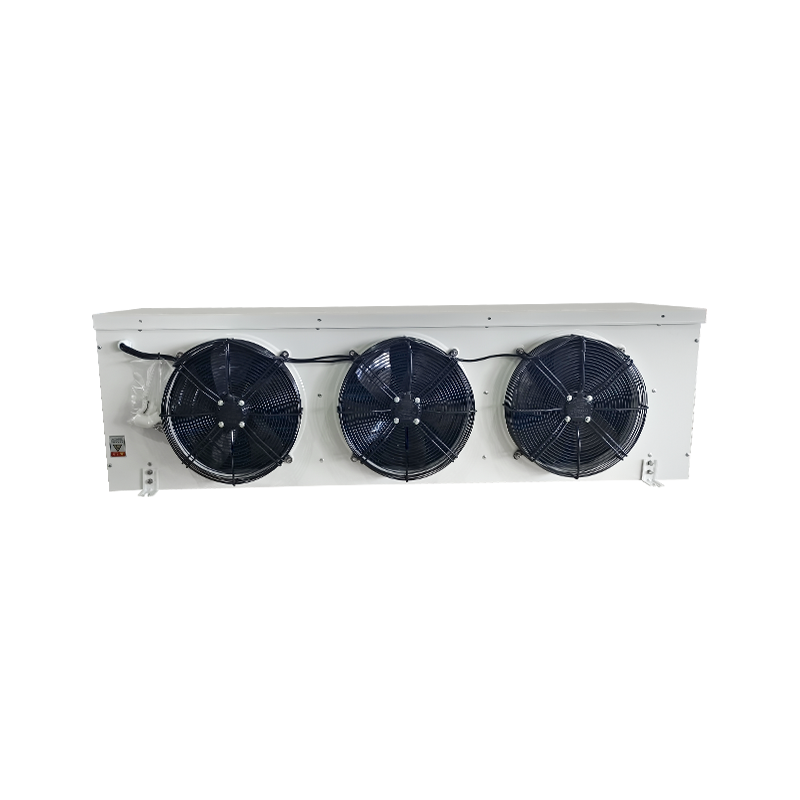
Before committing to a specific evaporator model and quantity, working through the following checklist ensures that all critical selection parameters have been addressed:
Taking the time to address each of these factors systematically before finalising the evaporator specification produces a cold storage installation that operates reliably, consumes energy efficiently, protects product quality, and requires straightforward maintenance throughout its service life. Shortcuts taken at the specification stage invariably result in more complex and costly problems once the system is in operation.
For exclusive deals and latest offers, sign up by entering your email address below.

We specialise in the refrigeration industry. Please feel free to contact us.
