

 English
 中文简体
中文简体 Español
Home / News / Industry News / 1234ze Refrigerant: Key Properties, Pros, Cons, and Cold Room Design Notes
Industry News
Ask a room full of refrigeration engineers about 1234ze refrigerant and you will get a range of reactions, from enthusiasm to careful caution. That is normal for any fluid moving from a niche into mainstream commercial refrigeration. What is no longer in question is that R-1234ze has earned a permanent place in the low-GWP toolbox, especially in chillers, heat pumps, and medium-temperature systems.
We manufacture condensing units, evaporators, and monoblock equipment for commercial cold storage, so we rarely discuss a refrigerant in the abstract. Every decision shows up somewhere practical: compressor displacement, pipe diameter, oil return, defrost strategy, and the skills of the technician who will one day open the panel. This guide shares what we have learned about R-1234ze from that angle.
Content
R-1234ze belongs to the HFO family of hydrofluoroolefins, not the HFC family. Its chemical name is trans-1,3,3,3-tetrafluoropropene, and the isomer used in most refrigeration and heat pump equipment is written as R-1234ze(E). A second isomer, R-1234ze(Z), has a higher boiling point and is mainly used in high-temperature heat pump work.
Two numbers explain why the fluid exists at all. Its ozone depletion potential is zero, and its 100-year global warming potential sits in the low single digits, commonly quoted as 7 under IPCC AR4 and about 1.4 under AR5. Compare that with roughly 1430 for R-134a and close to 3900 for R-404A. With the Kigali Amendment, the European F-Gas Regulation, and the US AIM Act all pushing HFC consumption downward, that gap is the entire business case.
R-1234ze is also an A2L refrigerant: mildly flammable under ASHRAE Standard 34 and ISO 817, with a low burning velocity and a relatively high lower flammability limit. A2L is entirely workable, since thousands of systems already run on it, but it does change charge limits, leak detection, ventilation, and service procedures. It has to be designed for, not bolted on afterwards.
Data sheets list dozens of numbers. For equipment selection, these are the ones that decide the layout of a plant room:
The comparison below is a planning-level summary rather than a selection table. Final figures depend on the compressor, the operating envelope, and the component supplier, so always confirm against approved data before you fix a design.
| Property | R-1234ze(E) | R-134a | R-404A |
|---|---|---|---|
| Chemical family | HFO | HFC | HFC blend |
| ASHRAE safety class | A2L | A1 | A1 |
| Ozone depletion potential | 0 | 0 | 0 |
| GWP, 100-year, indicative | About 1 to 7 | About 1430 | About 3900 |
| Normal boiling point | About -19 °C | About -26 °C | About -46 °C |
| Critical temperature | About 109 °C | About 101 °C | About 72 °C |
| Volumetric capacity | Lower than R-134a | Baseline | High, suited to low-temperature DX |
| Typical duty today | Chillers, heat pumps, medium-temperature refrigeration | Medium-temperature chillers and DX circuits | Low-temperature commercial refrigeration |
| Lubricant | POE | POE or PAG | POE |
The most important line in that table is not a number but a warning: R-1234ze is not a drop-in replacement for R-134a. Field reports of double-digit losses in capacity and efficiency from simple charge swaps are common, and compressors approved for one fluid are not automatically approved for the other. A proper conversion means a different compressor, re-checked heat exchangers, a new expansion device, updated controls, and refrigerant detection. Treating it as a gas swap is how projects end up disappointing.
Adoption so far is concentrated in three areas:
Where R-1234ze is usually not the answer is deep-freeze duty. Low-temperature freezer rooms near -25 °C to -35 °C still favour CO2 or established HFC replacements, because the pressure levels and volumetric capacity of R-1234ze make the equipment large and the efficiency harder to defend.
For medium-temperature cold rooms, a water-cooled condensing unit is often the most efficient way to reject heat in a tight plant room or on a high-ambient site, and it pairs well with a low-GWP refrigerant strategy.
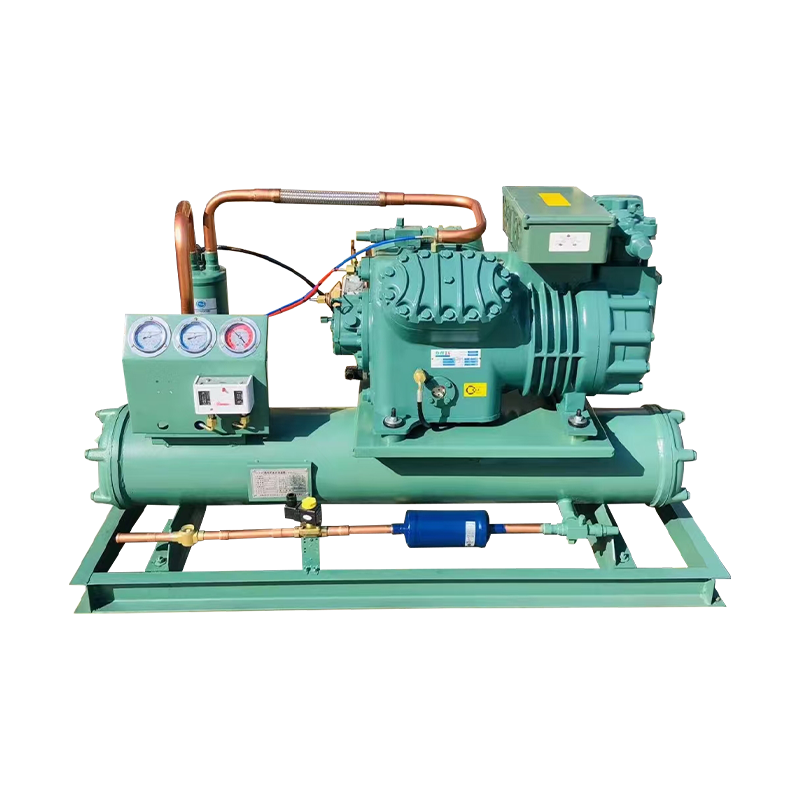 Water Cooled Condensing Units ManufacturersMedium To Low Temperature Water Cooling Condensing UnitView Product →
Lower volumetric capacity and lower pressures ripple through the whole system. In practice, a refrigerant change usually means more coil surface, a different refrigerant distribution approach, and a review of the temperature difference you are prepared to accept between room air and evaporating temperature. Shorter temperature differences improve efficiency and product quality but demand larger coils.
For fast pull-down duty in medium-temperature rooms, an evaporator designed for a controlled high temperature difference keeps the room stable without oversizing the plant.
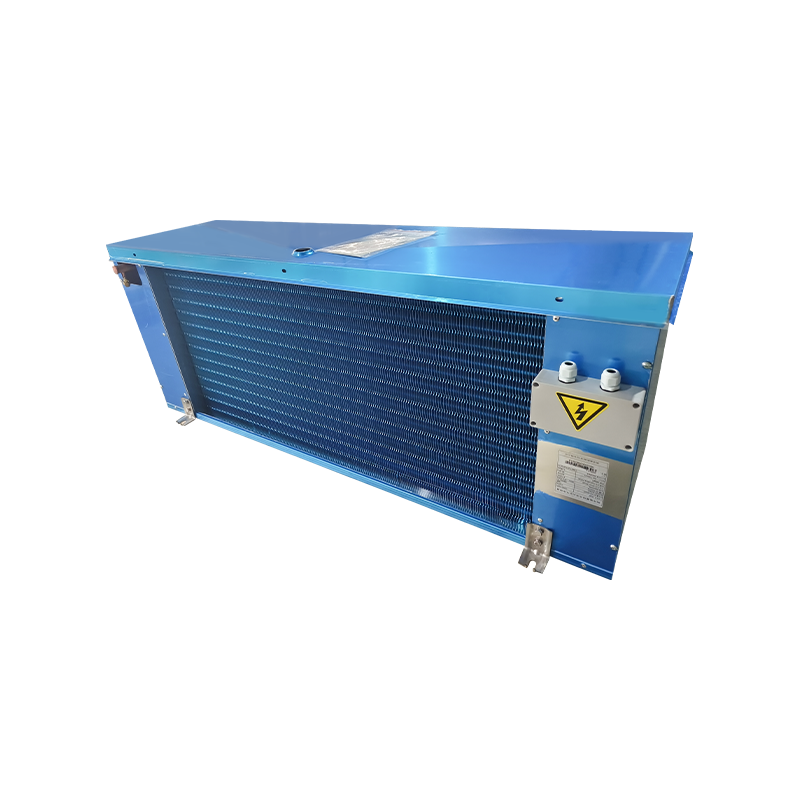 Middle Temperature (0~-25℃) Rapid Pull-Down EvaporatorThe Middle Temperature (0°C to -25°C) Rapid Pull-Down Evaporator — your secret weapon for fast, efficient, and precise cooling where speed matters most. Engineered for...View Product →
Controls deserve equal attention. Once the refrigerant itself carries a much smaller carbon footprint, the remaining environmental impact comes from energy consumption, and that is decided at part load. Variable frequency operation, floating suction pressure, and demand-based defrost all matter more than the fluid in the pipe. On that front, a variable frequency hot fluorine unit gives you capacity modulation and hot gas defrost from the same package, which reduces both running hours and electrical demand in medium-temperature cold storage.
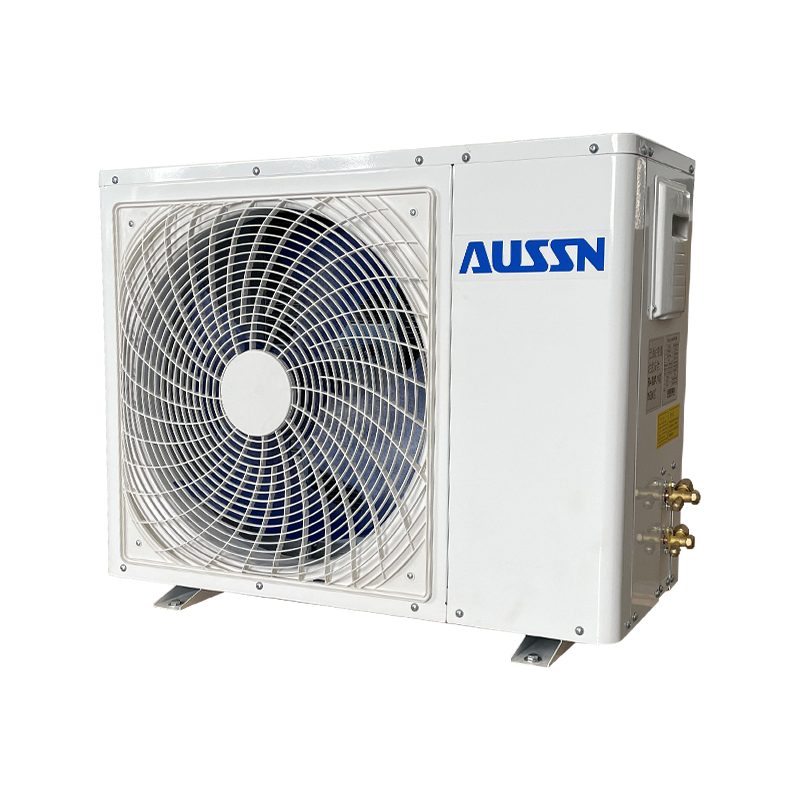 Variable Frequency Hot Fluorine Unit ManufacturersAi Variable-Frequency Temperature Control Variable Frequency Hot Fluorine UnitView Product →
Before a low-GWP refrigerant goes into a specification, we walk project teams through this checklist:
No. Capacity and efficiency both suffer, the lubricant and expansion device may not behave as expected, and the warranty position becomes unclear. A conversion is an engineered project, not a gas swap.
It is manageable, but it is not free. Charge limits, leak detection, signage, and ventilation all need attention, and small enclosed rooms are exactly where those rules bite hardest.
Yes, and that is one of its strengths. The very high critical temperature keeps performance predictable at high ambient conditions, which matters for projects in southern Asia, the Middle East, and Latin America.
If you are weighing refrigerant options for a cold room, a commercial cold storage facility, or a plant that needs both cooling and heating, we are glad to work through the details with you. Our range of condensing units covers air-cooled, water-cooled, side outlet, top outlet, and variable frequency configurations, and we will help you match the machine, the evaporator, and the controls to the fluid and the duty you have chosen. Send us your room conditions and we will come back with a practical selection rather than a catalogue number.
For exclusive deals and latest offers, sign up by entering your email address below.

We specialise in the refrigeration industry. Please feel free to contact us.