


 English
 中文简体
 Español
Home / News / Industry News / Electric Motor With VFD: How Variable Speed Drives Improve Refrigeration
Industry News
An electric motor with VFD is not a special breed of motor. In most refrigeration plants it is an ordinary three-phase induction motor, sometimes a permanent-magnet or EC motor, paired with a variable-frequency drive that reshapes the voltage and frequency feeding it. The shaft still turns because of a rotating magnetic field; the drive simply decides how fast that field rotates and how much torque the motor produces at any given moment.
That single change in the power supply has a large effect on how a cold room behaves. Compressors, evaporator fans and pumps almost never need to run flat out all day. When the motor can slow down instead of switching on and off, temperatures hold tighter, starting currents drop, and energy use follows the load curve rather than the clock. The notes below are the practical version of what we explain to engineers specifying condensing units for cold rooms and commercial cabinets.
Content
A conventional drive works in three stages. A rectifier turns the incoming AC supply into DC, a DC bus with capacitors smooths it, and an inverter switches that DC back into a three-phase output whose frequency and voltage you can adjust. Raise the frequency and the motor speeds up; lower it and the motor slows down, with torque managed either by keeping the voltage-to-frequency ratio roughly constant or by closed-loop vector control.
Three consequences matter on site:
Many smaller drives also accept a single-phase input and produce a three-phase output, which is convenient in light commercial work where a three-phase supply is simply not available at the cabinet.
Refrigeration loads are dominated by part-load hours. A cold room sized for a 35 °C summer afternoon spends most of the year at half that duty, and a fixed-speed compressor answers by cycling. Every start pulls a current spike, stresses the contactor and the compressor, and disturbs suction pressure; every stop lets the evaporator warm slightly and the product temperature drift.
A variable-speed compressor motor flattens that curve. It trims speed to hold suction pressure, keeps a tighter room temperature, and cuts the number of starts per hour dramatically. The same logic applies to evaporator fan motors: dropping fan speed during holding periods saves fan energy and reduces the drying effect on stored product.
| Item | Fixed-speed motor | Motor with VFD |
|---|---|---|
| Starting current | Six to eight times full load | Near full load, ramped |
| Speed | Fixed by pole count | Continuously adjustable |
| Temperature stability | Cycles around setpoint | Holds setpoint closely |
| Part-load efficiency | Lower, with on/off losses | Higher, follows the load |
| Compressor starts per hour | High | Low |
| Mechanical wear | Shock at every start | Gradual ramp |
| Controls integration | Contactor and thermostat | Drive parameters, Modbus, analogue signals |
Not every motor enjoys life behind a drive. The inverter output is a pulse-width-modulated waveform with very fast switching edges, and that waveform is harder on windings and bearings than a clean sinusoidal supply. Before bolting a drive onto an existing motor, work through the following.
In a factory-built unit the drive sits inside the electrical panel, wired and parameterised before the machine leaves the line. Compressor motor, condenser fans and controls are matched as one system, which removes most of the guesswork described above. It also means defrost can use hot gas modulated by speed rather than fixed timers, a theme we cover in our note on how AI variable-frequency temperature control handles load changes.
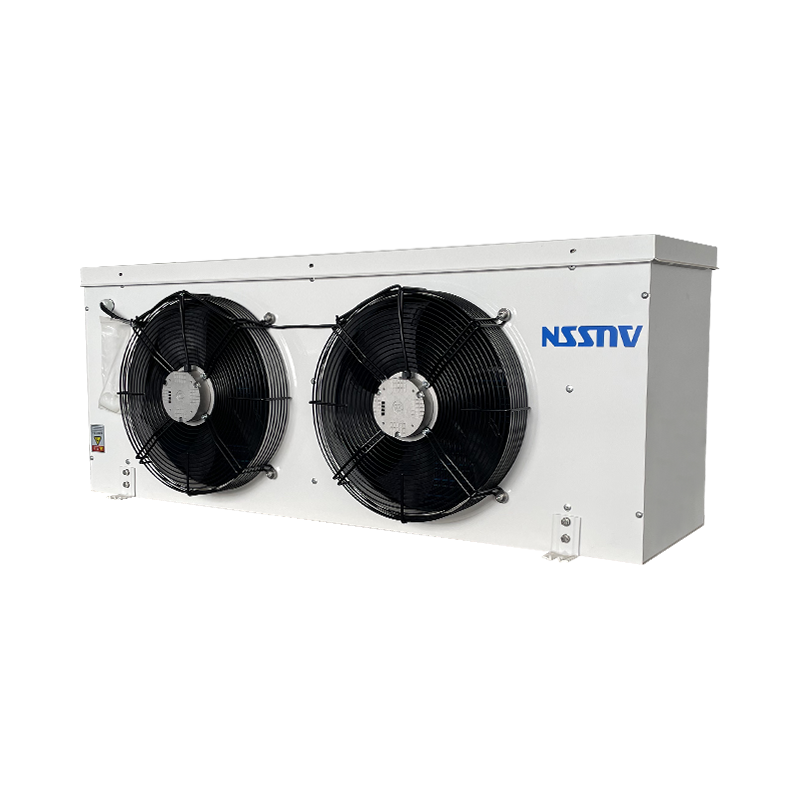 AI Variable-Frequency Hot Fluorine Condensing UnitFactory-built variable-speed hot-gas defrost condensing unit with AI temperature control, 4G monitoring, and 2–5 HP models for small to mid-sized cold storage.View Product →
For projects that want variable speed and hot-gas defrost but not the full AI control layer, the variable frequency hot fluorine unit is the logical middle step: the same speed-modulated refrigeration circuit, a simpler control philosophy, and a shorter commissioning checklist.
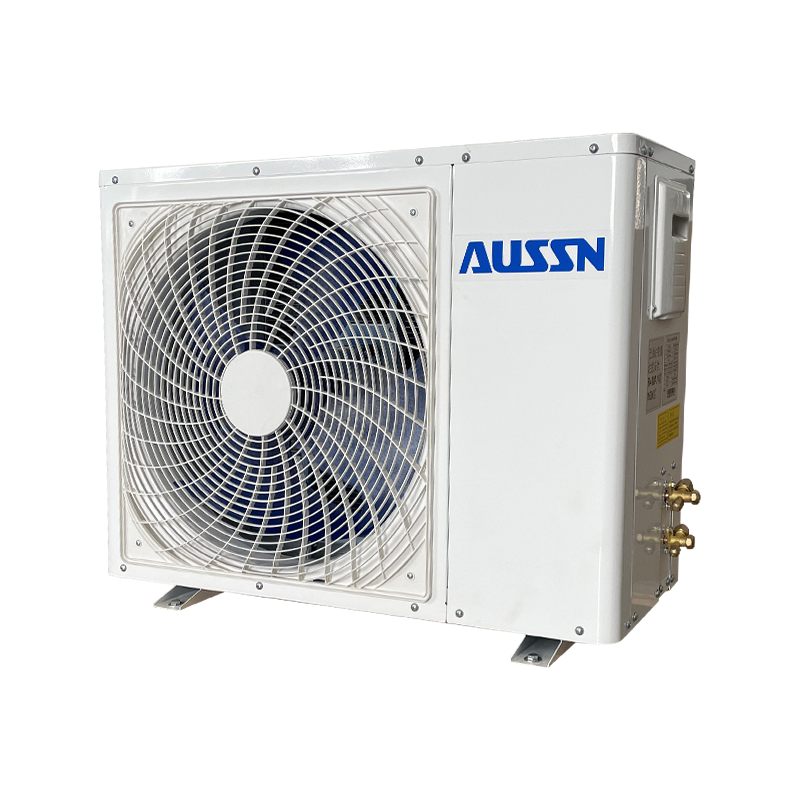 Custom Variable-Frequency Hot Gas Defrost UnitCustomizable variable-speed hot-gas bypass condensing unit for frequent-defrost cold rooms and food processing, offered with OEM/ODM support and capacities from 5 to 200+ tons.View Product →
Where the duty is stable and the priority is cost per kilowatt, a fixed-speed air-cooled unit remains a sound choice. Our condensing unit range covers both approaches, so you can compare a variable-speed selection against a fixed-speed one on the same cooling capacity before committing.
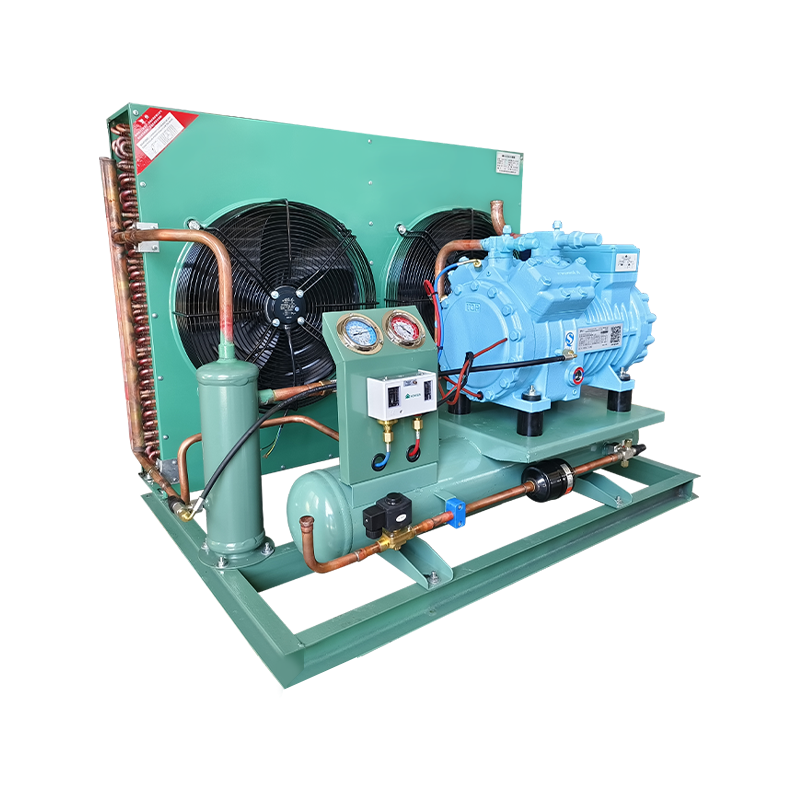 Medium- to High-Temperature Air-Cooled Condensing UnitAir-cooled condensing unit for small to mid-sized cold rooms and retail refrigeration, with compact all-in-one layout and 5.67–86.3 kW cooling capacity.View Product →
Most drive-related failures we hear about come from installation detail rather than from the electronics themselves. A few habits go a long way.
An electric motor with VFD is ultimately a system decision rather than a component purchase. The drive gives you speed, the motor has to tolerate the waveform the drive produces, and the refrigeration circuit has to be tuned so that the two work together at part load. Get those three aligned and the rewards are steady temperatures, gentler starts and a smaller electricity bill month after month. If you are weighing a variable-speed selection for an upcoming cold room or cabinet project, send us the cooling capacity, the room temperature and the supply details, and we will tell you honestly which configuration fits.
For exclusive deals and latest offers, sign up by entering your email address below.

We specialise in the refrigeration industry. Please feel free to contact us.
