


 English
 中文简体
 Español
Home / News / Industry News / Temperature Controlled Water Valve: Stable Water-Cooled Condensing Units
Industry News
Water-cooled refrigeration equipment behaves predictably only when the condenser receives the right amount of water at the right moment. That is the job of a temperature controlled water valve: it throttles cooling water flow so the condensing temperature stays where the system was designed to run. Working with AUSSN condensing units every day, we see the same pattern in the field — a well-chosen valve quietly protects the compressor for years, while a badly set or oversized one produces head pressure alarms, wasted water and repeat callbacks. This guide walks through what the valve does, how it senses load, how to size it, and how to keep it working through every season.
Content
In domestic hot water systems, the same phrase usually describes a thermostatic mixing valve that blends hot and cold water to a safe outlet temperature. Refrigeration uses the idea differently. Here the valve sits on the condenser water line of a water-cooled condensing unit and meters the flow so that the refrigerant condensing pressure — and therefore the condensing temperature — stays close to its design point regardless of how the room load changes.
The valve is a modulating device, not a switch. It does not open fully at start-up and slam shut at set point; it finds a position and holds it, opening a little more as the compressor works harder and closing down as the load eases. That continuous adjustment is what separates a stable system from one that cycles on its high pressure switch.
Condensing pressure is the single number that tells you whether a water-cooled unit is comfortable. Push it too high and discharge temperature climbs, oil life shortens, the compressor works harder than it should, and eventually the high pressure switch ends the story in the middle of a busy trading day. Let it fall too low and the expansion valve loses its pressure differential, the evaporator starves, liquid can find its way back to the compressor, and the room never quite reaches temperature.
There is a cost side too. Water that runs wide open through a condenser that does not need it wastes money on supply and treatment, loads the tower or chiller, and encourages scale. A valve that is properly sized and set typically pays for itself quietly within a season or two.
Cold climate operation deserves a mention because it is where most winter callbacks originate. Very cold make-up water can pull head pressure below the point where the system controls properly, so a valve that can maintain a minimum condensing pressure — or a three-way arrangement that bypasses part of the flow — is worth planning for at design stage rather than retrofitting in January. Our own team covers this ground in more depth in the article on water-cooled condensing units for large cold storage.
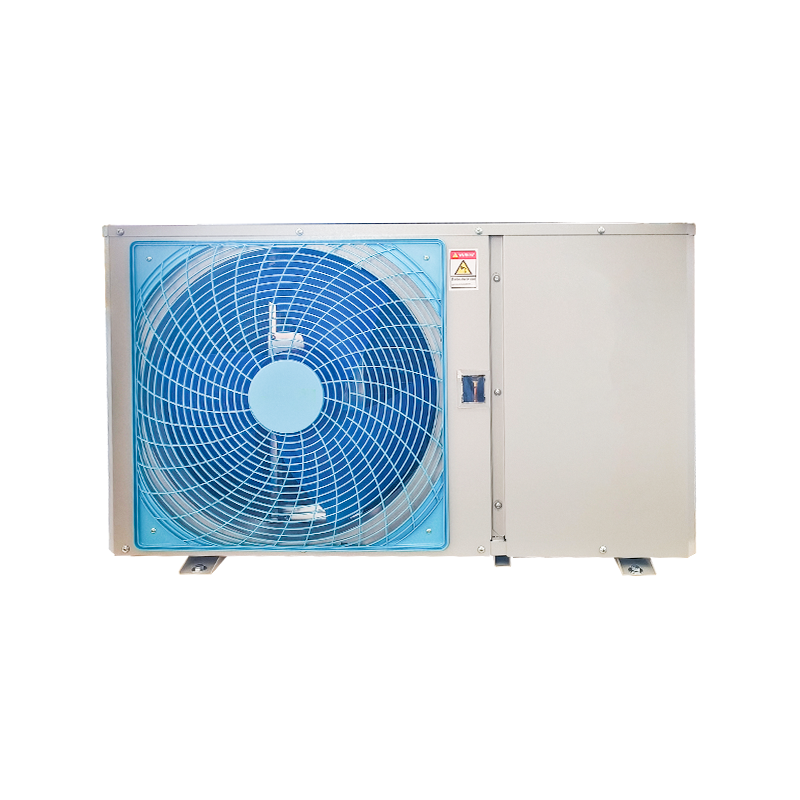
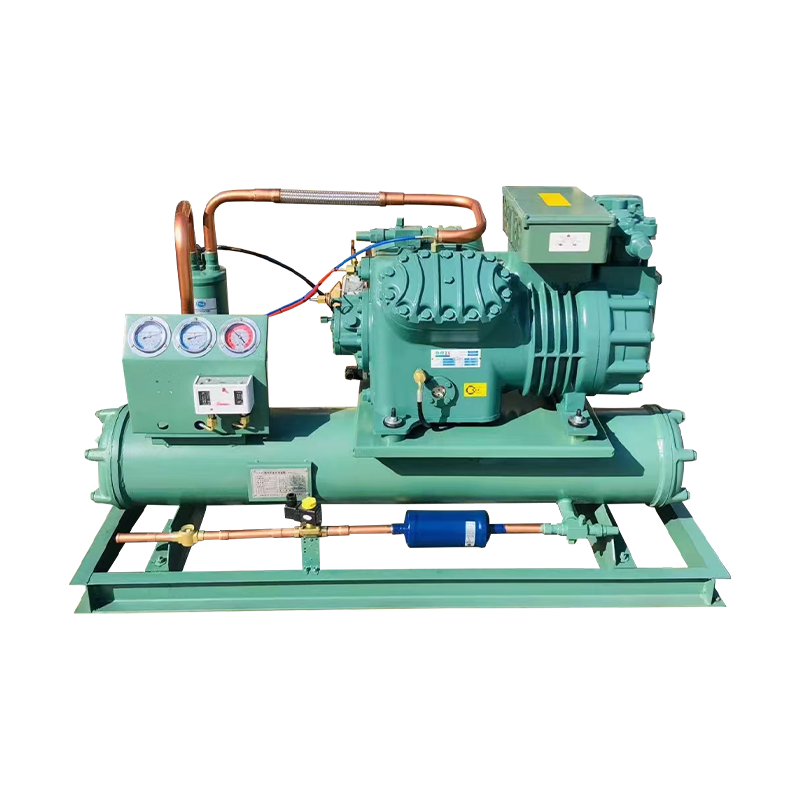 Water-Cooled Condensing Units for Cold StorageCustom water-cooled condensing units from 3HP to 50HP support large cold storage and high-load continuous cooling with optional PLC control.View Product →
Most refrigeration valves are pressure-actuated even though the name says temperature. A bellows or piston senses condensing pressure and pushes against an adjustable spring. As compressor load rises, head pressure rises, the spring compresses slightly further and the valve opens, admitting more water. As load falls, the valve closes down. Because condensing pressure and condensing temperature move together along the saturated curve, holding one holds the other — which is why the device is described as temperature controlled.
Two-way valves throttle the flow. Three-way valves keep total flow roughly constant and divert part of it around the condenser, which suits systems with a pump that must not be dead-headed, a cooling tower that needs minimum flow, or a winter minimum head pressure requirement. Either way, the setting is a single number: the head pressure you want the unit to hold under design conditions. Adjust it in small increments and give the system fifteen to twenty minutes to settle before judging the result. Chasing the screw while the room is still pulling down tells you nothing useful.
Sizing starts from heat of rejection, not from pipe diameter. Multiply the heat rejected at the condenser in kW by 0.86 and divide by the permitted water temperature rise in kelvin to get the design flow in cubic metres per hour. A unit rejecting 60 kW with a 5 K rise therefore needs roughly 10 m³/h. The valve you choose must pass that flow at the pressure difference actually available between supply and return — not at the pressure drop printed in a catalogue under laboratory conditions.
Oversizing is the more common mistake, and it shows up as a valve that hunts: head pressure swings, the water return temperature wanders, and the compressor sounds restless. A slightly small valve that sits near fully open at design load is far easier to live with than a large one that spends its life cracked a hair off its seat.
| Unit capacity (approx.) | Typical connection | Control style | Typical application |
|---|---|---|---|
| Up to 15 kW | 1/2 in | Direct-acting pressure valve | Display cabinets, small prep rooms |
| 15 to 40 kW | 3/4 in | Direct-acting or pilot-operated | Cold room condensing units, blast chillers |
| 40 to 90 kW | 1 in | Pilot-operated thermostatic | Medium cold storage, processing rooms |
| 90 kW and above | 1-1/4 to 2 in | Motorised or three-way | Large cold stores, process cooling |
Chilled storage, prep rooms and display cabinets run with a modest condensing pressure, which means a comparatively low valve set point and a small water flow. At light load the valve may sit only a fraction open, and that is precisely where cheap valves start to hunt. Look for a model with a usable adjustment range that brackets your target rather than one whose set point sits at the very bottom of its span.
Freeze protection matters here as much as pressure control. If the water line runs through an unheated plant room or a roof space, a valve that closes fully and traps water in a dead leg is a liability. Insulation, trace heating or a drain-down routine belongs in the same conversation as the valve selection.
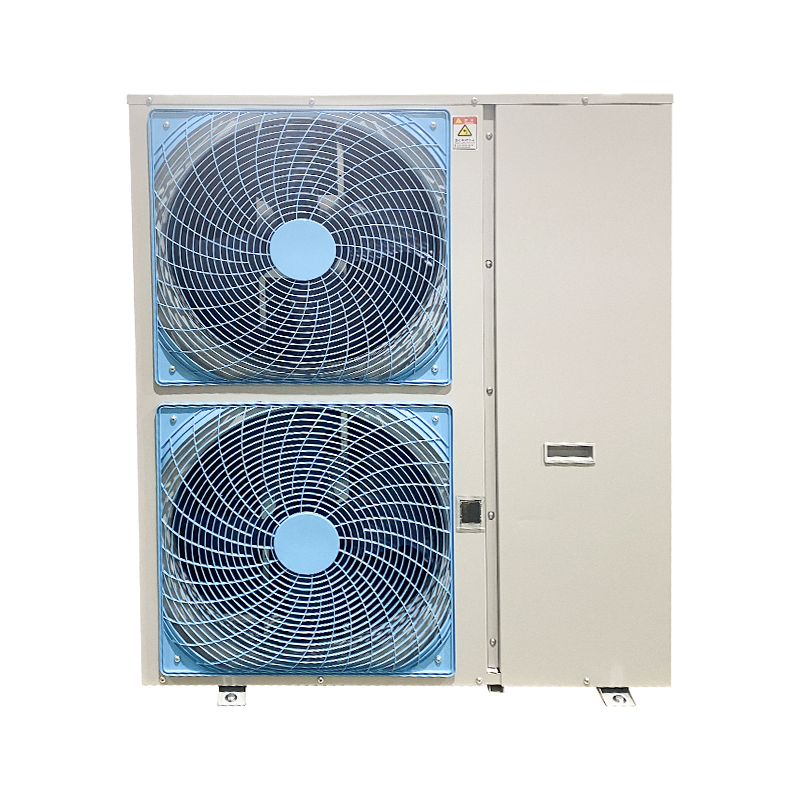
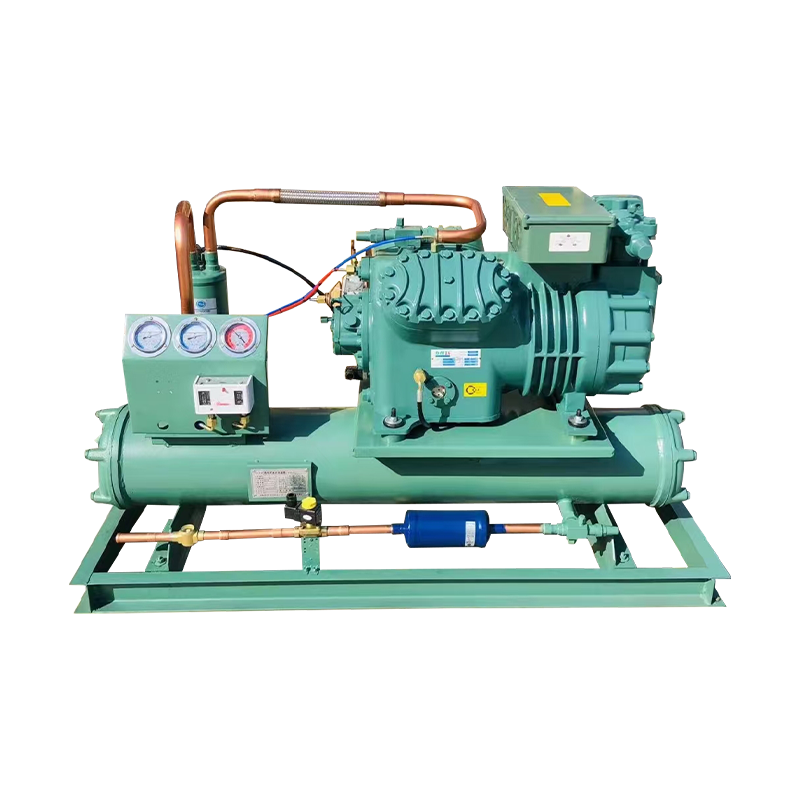 Medium to High Temperature Water Cooling Condensing UnitWater-cooled unit for 0°C to +15°C and higher, suited to large cold storage, food processing, and continuous high-load operation.View Product →
Freezers and blast freezers work at higher condensing pressures and reject considerably more heat, so the valve has to pass its full design flow during pull-down without running out of stroke. Size for the worst case — a warm room, a full load and a long pull-down — then check that the same valve still controls sensibly once the room is down to temperature and the load has collapsed to almost nothing.
Blast pull-down puts the valve through rapid transients. A slow-acting valve with a little damping in the sensing line usually rides them out; a fast valve chatters and eventually wears its seat. On installations with wide seasonal water temperature swings, a three-way valve that can maintain minimum head pressure is often the calmer solution.
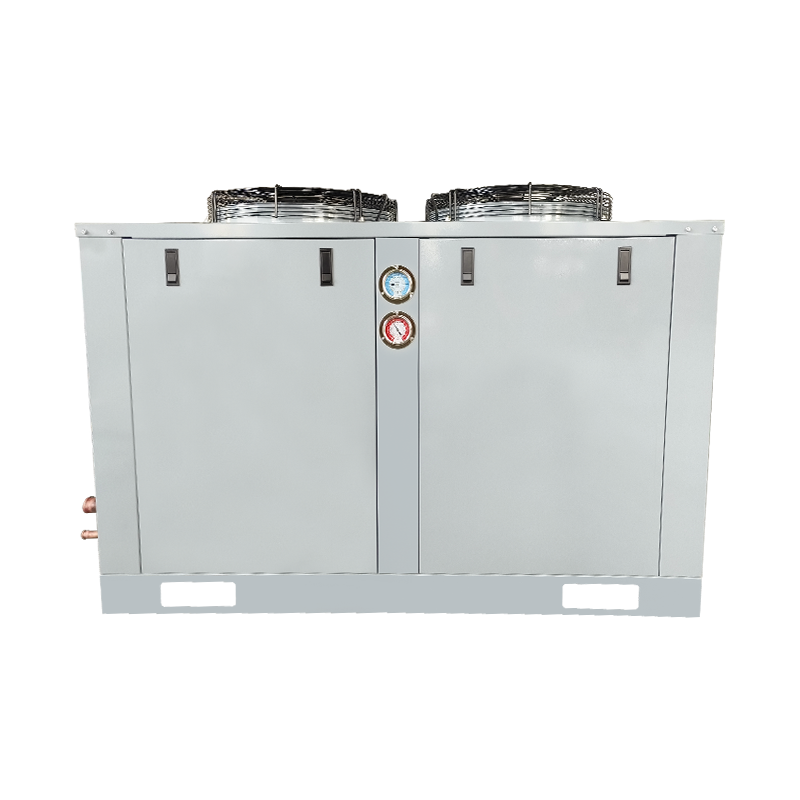
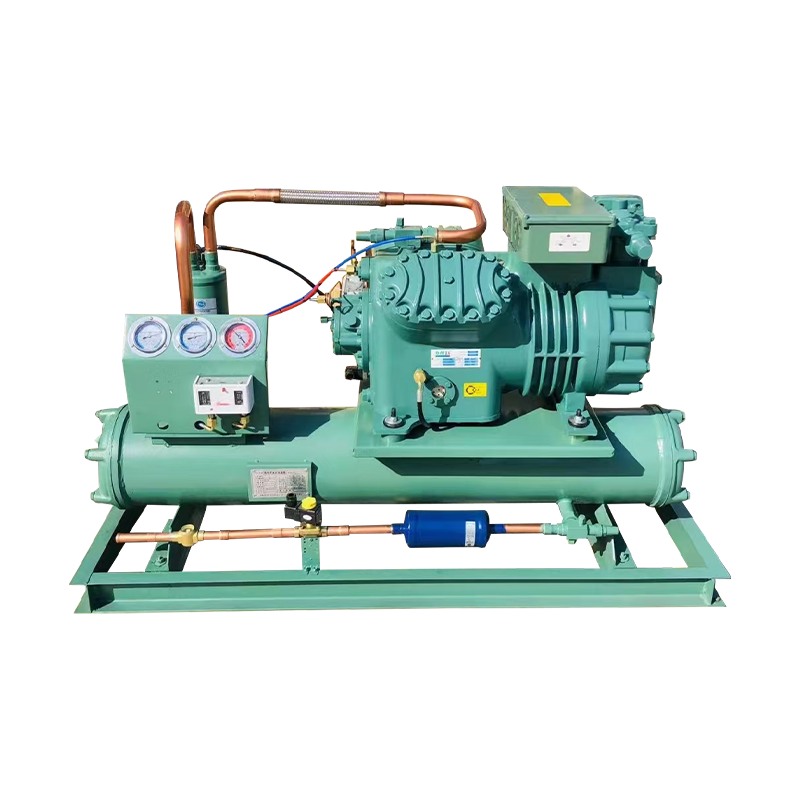 Medium to Low Temperature Water Cooling Condensing UnitWater-cooled unit for -35°C to +10°C deep cooling, suited to blast freezers, meat and seafood processing, and heavy continuous operation.View Product →
An annual habit worth building: descale the seat, work the valve through its full stroke by hand, log supply and return temperatures, and keep a spare bellows or cartridge on the shelf. Ten minutes of attention in spring prevents the call that always seems to arrive on the hottest afternoon of the year.
A temperature controlled water valve is a small, unglamorous component, but it sits at the point where compressor reliability, water cost and room temperature all meet. Get the size right, commission it patiently, and look after it once a year, and it will do its job without ever asking for attention. If you are putting together a water-cooled system for cabinets, cold rooms or process cooling, our engineers are happy to talk through the valve, the condenser and the unit as one package — because that is how they behave on site.
For exclusive deals and latest offers, sign up by entering your email address below.

We specialise in the refrigeration industry. Please feel free to contact us.
