

 English
 中文简体
中文简体 Español
Industry News
Content
- 1 Understanding Cold Room Evaporators
- 2 How Cold Room Evaporators Work
- 3 Main Components of a Cold Room Evaporator
- 4 Types of Cold Room Evaporators
- 5 Importance of Proper Evaporator Selection
- 6 Common Problems in Cold Room Evaporators
- 7 Maintenance Practices for Cold Room Evaporators
- 8 Energy Efficiency and Modern Evaporator Technology
- 9 Conclusion
Understanding Cold Room Evaporators
Cold room evaporators are essential components in commercial and industrial refrigeration systems. They are responsible for absorbing heat from the cold room environment and maintaining the required storage temperature for products such as food, pharmaceuticals, flowers, dairy products, seafood, and frozen goods.
In a refrigeration cycle, the evaporator functions as the heat exchange unit located inside the cold room. Refrigerant flowing through the evaporator coils absorbs heat from the surrounding air, causing the refrigerant to evaporate from a liquid into a gas. This process removes heat from the storage area and keeps the room cold.
Cold room evaporators are designed to operate continuously under demanding conditions. Their performance directly affects cooling efficiency, temperature consistency, energy consumption, and product preservation. Selecting the correct evaporator type and maintaining it properly are critical for reliable refrigeration performance.
How Cold Room Evaporators Work
The evaporator works by circulating low-pressure refrigerant through a network of coils. As warm air from the cold room passes over these coils, the refrigerant absorbs the heat energy. During this heat absorption process, the refrigerant evaporates and changes into a low-temperature vapor.
Fans installed on the evaporator help circulate air evenly throughout the cold room. This continuous airflow ensures that all stored products receive consistent cooling and prevents hot spots from developing inside the room.
Once the refrigerant absorbs sufficient heat, it exits the evaporator and travels to the compressor, where the refrigeration cycle continues. The system repeatedly removes heat from the cold room to maintain stable temperatures.
Basic Refrigeration Cycle in the Evaporator
- Low-pressure refrigerant enters the evaporator coil
- Warm room air passes over the coil surface
- Heat transfers from air to refrigerant
- Refrigerant evaporates into vapor
- Cooled air circulates back into the cold room
Main Components of a Cold Room Evaporator
Cold room evaporators contain several integrated components that work together to ensure effective cooling performance. Each part plays a specific role in heat exchange and air circulation.
Evaporator Coils
The coils are the primary heat exchange surfaces. Refrigerant flows through these tubes while absorbing heat from the surrounding air. Copper tubes with aluminum fins are commonly used because they provide excellent heat transfer efficiency.
Fans
Fans force air across the evaporator coils and distribute cooled air evenly throughout the room. Proper airflow is essential for maintaining stable room temperatures and reducing humidity variations.
Drain Pan
During cooling, moisture in the air condenses on the evaporator surface. The drain pan collects this water and channels it away from the unit to prevent water accumulation inside the cold room.
Defrost System
In low-temperature applications, frost forms on the evaporator coils. Defrost systems periodically remove accumulated ice to maintain efficient heat transfer and airflow.
| Component | Function |
| Evaporator Coil | Absorbs heat from room air |
| Fan Motor | Circulates cold air |
| Drain Pan | Collects condensation water |
| Defrost Heater | Removes frost buildup |
Types of Cold Room Evaporators
Different evaporator designs are available depending on room temperature requirements, humidity levels, storage applications, and room size. Selecting the appropriate type improves refrigeration efficiency and product safety.
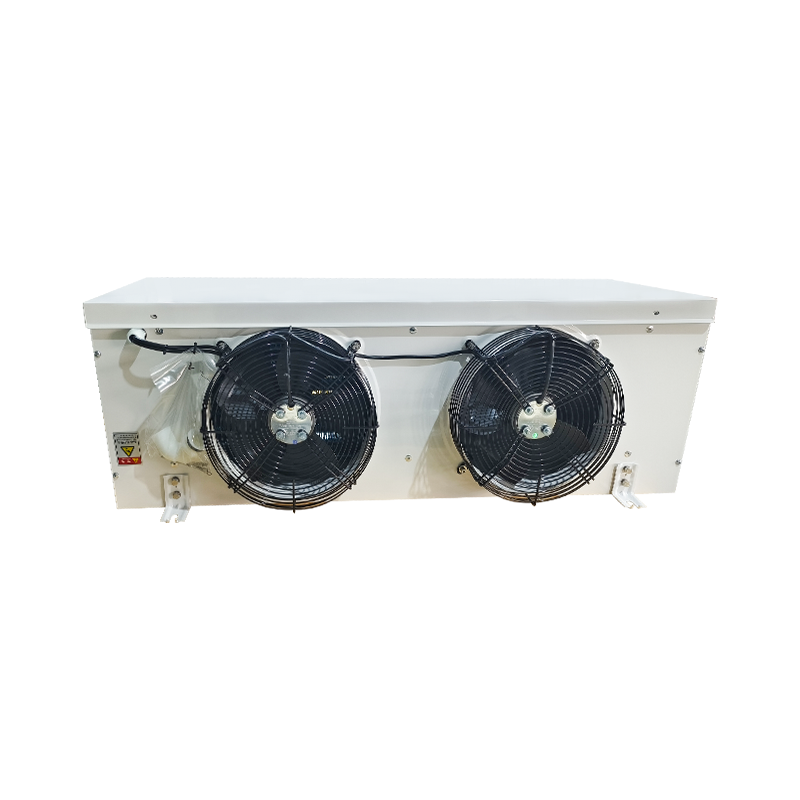
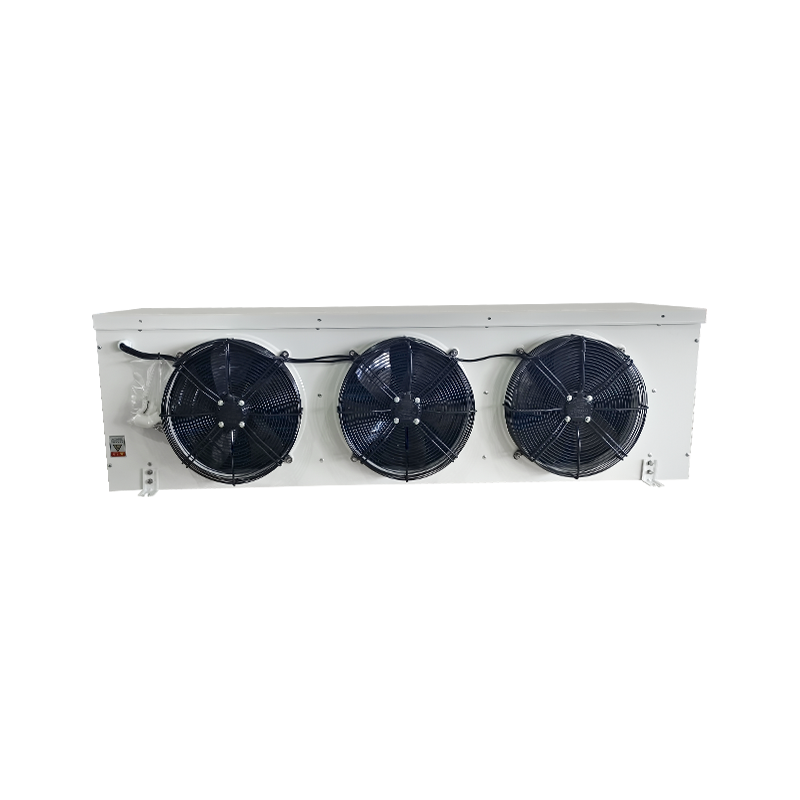
Ceiling-Mounted Evaporators
Ceiling-mounted units are the most common evaporators used in cold storage rooms. These units are installed overhead to maximize storage space and promote even air circulation throughout the room.
They are widely used in restaurants, food processing facilities, supermarkets, and pharmaceutical storage areas.
Dual Discharge Evaporators
Dual discharge evaporators distribute air in two directions, providing more balanced airflow for wider cold rooms. These systems improve temperature consistency in larger storage areas.
Low Profile Evaporators
Low profile evaporators are designed for compact cold rooms with limited ceiling height. Their slim design allows installation in confined spaces while maintaining effective cooling capacity.
Industrial Blast Freezer Evaporators
Blast freezer evaporators are built for rapid freezing applications. These units use powerful airflow and low operating temperatures to freeze products quickly while preserving product quality.
Importance of Proper Evaporator Selection
Choosing the correct evaporator is critical for refrigeration system performance. An improperly sized or unsuitable evaporator can lead to uneven temperatures, excessive energy consumption, humidity problems, and product spoilage.
Several factors must be considered during evaporator selection, including room dimensions, product type, operating temperature, humidity requirements, and refrigeration load.
Factors Affecting Evaporator Selection
- Cold room size and storage capacity
- Required temperature range
- Humidity control needs
- Air circulation requirements
- Energy efficiency goals
- Defrost method compatibility
Common Problems in Cold Room Evaporators
Like all refrigeration components, evaporators can experience operational issues over time. Poor maintenance, incorrect installation, or unsuitable operating conditions often contribute to evaporator problems.
Frost and Ice Accumulation
Frost buildup on evaporator coils is one of the most common problems in low-temperature refrigeration systems. Excessive ice reduces airflow and acts as insulation, limiting heat transfer efficiency.
If not removed regularly, heavy frost accumulation can completely block airflow and severely reduce cooling capacity.
Fan Failure
Damaged or malfunctioning fan motors prevent proper air circulation. This creates uneven room temperatures and increases compressor workload.
Refrigerant Leakage
Leaks in evaporator coils reduce refrigerant levels and impair cooling performance. Low refrigerant charge may also cause coil freezing and compressor damage.
Dirty Coils
Dust, grease, and debris on evaporator fins reduce heat exchange efficiency. Dirty coils force the refrigeration system to work harder and increase energy consumption.
| Problem | Possible Effect |
| Frost buildup | Reduced airflow |
| Fan malfunction | Uneven cooling |
| Refrigerant leak | Low cooling efficiency |
| Dirty evaporator fins | Higher energy usage |
Maintenance Practices for Cold Room Evaporators
Routine maintenance is essential for maintaining evaporator efficiency and extending equipment lifespan. Preventive maintenance reduces breakdown risks and improves overall refrigeration reliability.
Regular Coil Cleaning
Cleaning evaporator fins removes dirt and debris that interfere with heat transfer. Proper cleaning also improves airflow and reduces compressor operating time.
Defrost System Inspection
Defrost heaters, timers, and sensors should be inspected regularly to ensure effective frost removal. Malfunctioning defrost systems often lead to severe ice buildup.
Checking Fan Operation
Technicians should inspect fan blades and motors for wear, vibration, and airflow performance. Proper fan operation is critical for temperature consistency.
Monitoring Refrigerant Levels
Maintaining correct refrigerant charge ensures optimal cooling performance and prevents compressor strain.
Energy Efficiency and Modern Evaporator Technology
Modern cold room evaporators are increasingly designed with energy-saving technologies. Improved coil designs, electronically controlled fan motors, and intelligent defrost systems help reduce energy consumption while maintaining stable cooling conditions.
Variable speed EC fans are becoming more common because they adjust airflow based on cooling demand. This reduces unnecessary electricity use and lowers operating costs.
Advanced evaporator designs also improve humidity control, which is especially important for fresh produce, meat, and pharmaceutical storage applications.
Conclusion
Cold room evaporators are one of the most important components in refrigeration systems. They remove heat from storage environments, maintain stable temperatures, and ensure the safe preservation of temperature-sensitive products.
Understanding how evaporators work, the different types available, and their maintenance requirements helps businesses improve refrigeration efficiency and reduce operating costs. Proper evaporator selection and regular maintenance also minimize equipment failure risks and extend system lifespan.
As refrigeration technology continues to evolve, modern evaporators are becoming more energy efficient, reliable, and adaptable to various industrial and commercial cooling applications.