


 English
 中文简体
中文简体 Español
Home / News / Industry News / What Are the Essential Features to Look for in a Commercial Condensing Unit?
Industry News
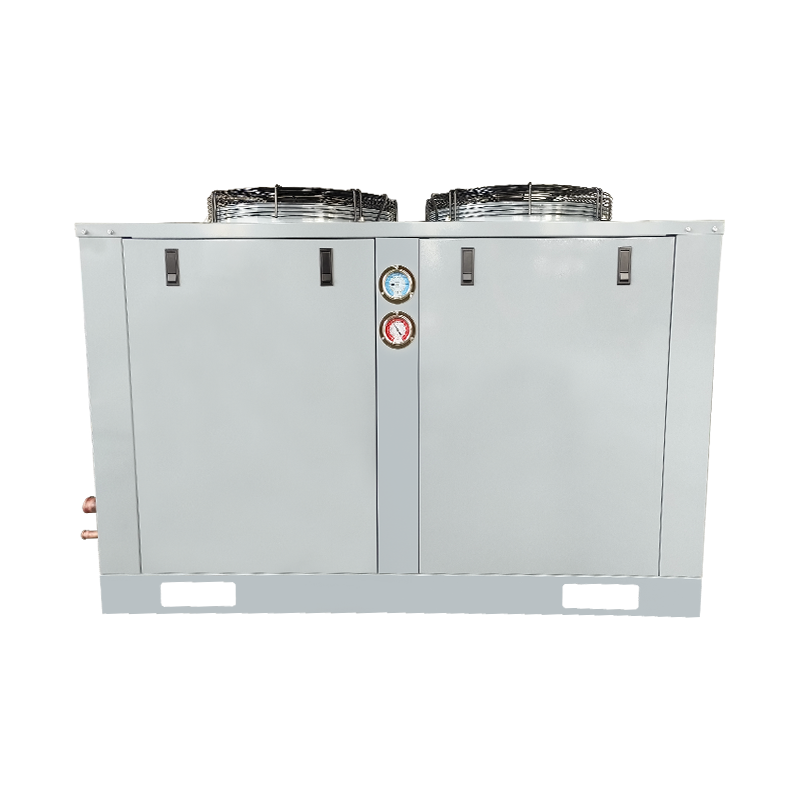
Commercial condensing units are the mechanical heart of refrigeration systems used in supermarkets, cold storage facilities, restaurants, food processing plants, and pharmaceutical warehouses. Unlike residential refrigeration equipment, commercial condensing units are engineered to operate continuously under heavy loads, in demanding ambient conditions, and often across wide temperature ranges — all while meeting strict energy efficiency and food safety requirements. Choosing or specifying the wrong unit can result in premature compressor failure, temperature control problems, excessive energy costs, and costly product losses. Understanding the essential features of commercial condensing units is therefore not merely a technical exercise; it is a practical requirement for anyone involved in refrigeration system design, procurement, or maintenance.
Content
The compressor is the most critical component in any condensing unit. It is responsible for compressing the refrigerant gas, raising its pressure and temperature so that heat can be rejected at the condenser. Commercial condensing units are available with several compressor technologies, each suited to specific application profiles and capacity ranges.
Reciprocating (piston) compressors are widely used in small to medium commercial condensing units. They are robust, tolerant of refrigerant liquid slugging, and available in a wide range of capacities from less than 1 kW up to around 20 kW. Their relatively simple construction makes them cost-effective to service, though they operate at fixed speed and are therefore less energy-efficient at part-load conditions than variable-speed alternatives.
Scroll compressors have become the dominant technology in mid-range commercial condensing units. They operate with fewer moving parts than reciprocating compressors, produce lower vibration and noise levels, and deliver higher volumetric efficiency — meaning more refrigerant is moved per unit of electrical energy consumed. Scroll compressors are particularly well-suited to air-conditioning and medium-temperature refrigeration applications and are available with variable-speed drive (inverter) capability, allowing the compressor to modulate its output in response to actual cooling demand.
For large commercial and industrial refrigeration systems above approximately 25 kW, screw compressors provide high efficiency at full and part-load conditions. Semi-hermetic screw compressors are used in supermarket rack systems, blast freezers, and large cold storage facilities where continuous, high-capacity operation is required. They offer stepless capacity modulation and are available for use with low-GWP refrigerants including CO₂ and HFO blends.
The condenser is where the heat absorbed from the refrigerated space is rejected to the environment. In commercial condensing units, the condenser coil is almost always air-cooled for outdoor or rooftop installations, using one or more fans to draw ambient air across the coil surface. The design of the condenser coil — its face area, fin density, tube diameter, and fin material — directly determines how effectively the unit can reject heat at various ambient temperatures.
A critical and frequently underestimated feature is the unit's rated heat rejection capacity across the expected range of ambient temperatures. A condensing unit specified for an ambient of 32°C will perform very differently on a summer day when ambient temperatures reach 40°C or above. Quality commercial condensing units provide performance data across a range of ambient conditions — typically from 20°C to 46°C — allowing engineers to verify that adequate capacity is maintained under worst-case conditions without excessive condensing pressure.
Microchannel aluminium coils are increasingly used in modern commercial condensing units due to their compact footprint, lower refrigerant charge, and superior heat transfer per unit of weight compared to traditional copper tube and aluminium fin coils. However, microchannel coils are more susceptible to corrosion in coastal or industrial environments, making coil material and coating selection an important feature to evaluate for installations in aggressive atmospheres.
Commercial condensing units must be specified with refrigerants that are both thermodynamically appropriate for the application and compliant with current and forthcoming environmental regulations. The phasedown of high Global Warming Potential (GWP) HFC refrigerants under the EU F-Gas Regulation and the Kigali Amendment to the Montreal Protocol has accelerated the adoption of lower-GWP alternatives across the commercial refrigeration sector.
Common refrigerants used in commercial condensing units and their typical application ranges are summarised below.
| Refrigerant | GWP | Typical Application | Notes |
|---|---|---|---|
| R-404A | 3,922 | Low/medium-temp commercial refrigeration | Being phased out under F-Gas regulations |
| R-448A / R-449A | ~1,300 | Retrofit and new low-temp refrigeration | Drop-in replacements for R-404A systems |
| R-407F | 1,825 | Medium-temperature refrigeration | Good capacity retention at medium temps |
| R-290 (Propane) | 3 | Small commercial units, self-contained | Flammable; charge limits apply |
| R-744 (CO₂) | 1 | Supermarket transcritical systems | High operating pressures; growing adoption |
When selecting a commercial condensing unit, confirming that the unit's components — compressor, expansion valve, seals, and lubricant — are rated and approved for the intended refrigerant is essential. Using a refrigerant for which the unit has not been rated risks compressor warranty voidance, lubricant breakdown, and seal degradation.
Energy efficiency is one of the most commercially significant features of a commercial condensing unit, given that refrigeration systems typically account for 30–50% of a food retail facility's total electricity consumption. The efficiency of a condensing unit is expressed through its Coefficient of Performance (COP) — the ratio of cooling capacity delivered to electrical power consumed. A higher COP means more cooling per kilowatt-hour of electricity, translating directly into lower operating costs.
However, rated COP figures provided at a single operating point can be misleading. Most commercial refrigeration systems operate at part-load for the majority of their running hours, as cooling demand fluctuates with ambient temperature, door-opening frequency, and product throughput. Features that improve part-load efficiency include:
Modern commercial condensing units are equipped with integrated electronic controllers that manage compressor operation, fan speed, defrost cycles, alarm conditions, and safety cut-outs. The sophistication of this control system is an essential feature that affects both operating efficiency and ease of maintenance.
Entry-level controllers provide basic on/off temperature control with fixed safety parameters. Advanced controllers offer programmable setpoints, multiple alarm outputs, Modbus or BACnet communication protocols for integration with building management systems (BMS), and data logging of operating parameters including suction pressure, discharge pressure, compressor run hours, and refrigerant temperatures. This data is invaluable for predictive maintenance — identifying trends such as rising discharge temperatures or declining suction pressure that indicate developing faults before they result in system failure and product loss.
Cloud-connected monitoring is an increasingly standard feature on commercial condensing units supplied to multi-site operators. Remote monitoring platforms allow facilities managers and refrigeration contractors to view real-time operating data, receive fault alerts, and review historical performance across an entire estate from a single dashboard. For supermarket chains, food logistics companies, and pharmaceutical cold chains, this capability reduces the cost of site visits, enables faster fault diagnosis, and supports compliance with food safety temperature logging requirements.
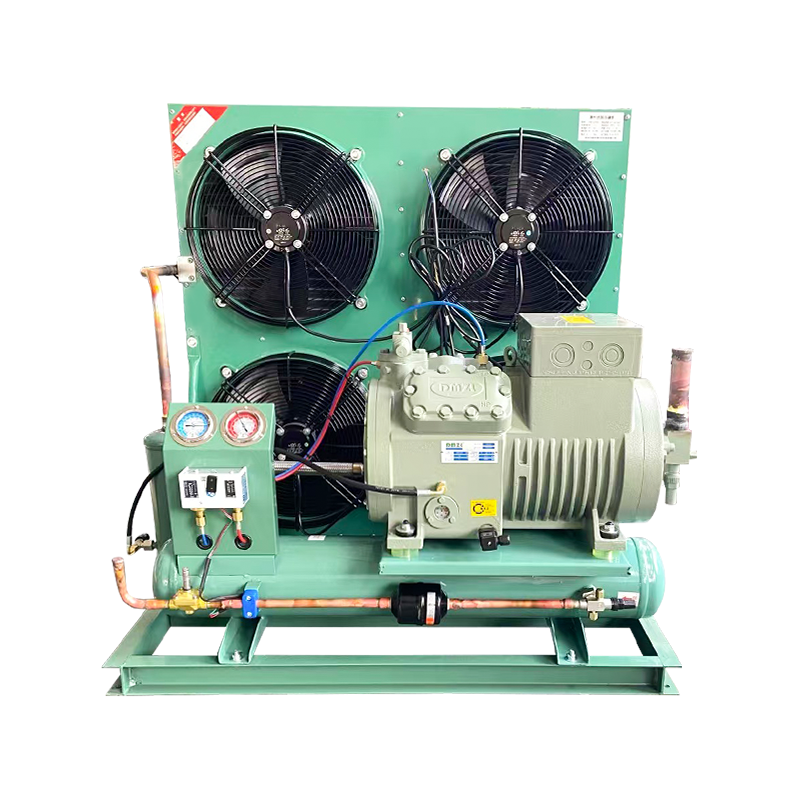
Noise output is a feature that is often considered only after installation problems arise, but it should be evaluated during the specification phase for any condensing unit sited near residential areas, outdoor dining spaces, or noise-sensitive commercial premises. Commercial condensing units generate noise from three primary sources: compressor mechanical vibration, refrigerant flow, and condenser fan operation.
Quality condensing units incorporate several noise-reduction features as standard, including compressor mountings with anti-vibration grommets, acoustically lined compressor compartments, and low-noise EC fan motors. Noise levels are expressed in dB(A) at a specified distance — typically 1 metre or 10 metres — and should be compared against local planning noise limits before installation approval is sought.
For particularly noise-sensitive installations, acoustic enclosures or sound-attenuating compressor blankets can be specified as optional extras. Positioning the unit away from reflective walls and ensuring adequate clearance for airflow also significantly reduces the effective noise level perceived at neighbouring properties.
Commercial condensing units installed outdoors must withstand years of exposure to rain, UV radiation, frost, and wind-driven debris while maintaining reliable operation. The chassis and cabinet construction, component quality, and surface finishing of the unit are therefore important features that determine long-term reliability and maintenance cost.
Key construction features to evaluate include:
Commercial condensing units incorporate a range of safety devices that protect the compressor, refrigerant circuit, and electrical system from operating outside safe parameters. These protective features are not optional extras — they are essential safeguards that prevent catastrophic failures and extend equipment life.
Standard safety features on quality commercial condensing units include high-pressure and low-pressure cut-out switches, crankcase heaters to prevent refrigerant migration into the compressor oil during off-cycles, compressor thermal overload protection, and anti-short-cycle timers that prevent rapid compressor cycling that causes overheating and mechanical wear. Phase-failure and phase-reversal protection is essential on three-phase units to prevent compressor damage if the power supply quality is poor or connections are made incorrectly during commissioning.
Together, these essential features — compressor technology, condenser design, refrigerant compatibility, energy efficiency mechanisms, control intelligence, acoustic performance, build quality, and safety protection — define what separates a commercial condensing unit capable of delivering years of reliable, efficient service from one that will become a recurring maintenance burden. Evaluating each feature systematically against the specific demands of the application is the only reliable path to a correctly specified installation.

For exclusive deals and latest offers, sign up by entering your email address below.

We specialise in the refrigeration industry. Please feel free to contact us.
