


 English
 中文简体
中文简体 Español
Home / News / Industry News / Top-Mount or Side-Mount Monoblock Condensing Unit: Which Configuration Is Right for Your Application?
Industry News
Content
A monoblock condensing unit is a self-contained refrigeration assembly that integrates the compressor, condenser coil, condenser fan, and all associated controls into a single compact housing. Unlike split systems, which separate the condensing and evaporating sections across two physically distinct units connected by refrigerant lines, a monoblock design consolidates the entire condensing circuit into one pre-wired, pre-charged package. This makes installation faster, reduces the risk of refrigerant leaks at field-made joints, and simplifies maintenance since all serviceable components are accessible in one location.
Monoblock condensing units are widely used in commercial refrigeration — walk-in coolers and freezers, cold storage rooms, display cabinets, food processing facilities, and pharmaceutical storage environments. Within this product category, one of the most consequential design decisions is the direction in which the condenser fan discharges air: from the top of the unit (top-mount or top-discharge configuration) or from the side (side-mount or side-discharge configuration). These two arrangements differ significantly in airflow path, installation requirements, space consumption, noise behavior, and suitability for different environments. Selecting the wrong configuration can result in poor performance, overheating, and shortened equipment life.
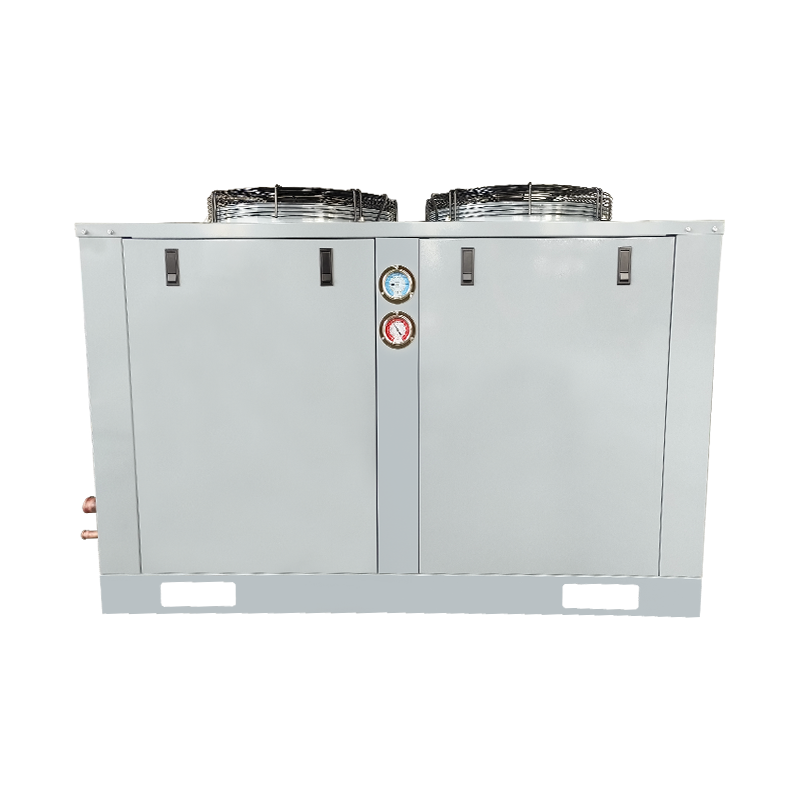
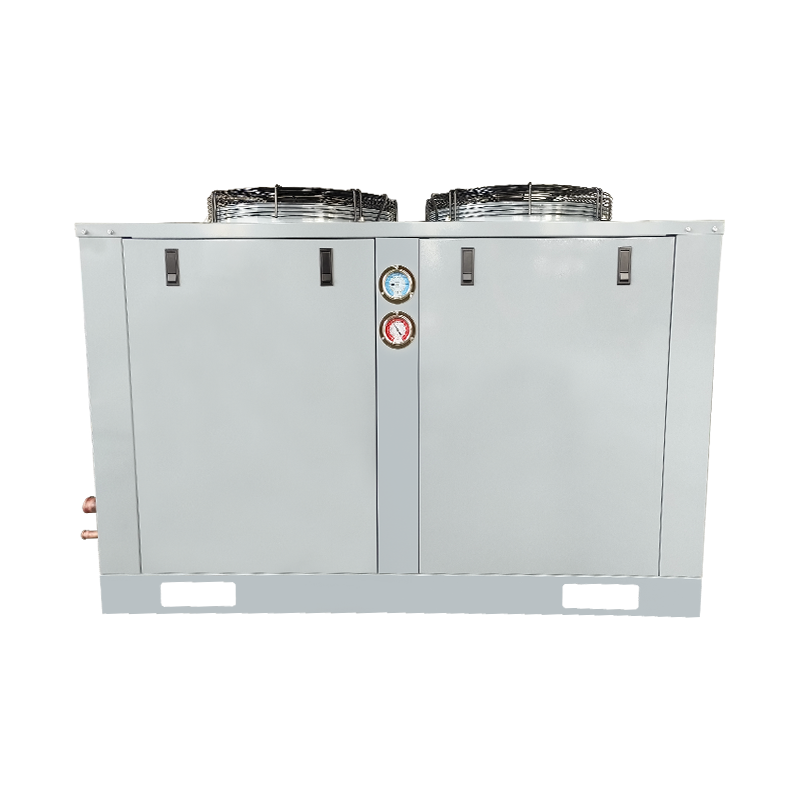
In a top-mount monoblock condensing unit, the condenser fan is positioned on the upper face of the unit and discharges hot air vertically upward, away from the unit body. Ambient air is drawn in from the sides or bottom of the housing, passes across the condenser coil to absorb heat from the refrigerant, and is then expelled through the top. This vertical discharge pattern relies on natural convection to assist airflow — hot air rises, so the fan and buoyancy forces work in the same direction, improving overall heat rejection efficiency.
Because the discharge stream exits upward and disperses into the open air above the unit, there is very little risk of hot discharge air being recirculated back into the condenser inlet. Recirculation — where already-heated air loops back through the condenser — is one of the primary causes of elevated condensing temperature and reduced system efficiency. The vertical discharge geometry of top-mount units inherently minimizes this risk, especially when units are installed in open or semi-open environments such as rooftops, canopies, or well-ventilated plant rooms.
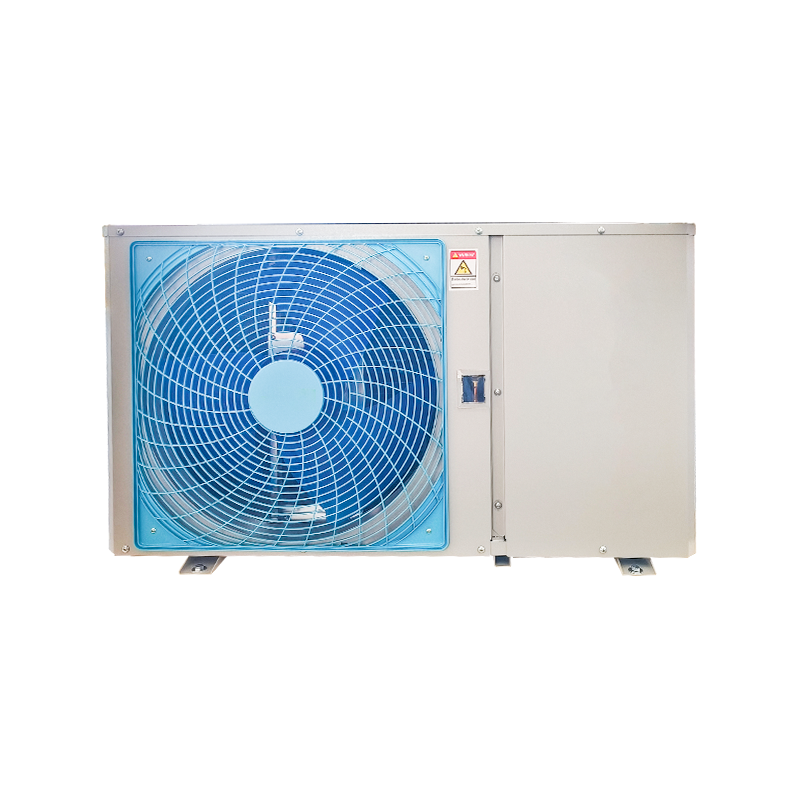
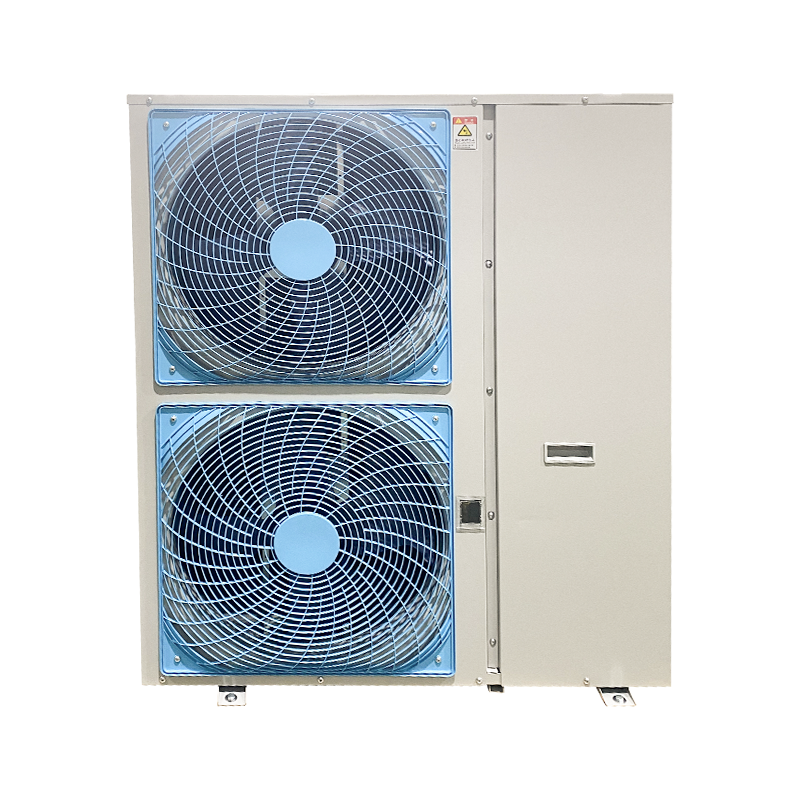
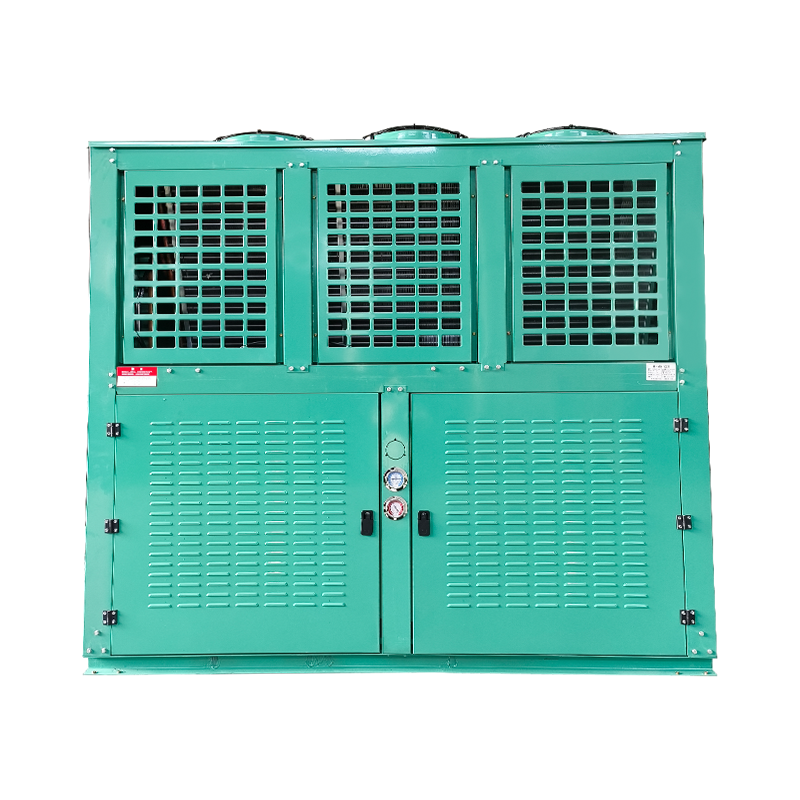
In a side-mount monoblock condensing unit, the condenser fan discharges hot air horizontally through one side of the unit. Ambient air enters through the opposite side or through a grille on the rear face, flows across the condenser coil, and exits through the discharge face. This horizontal airflow path makes side-mount units particularly well suited to installations where vertical clearance is restricted but horizontal space or a clear discharge path to the outside is available.
Side-mount units are the preferred choice when the condensing unit must be installed indoors — inside a machine room, under a canopy, or within a low-ceiling enclosure — with the discharge ducted or directed through a wall or louver to the outside. The horizontal discharge can be connected to short ductwork runs without the unit needing to be repositioned, and the lower overall height profile of many side-mount designs makes fitting them into confined spaces much more practical than tall top-discharge alternatives.
While both configurations perform the same fundamental function — rejecting heat from the refrigeration cycle — they differ across several important dimensions that directly affect installation planning, operating efficiency, and long-term reliability.
| Factor | Top-Mount (Top-Discharge) | Side-Mount (Side-Discharge) |
| Airflow Direction | Vertical (upward) | Horizontal (sideward) |
| Recirculation Risk | Low — discharge rises away naturally | Higher if clearance is insufficient |
| Vertical Clearance Needed | Significant overhead space required | Minimal — low profile fits tight spaces |
| Indoor Installation | Difficult without roof penetration | Easily ducted through a wall |
| Noise Level at Ground | Lower — discharge directed upward | Higher at face level if unobstructed |
| Outdoor Use | Excellent — rooftop, canopy, open yard | Good with adequate side clearance |
| Duct Connection | Requires vertical duct or roof opening | Simple horizontal wall duct connection |
| Rain/Debris Protection | Fan exposed — weather guard needed | Side grille provides more natural cover |
The top-discharge configuration offers a specific set of performance and installation benefits that make it the preferred choice in many common commercial refrigeration scenarios.
Vertical upward discharge works with natural buoyancy, allowing the fan motor to move a given volume of air with less electrical energy than is required to push air horizontally against gravity-neutral pressure. More importantly, the upward plume of hot discharge air rises rapidly away from the unit body and disperses into the ambient environment without folding back toward the condenser inlet. This keeps the effective inlet air temperature close to true ambient, maintaining the rated coefficient of performance (COP) of the refrigeration system across a wider range of operating conditions.
Top-mount units excel when installed outdoors on rooftops, in open equipment yards, or under canopy structures with open sides. In these locations, there are no walls nearby to deflect the discharge air back toward the inlet, and the unit can be positioned with relatively modest side clearances (typically 600–900 mm). Rooftop installation also removes the unit from ground-level traffic, reducing the risk of mechanical damage and keeping service technicians away from busy operational areas during maintenance.
Because the condenser fan discharge is directed upward, the loudest part of the airflow noise propagates away from occupied areas at ground or working level. This makes top-mount units a better choice near staff workspaces, retail areas, or noise-sensitive environments where maintaining low sound pressure levels at ear height is important. Side-discharge units, by contrast, emit their discharge noise horizontally, which can be more intrusive to people standing nearby.
When multiple condensing units are installed in a row or cluster, top-discharge units can be placed closer together in the horizontal plane because their discharge streams do not interact with each other's inlets. Side-discharge units grouped together require careful orientation and larger spacing to prevent one unit's hot discharge from entering a neighboring unit's intake, which rapidly degrades the performance of the entire group.
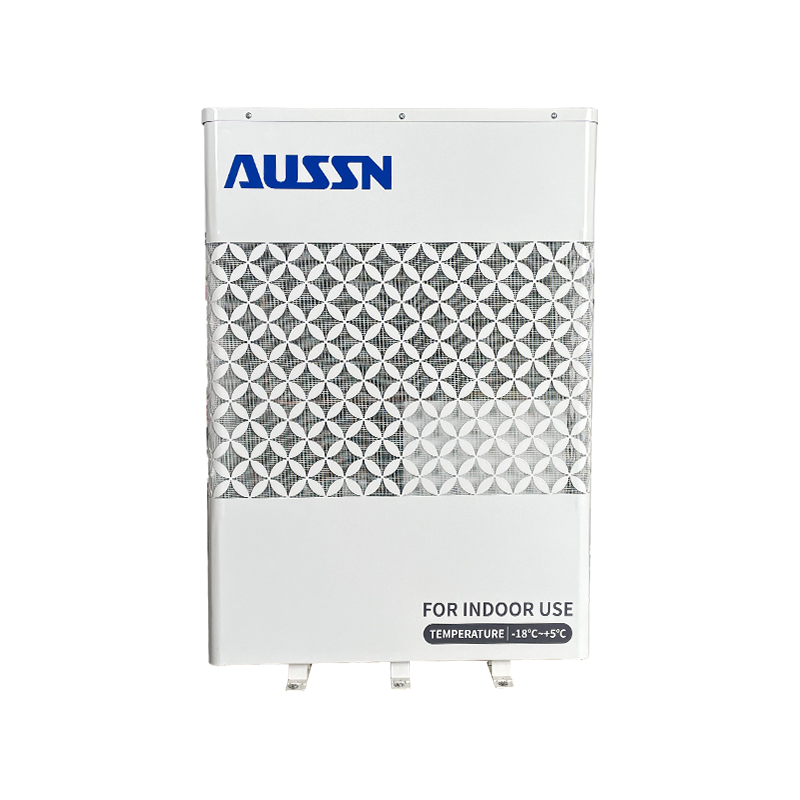
Side-mount configurations address a different set of installation challenges and are the superior choice in several important deployment scenarios.
The most significant advantage of side-mount units is their ability to operate effectively in spaces with limited vertical clearance. In a basement plant room, a ground-floor machine room with standard ceiling heights, or a mezzanine-level equipment area, a top-discharge unit cannot exhaust its hot air without modifications to the building structure. A side-discharge unit, on the other hand, can be positioned against an external wall with a simple duct knockout or louvered opening, allowing hot air to be pushed directly to the outside without any ceiling penetration.
Side-discharge units are inherently more compatible with short-run horizontal ductwork. When the condensing unit must be located some distance from the exterior wall — for security reasons, aesthetic requirements, or layout constraints — a horizontal duct run is structurally simpler and less expensive to build than an equivalent vertical run through a roof. This also facilitates the use of discharge hoods or louvered diffusers that control the direction and velocity of exhaust air at the building exterior.
Many side-discharge monoblock condensing units are designed with a lower, wider footprint rather than a tall upright profile. This lower center of gravity can be an advantage during installation and in locations where the unit must fit under existing infrastructure such as shelving, pipe runs, or structural beams. The reduced height also makes the unit easier to transport through standard doorways and corridors during site installation.
On an outdoor top-discharge unit, the fan and motor are mounted on the top surface and are fully exposed to rain, hail, falling leaves, and bird droppings. While weather guards and protective grilles can be added, they introduce additional cost and airflow resistance. Side-discharge fans are housed within the side panel of the unit, offering inherently better protection from direct rainfall and falling debris without requiring additional accessories.
Choosing between a top-mount and side-mount monoblock condensing unit comes down to a structured assessment of your installation site, performance requirements, and operational priorities. The following checklist summarizes the key decision criteria:
Always consult the manufacturer's installation guidelines for minimum clearance distances, maximum allowable duct static pressure for side-discharge models, and any restrictions on inlet and outlet orientations. A monoblock condensing unit that is correctly matched to its installation configuration will deliver consistent performance, lower energy consumption, and a longer service life than one that is forced into an unsuitable layout.
For exclusive deals and latest offers, sign up by entering your email address below.

We specialise in the refrigeration industry. Please feel free to contact us.
