


 English
 中文简体
 Español
Home / News / Industry News / Hermetically Sealed Scroll Compressors: How They Work in Commercial Refrigeration
Industry News
A hermetically sealed scroll compressor is one of those parts that quietly decides how a refrigeration system behaves over the next decade. No shaft seal, no external motor, no belt to tension — the motor, the oil, and the scroll set all live inside a welded steel shell.
We build condensing units and monoblock systems for commercial cold storage, so we spend a lot of hours looking at compressors from the outside in. Here is what "hermetically sealed" really means, how the scroll mechanism works, and what is worth checking before you specify one.
Content
In compressor terminology, "hermetic" describes the enclosure, not the compression principle. The shell is welded shut at the factory, with the electric motor sitting in the same space as the compression elements and cooled by returning suction gas. Refrigerant vapor enters the shell, passes over the motor windings, and then flows into the compression chamber. The only connections to the outside are the suction line, the discharge line, and the electrical terminal.
That construction removes the most common leak path in a refrigeration circuit: the rotating shaft seal. There is no shaft crossing the shell boundary, so there is no seal to wear or weep after thousands of running hours. Belts and couplings disappear too, which means fewer wear items and a much quieter machine.
The trade-off is serviceability. A hermetic compressor cannot be opened on site; if the winding fails or the scrolls are damaged by floodback, the unit is replaced. For most commercial work that is acceptable, because the failures that kill compressors — moisture, acid, liquid return, short cycling — are system problems rather than compressor problems.
Inside the shell there are remarkably few moving parts. Two spiral scrolls mesh together: one fixed to the housing, one orbiting around it without rotating, driven by a short eccentric shaft. Crescent-shaped pockets of gas form at the outer edge, seal off, and are pushed progressively toward the center. Because the pockets shrink as they travel inward, compression is continuous rather than pulsed.
There are no suction or discharge valves — nothing to bend, fatigue, or re-seat. Gas flows almost continuously, so hermetic scrolls run smoother and with far less discharge pulsation than reciprocating designs. With no clearance volume at the top of a stroke, volumetric efficiency also stays high across the operating envelope.
Modern scrolls add compliance: the scrolls shift slightly in the axial and radial directions while tip seals close the gaps between the wraps. That lets the compressor tolerate small amounts of liquid and debris without destroying itself, and it helps the scrolls keep their internal seal as pressures move around during a pulldown.
Hermetic scrolls are not the only option, so it helps to see where they sit against the other two construction styles still found in the field.
| Characteristic | Hermetically Sealed Scroll | Semi-Hermetic | Open |
|---|---|---|---|
| Motor location | Inside the welded shell, suction-gas cooled | Inside a bolted, serviceable housing | Outside the shell, driven by an external shaft |
| Shaft seal | None | Yes, replaceable | Yes, exposed and wearing |
| Field serviceability | Replace as a complete unit | Rebuildable on site | Rebuildable on site |
| Refrigerant leak risk | Lowest | Moderate | Highest |
| Noise and vibration | Low | Moderate to high | High |
| Typical application | Commercial condensing units, display cases, monoblocks | Larger industrial and process duty | Legacy and very large systems |
For the medium and low temperature commercial work we see most often, the hermetic scroll has become the default choice. It is the quietest, tightest, and least maintenance-hungry of the three, and it fits the compact footprints that shops and warehouses actually have available.
These compressors are happiest in the medium temperature band: cold rooms holding roughly 0 to 8 degrees Celsius, display cabinets, prep counters, and small distribution warehouses. They also handle low temperature duty when the circuit is properly designed with liquid injection or economizing, and heat pump and hot fluorine work where the compressor has to run year-round.
Inverter-driven scrolls broadened the picture further. By varying speed instead of cycling on and off, an inverter scroll holds suction pressure steady, cuts starting current, and removes most of the thermal cycling that shortens compressor life. The compressor is only as good as the control strategy around it.
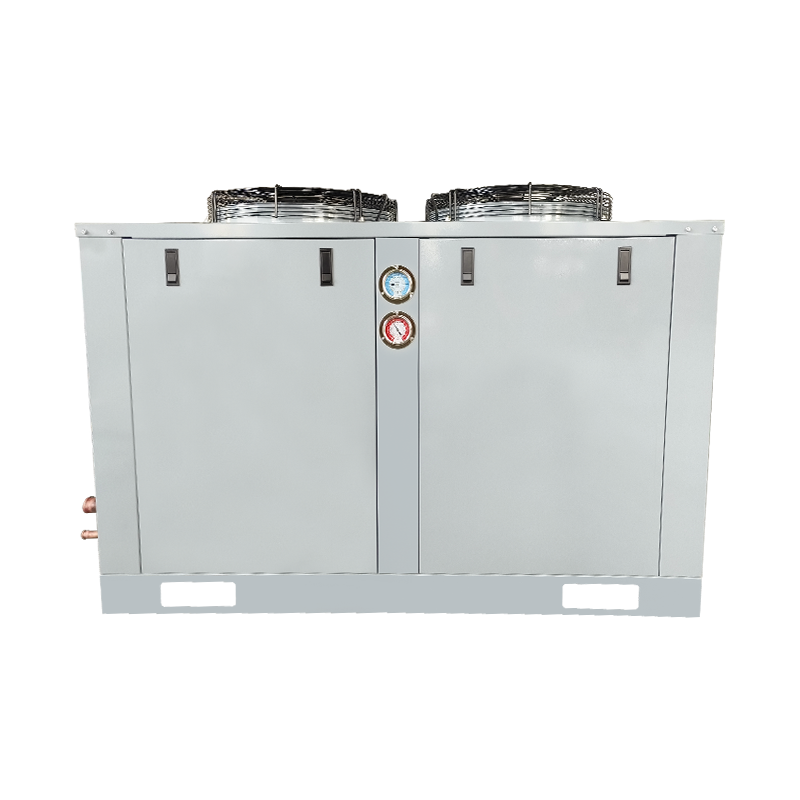
We build AUSSN condensing units around hermetic scrolls from established makers such as Copeland, Panasonic, and Xecom, matched to coils, fans, and electrical panels that suit the duty. A side air outlet unit in the 220HP class, for instance, slides into tight plant rooms and side alleys where a top discharge machine simply will not fit.
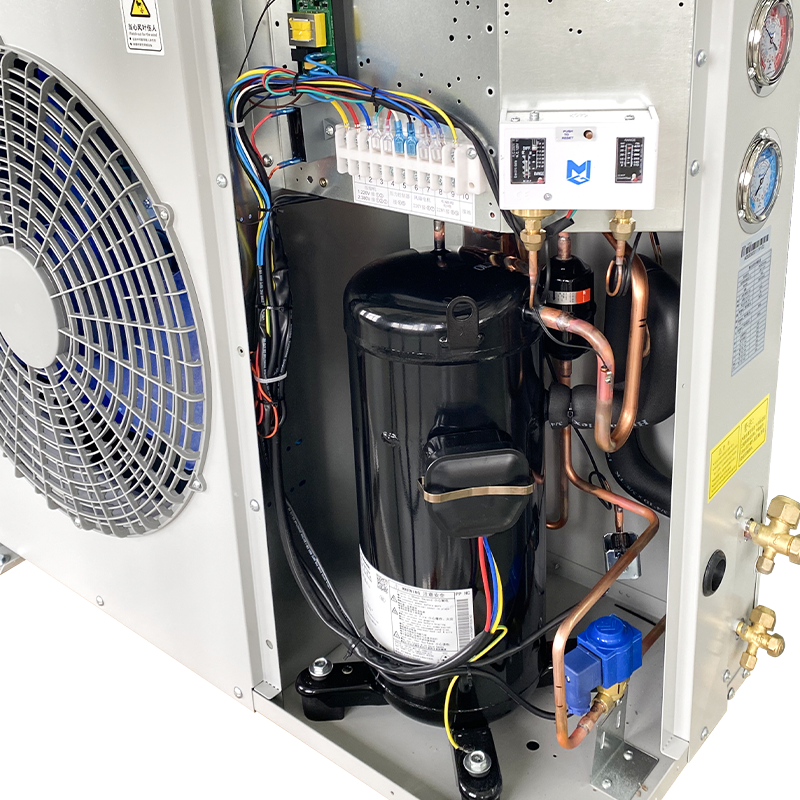 Side Air Outlet Copeland Scroll Condensing Unit, 2-20 HPCompact side-discharge condensing unit for cold storage and supermarkets; fits tight plant rooms where top-discharge models cannot.View Product →
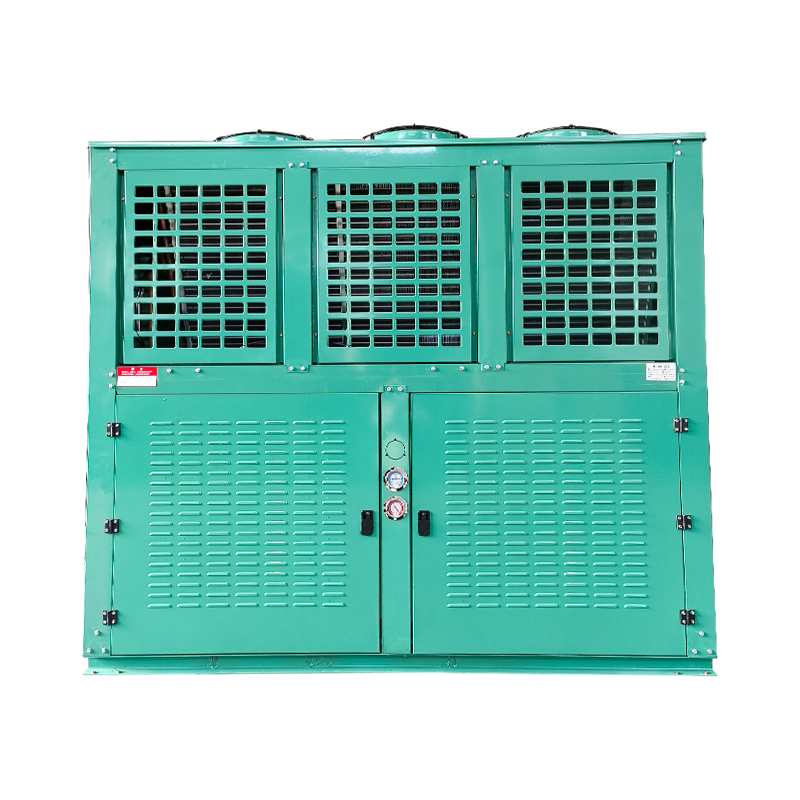
Where the load swings hard — a supermarket with a busy morning pulldown and a quiet afternoon — a variable frequency hot fluorine unit keeps the compressor inside its efficient range instead of slamming on and off.
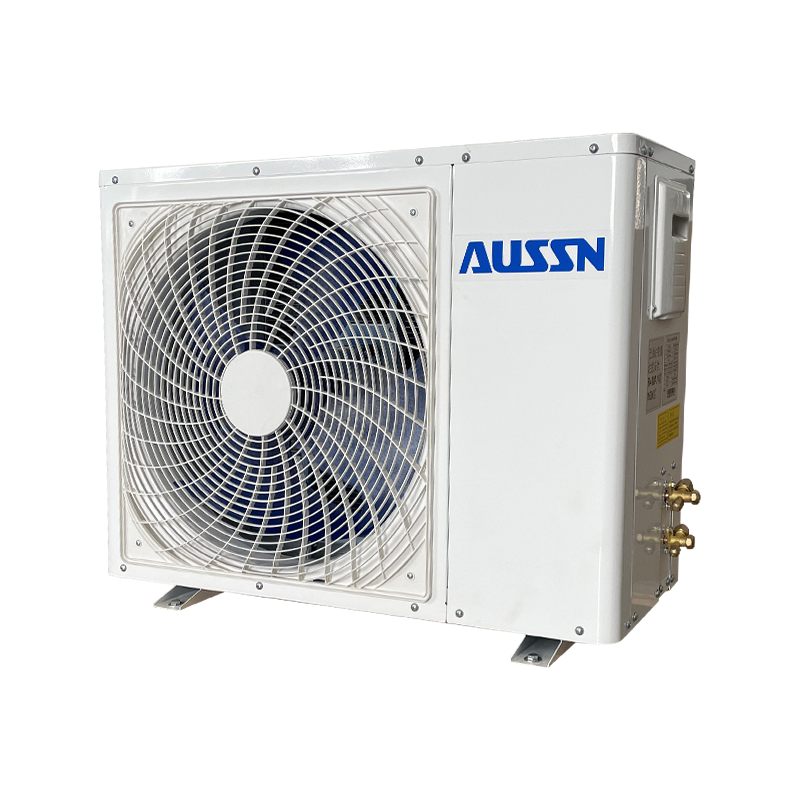 Custom Variable Frequency Hot Fluorine Refrigeration UnitVFD hot-gas defrost system for frequent-defrost cold storage and freezer warehouses, with precise temperature control and 5-200+ ton capacity.View Product →
A hermetic scroll is only as reliable as the circuit around it. Three things decide whether it is still running smoothly after five years: how the evaporator is matched, how charge and superheat are set, and how the system copes with liquid returning during defrost or pulldown.
The evaporator matters more than most people expect. A coil that never fully wets starves the compressor of cooling and lets discharge temperature climb; an undersized coil floods it. Choosing the right temperature band comes first, because it drives coil surface, fan speed, and expansion device selection. If you are still weighing that decision, our note on choosing between high, medium and low temperature equipment breaks down where each band fits.
When a project needs fast pulldown rather than steady holding, the compressor works hardest in the first hour and then coasts. Pairing a scroll condensing unit with a rapid pulldown evaporator such as a middle temperature 25 rapid pulldown evaporator gives the system enough surface to pull the room down quickly without pushing suction pressure somewhere the compressor cannot tolerate.
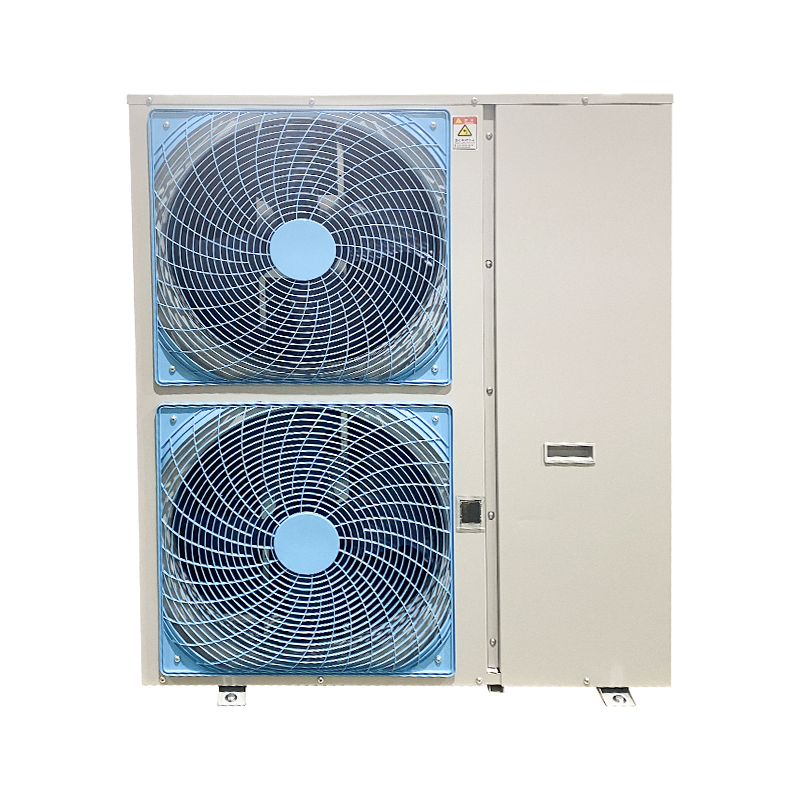
For shops that prefer a sealed, factory-charged package, a top mounted monoblock puts compressor, coil, and controls in one housing that mounts through a wall panel — no separate condensing unit, no long line runs, no site brazing.
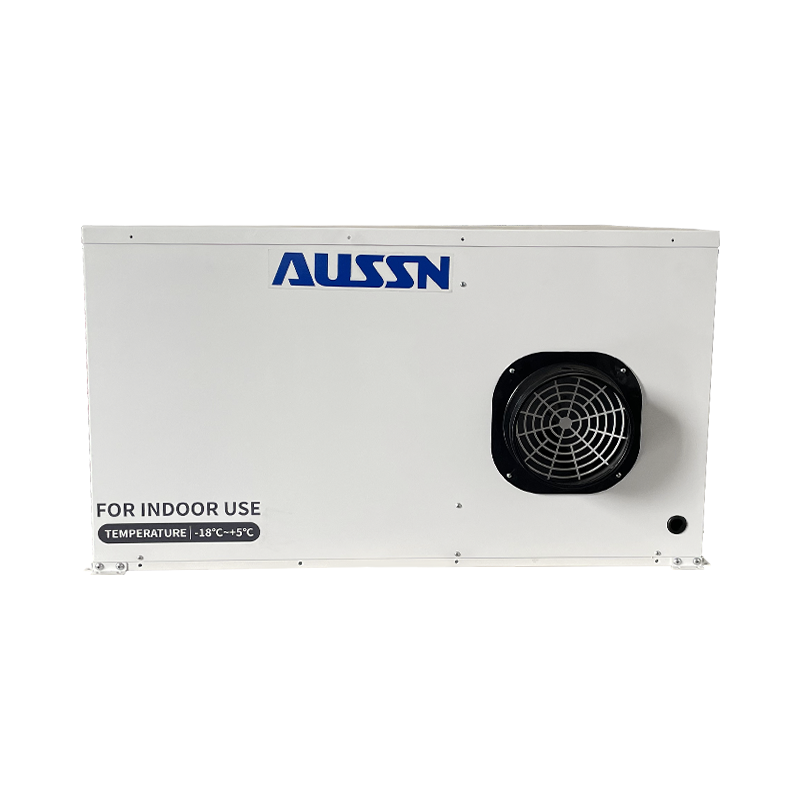 Top Mounted Monoblock Cold Storage Refrigeration UnitAll-in-one sealed unit combining compressor, coil, and controls; simplifies installation and avoids separate condensing units, long line runs, or site brazing.View Product →
Hermetic scrolls have a reputation for durability, and most of it is earned by the installation rather than the factory. Three habits protect the compressor more than any specification sheet will.
Keep the system clean and dry — moisture and acid are the most common causes of winding failure, and both come from rushed evacuation and charging. Control superheat at the evaporator, because returning liquid washes oil off the scroll surfaces, and oil starvation kills hermetic compressors quickly. Protect the electrical side with correct contactors, thermal overloads, phase protection, and a crankcase heater for cold starts.
Beyond that, the service story is simple: no routine oil top-ups, no shaft seal to inspect, no belts to replace. When a hermetic compressor does fail, find out why before fitting the replacement, otherwise the new unit inherits exactly the same problem.
Few refrigeration decisions rest on the compressor alone, but the compressor is often where a project's reliability is decided. A hermetically sealed scroll, matched to the right condensing unit, evaporator, and control strategy, is a genuinely low-maintenance answer to commercial cooling — which is why we build our units around them.
If you are working through a cold room, display cabinet, or freezer project and want a straight opinion on selection, our team is glad to talk it through.
For exclusive deals and latest offers, sign up by entering your email address below.

We specialise in the refrigeration industry. Please feel free to contact us.
