


 English
 中文简体
中文简体 Español
Home / News / Industry News / Motor Condition Monitoring: Protecting Condensing Units and Cold Storage
Industry News
At 2:30 in the morning, the compressor motor of a 600 m³ frozen-food cold room trips on its thermal overload. By the time the maintenance contractor arrives, the room temperature has climbed from -22 °C to -8 °C, several pallets of finished product are at risk, and the service invoice is larger than the price of the condensing unit itself. The failure was not sudden: the motor had run hotter than its normal baseline for weeks, and the vibration velocity on the bearing housing had drifted upward, reading after reading. No one was monitoring either parameter.
Motor condition monitoring exists to prevent exactly this sequence. It is the practice of measuring the operating health of an electric motor while it runs, recognizing the early indicators of wear, and intervening before a minor fault becomes a catastrophic failure. For any facility that depends on condensing units — a supermarket cold room, a frozen-food warehouse, or a food-processing plant — the difference is between an emergency replacement at 3 a.m. and a planned, inexpensive repair.
This guide covers what motor condition monitoring actually measures, why condensing-unit motors deserve special attention, and what to look for when purchasing equipment that already supports monitoring.
Content
Motor condition monitoring is not a single reading, and it does not require an expensive enterprise platform to be useful. It is a small set of physical quantities that, taken together, describe how far a motor has drifted from its healthy baseline: temperature, vibration, and electrical signature. A motor that is observed behaves far better than a motor that is ignored.
Winding temperature is the most informative single parameter for a motor in refrigeration duty, because most motor failures begin with insulation breakdown. A motor with Class F insulation is designed for a maximum hot-spot temperature of 155 °C, but continuous operation above roughly 130 °C measurably accelerates aging. The classic rule in motor engineering is that every 10 °C increase above the design winding temperature halves the remaining insulation life; a motor running 20 °C hotter than its baseline will fail years earlier even though it never trips an overload relay. Embedded sensors in the stator winding are the most reliable way to capture this data. For smaller motors, a regular infrared scan of the motor housing is far better than no measurement at all.
Industrial failure surveys consistently place bearing faults at or near the top of the motor failure list, and vibration is the earliest measurable symptom of bearing wear. The practical metric is vibration velocity in millimetres per second (rms), evaluated against the severity zones of ISO 10816-3. The absolute value matters, but the trend matters more: a motor that climbs gradually from 1.5 to 3.5 mm/s rms over six months is developing a fault, even if no single reading triggers an alarm. Permanently mounted accelerometers allow continuous monitoring; a handheld vibration meter on a monthly route is a perfectly acceptable starting point for most cold storage operations.
Motor current signature analysis (MCSA) uses the current waveform to detect faults that temperature and vibration cannot reveal. Broken rotor bars, rotor eccentricity, and load disturbances each leave a characteristic frequency pattern in the motor current. On a three-phase supply, current unbalance between phases is itself an important indicator: NEMA MG-1 recommends keeping voltage unbalance below 1%, because a small voltage unbalance produces disproportionately high current unbalance and additional heating. A phase-to-phase current difference consistently above 2-3% should trigger an investigation of the supply, the connections, or the motor itself.
| Parameter | Common fault it detects | Typical warning threshold | Practical measurement method |
|---|---|---|---|
| Winding temperature | Insulation aging, overload, blocked cooling | Sustained above 130 °C for Class F insulation | Embedded RTD or thermistor |
| Vibration velocity | Bearing wear, unbalance, misalignment | Rising trend; verify against ISO 10816-3 zones | Accelerometer or handheld vibration pen |
| Three-phase motor current | Rotor faults, load changes, phase loss | Phase-to-phase current unbalance above 2-3% | Clamp meter or controller monitoring data |
| Supply voltage | Phase loss, undersized wiring, poor contacts | Voltage unbalance above 1% (NEMA MG-1) | Multimeter or power quality analyser |
| Bearing temperature | Lubrication loss, overloading, misalignment | Sudden rise compared with the baseline trend | RTD or infrared thermometer |
In commercial refrigeration, a motor is never just a motor. The compressor motor is the heart of the refrigerant circuit; its failure does not simply stop a machine. It releases refrigerant, contaminates the charge with decomposition products, and generates a cleanup and repair bill that dwarfs the motor replacement cost. Condenser fan motors operate outdoors or in hot plant rooms, where dust loading and high ambient temperatures directly raise the pressure the compressor must pump against. Evaporator fan motors work in cold, moist environments where icing and condensation threaten the electrical winding even while the low temperature keeps the motor housing cool. The conclusion is straightforward: the motors attached to condensing units work in harsher duty cycles than most industrial motors, so condition monitoring pays for itself here faster than almost anywhere else.
The compressor is the largest electrical load in a cold storage installation, and its failure creates the longest downtime. A worn bearing or a degraded winding does not announce itself through the temperature controller; it appears first as rising current, rising winding temperature, or a slowly changing vibration signature. Monitoring those quantities gives you days or weeks of advance warning instead of a midnight emergency call.
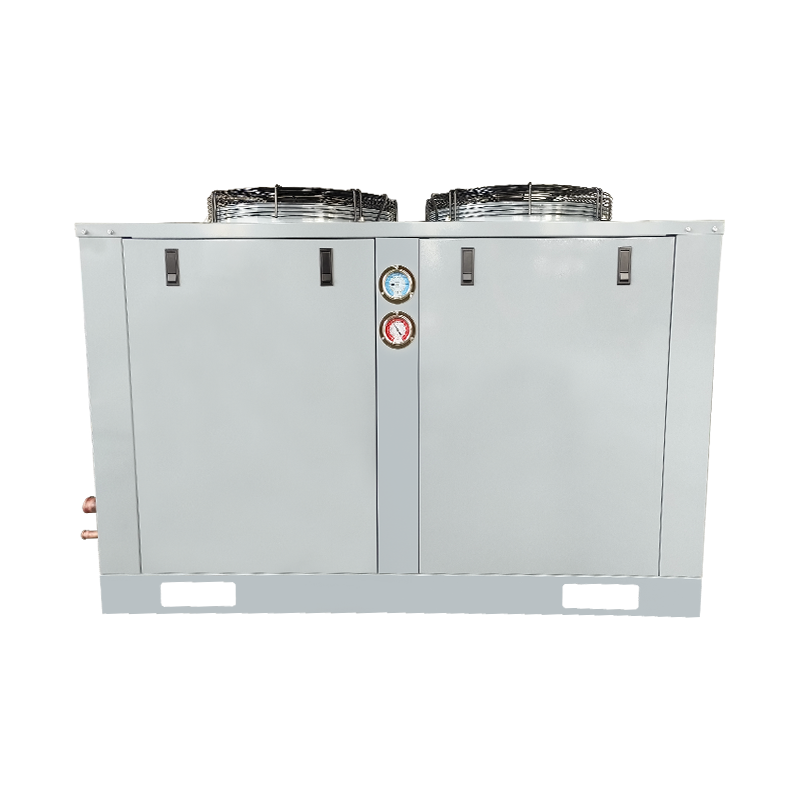
Condenser fan motors are small, inexpensive, and frequently ignored. Yet when a fan slows down or stalls, condenser pressure rises, compressor current climbs, and the compressor motor begins to overheat. A fan motor observed for current and vibration provides indirect but very effective protection for the far more expensive compressor. This is also where a medium-to-low temperature air-cooling condensing unit with well-designed airflow paths pays for itself: good condenser airflow keeps both the fan motor and the compressor motor cooler.
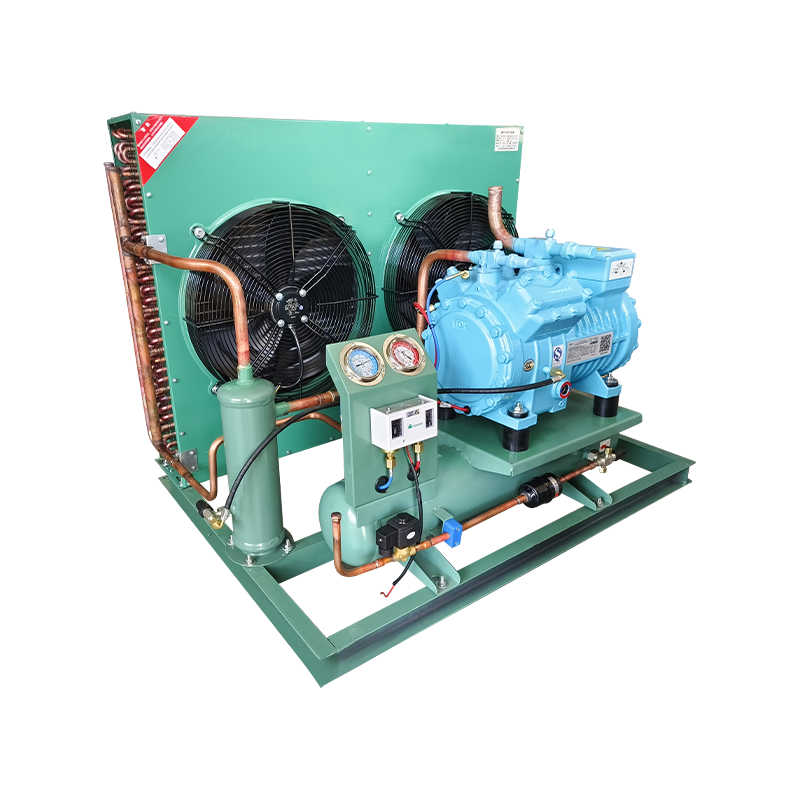 Medium to low temperature Air Cooling Condensing Unit Suppliers, Custom Company Aosheng supply Medium to low temperature Air Cooling Condensing Unit for sale, we are Custom Medium to low temperature Air Cooling Conden...View Product →
Evaporator fans run inside the cold room, where the air is cold but moisture, frost, and ice are constant threats. Bearing grease thickens at low temperature, and condensation can creep into terminal boxes. A fan motor marginally specified for -18 °C draws higher current and runs hotter than its design point. Monitoring current and checking vibration catches these problems before a fan failure turns into an overnight defrost-and-replace job.
Most condition monitoring problems are decided on the day the condensing unit is purchased, not on the day a sensor is installed. Component quality, controller capability, and airflow design determine how observable and how predictable the motor's condition will be over the unit's service life.
Start with the compressor and fan motors. A unit built with well-documented compressors from established brands such as Copeland or Panasonic makes future diagnosis easier, because their failure modes are well understood and spare parts are widely available. Full-process inspection at the factory reduces the chance that a new unit ships with a hidden defect that later appears as a motor overload.
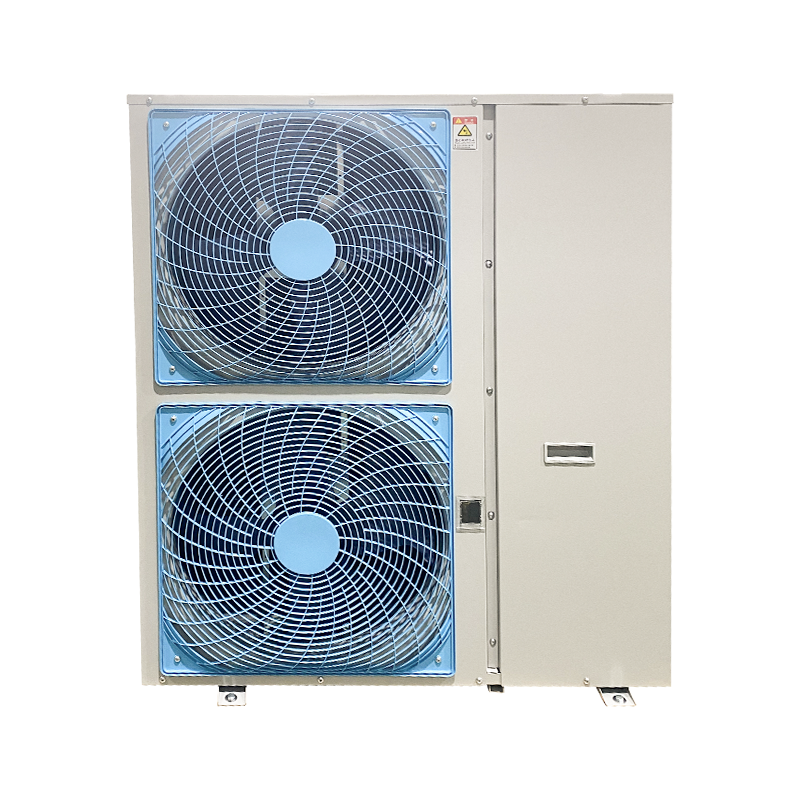
Next, examine the controller. Intelligent condensing units log operating data — running current, discharge temperature, fan status, alarm history — which is exactly the data a condition monitoring program needs. AUSSN's AI variable-frequency temperature control hot fluorine unit goes a step further: it adjusts compressor and fan speed in response to real-time load instead of running a fixed duty cycle, reducing the thermal and mechanical cycling that ages motor insulation and bearings in the first place.
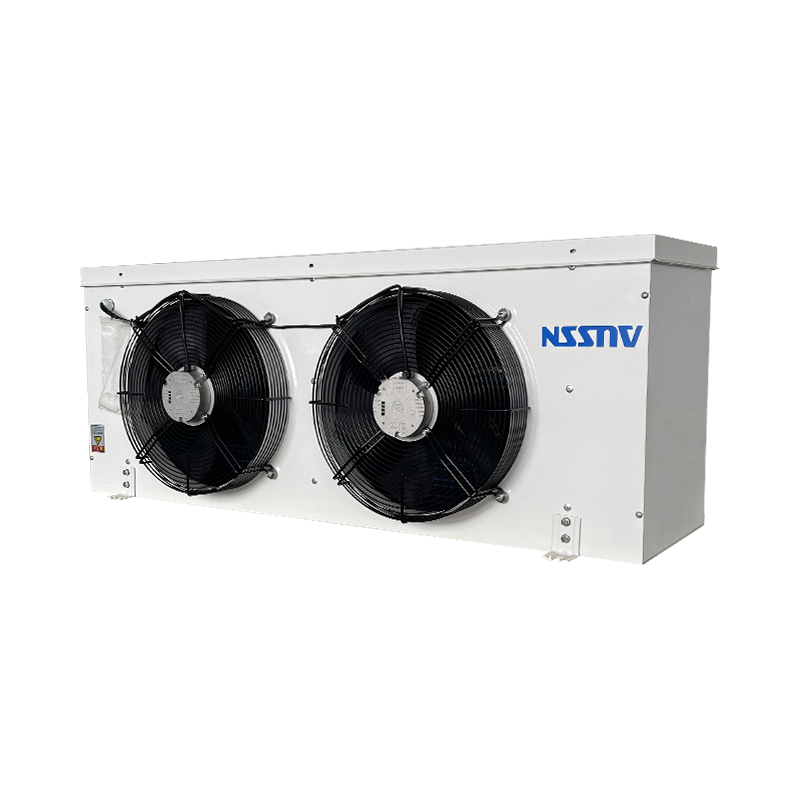 Ai Variable-Frequency Temperature Control Variable Frequency Hot Fluorine Unit SAosheng supply Ai Variable-Frequency Temperature Control Variable Frequency Hot Fluorine Unit for sale, we are Custom Ai Variable-Frequen...View Product →
Finally, consider airflow and enclosure layout. The same condensing unit installed in a narrow space with recirculated hot air keeps its motors 10-15 °C hotter than one installed with clear ventilation, and that difference directly shortens motor life. You can read more about how intelligent condensing unit designs are improving refrigeration technology in our industry notes.
You do not need complex enterprise software to start. A small, consistent routine with basic instruments captures most of the benefit, and intelligent condensing units with built-in controllers already provide part of the data for free.
For smaller cold rooms, installation matters as much as instrumentation. Compact, quiet side-air-outlet condensing unit solutions are often the practical choice, because their airflow paths and clearances are simpler to keep clear and their low-noise design suits spaces near occupied areas.
A complete approach also connects monitoring to the rest of the refrigeration system. One-stop refrigeration solutions for commercial cold storage, covering equipment selection, installation, and after-sales support, make it easier to keep every motor in the loop under the same operating philosophy.
The best monitoring strategy is the one that prevents faults from developing in the first place. Two equipment-level decisions have an outsized effect on motor reliability in commercial refrigeration.
A condensing unit designed for freezer work has the correct compressor displacement, condenser airflow, and expansion-valve compatibility for low evaporating temperatures. Running a borderline unit continuously at low temperature forces the motor to work at a higher compression ratio and elevated winding temperature — exactly the condition that monitoring will later flag as abnormal.
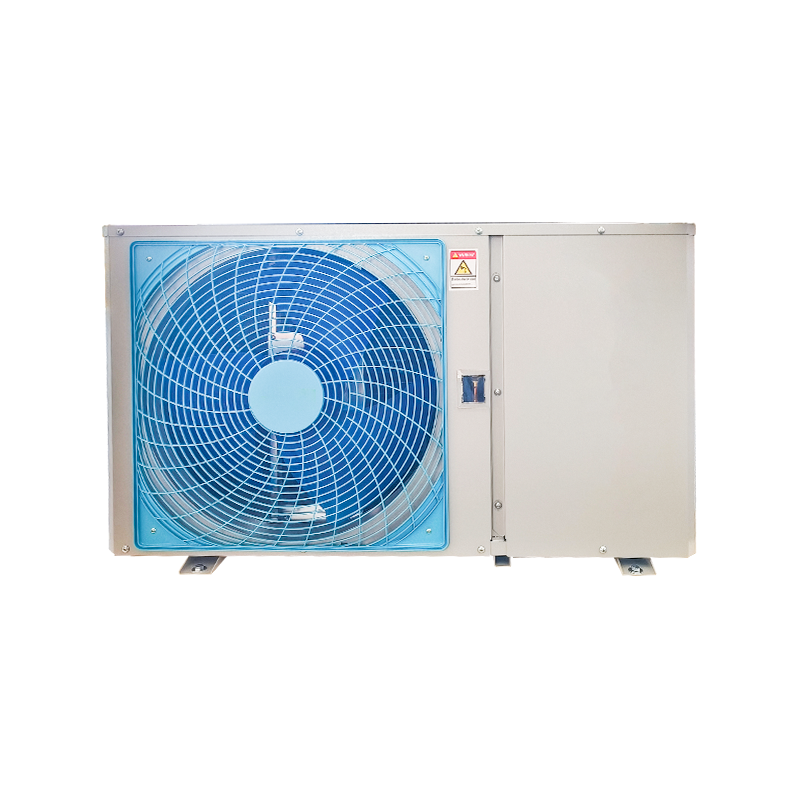
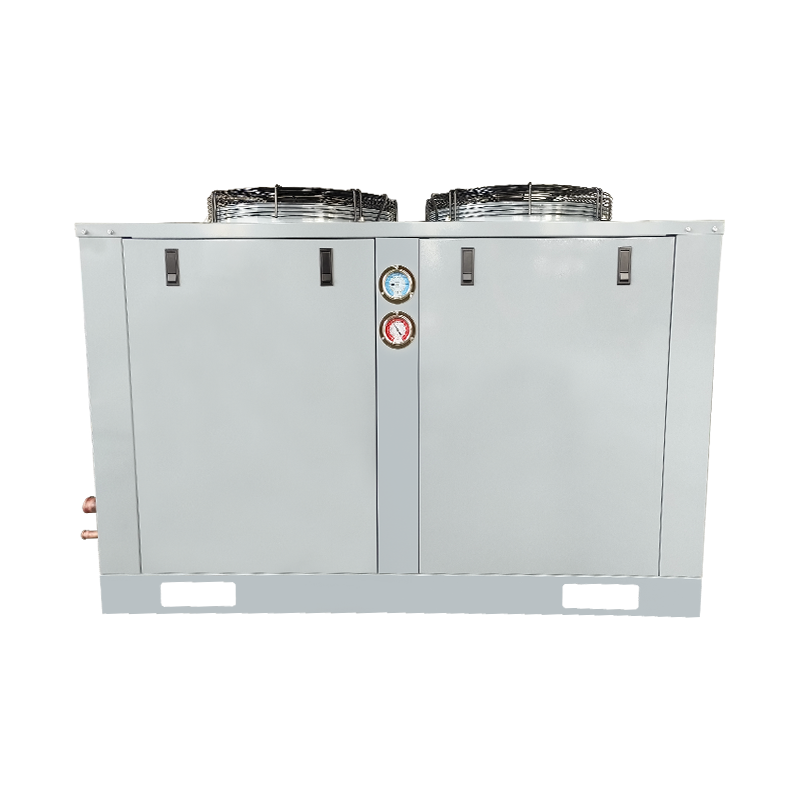
For small and medium cold rooms, monoblock designs reduce the number of field-installed motors. A top-mounted monoblock condensing unit mounts through the ceiling or wall as a factory-assembled package, removing the need for long refrigerant lines and multiple on-site fan motors. Fewer components mean fewer motors to monitor, and the factory-sealed refrigerant charge removes a major source of system faults.
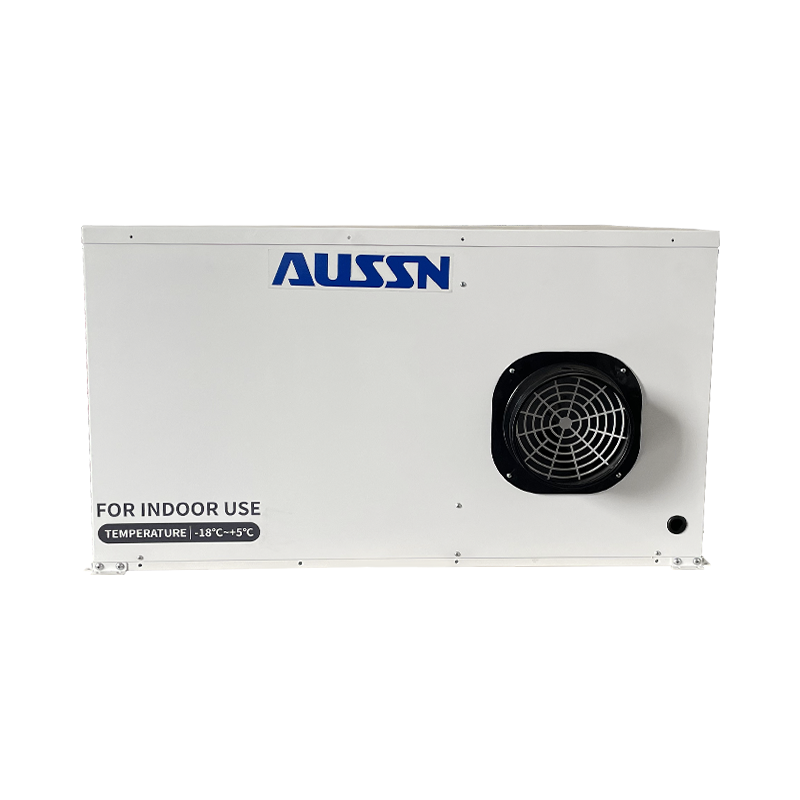 Top Mounted Monoblock Suppliers, Custom Company - Changzhou Aosheng RefrigeratioAosheng supply Top Mounted Monoblock for sale, we are Custom Top Mounted Monoblock Suppliers and Company in China, The top-mounted monobl...View Product →
Motor condition monitoring does not have to be complicated, and it does not have to be expensive. A temperature reading, a vibration trend, and a current comparison will catch the vast majority of motor failures before they become emergency events. The remaining variables — component quality, controller intelligence, airflow design, and matching equipment to the actual duty — are decided when the condensing unit is selected. Choose equipment that is easy to observe and designed to run cool, monitor it consistently, and the 3 a.m. outage becomes an avoidable event rather than an inevitable one.
For exclusive deals and latest offers, sign up by entering your email address below.

We specialise in the refrigeration industry. Please feel free to contact us.
